In today’s competitive business landscape, fostering a positive workplace culture has become more crucial than ever. As organizations strive to create environments where employees thrive, being recognized as a Great Place To Work® has emerged as a significant milestone. This Certification not only validates your commitment to cultivating an exceptional workplace culture but also opens doors to numerous benefits for your organization. 

As we approach Certification Nation Day, it’s time to reflect on the journey that led to this achievement and celebrate the positive impact it has on your workplace culture. In this blog post, we’ll explore creative ways to commemorate your Great Place To Work Certification™ and delve into the myriad benefits that come with this prestigious recognition. 

The Significance of Great Place To Work Certification 

Before we dive into celebration ideas, let’s take a moment to understand why the Great Place To Work Certification is such a remarkable achievement. This globally recognized Certification is awarded to organizations that demonstrate exceptional workplace cultures based on extensive employee feedback and rigorous evaluation criteria. 

The Certification process involves a comprehensive assessment of various aspects of your workplace culture, including trust, respect, fairness, pride, and camaraderie. By earning this Certification, your organization has proven its commitment to creating an environment where employees feel valued, supported, and motivated to give their best. 

Creative Ways to Celebrate Your Certification on Certification Nation Day 

Certification Nation Day is the perfect opportunity to showcase your achievement and reinforce the positive workplace culture that earned you this recognition. Here are some innovative ideas to celebrate your Great Place To Work Certification: 

  • Host a Company-Wide Virtual or In-Person Celebration 

Organize a special event to bring all employees together. This could be a virtual gathering for remote teams or an in-person celebration at the office. Use this opportunity to thank your team for their contributions to creating a great workplace culture. 

  • Launch a Social Media Campaign 

Create a dedicated hashtag and encourage employees to share their favorite aspects of working at your company. This not only boosts morale but also serves as authentic employer branding. 

  • Unveil a Workplace Culture Wall 

Designate a prominent space in your office to showcase your certification and highlight key elements of your workplace culture. Include employee testimonials, photos, and company values to create a visual representation of what makes your organization special. 

  • Organize a “Culture Champions” Recognition Program 

Identify and celebrate employees who exemplify your company’s values and contribute significantly to the positive workplace culture. This can be an excellent way to reinforce desired behaviors and attitudes. 

  • Implement a “Random Acts of Kindness” Challenge 

Encourage employees to perform small acts of kindness for their colleagues throughout the day. This fosters a sense of community and reinforces the supportive aspects of your workplace culture. 

  • Create a Certification Celebration Video 

Produce a short video featuring employees sharing what they love about working at your company. This can be shared internally and on social media platforms to showcase your workplace culture to a broader audience. 

  • Offer Professional Development Opportunities 

Celebrate by investing in your employees’ growth. Provide access to online courses, workshops, or mentoring sessions aligned with individual career goals and company values. 

  • Host a “Workplace Culture Fair” 

Set up booths or virtual rooms representing different aspects of your workplace culture (e.g., diversity and inclusion, work-life balance, innovation). Employees can visit each station to learn more and participate in related activities. 

  • Launch a “Culture Ambassador” Program 

Select employees to serve as culture ambassadors, responsible for organizing regular events and initiatives that reinforce your workplace values throughout the year. 

The Benefits of Being Great Place To Work Certified 

Achieving Great Place To Work Certification is more than just a badge of honor. It comes with a host of benefits that can significantly impact your organization’s success. Let’s explore some of the key advantages: 

  • Enhanced Employer Brand and Talent Attraction
    In today’s competitive job market, top talent is often drawn to companies with strong workplace cultures. The Great Place To Work Certification serves as a powerful signal to potential candidates that your organization prioritizes employee well-being and satisfaction. This can lead to:
    • Increased quality and quantity of job applicants 
    • Reduced recruitment costs 
    • Improved employer brand visibility 
  • Improved Employee Engagement and Retention
    Certified organizations often experience higher levels of employee engagement, which can have a cascading effect on various aspects of the business. Benefits include:
    • Lower turnover rates
    • Increased productivity
    • Higher levels of employee satisfaction and loyalty
  • Positive Impact on Customer Satisfaction
    A strong workplace culture often translates to better customer experiences. Engaged employees are more likely to go above and beyond for customers, resulting in:
    • Improved customer satisfaction scores
    • Increased customer loyalty
    • Positive word-of-mouth referrals
  • Boosted Financial Performance
    Research has consistently shown a correlation between great workplace cultures and financial success. Certified organizations often enjoy:
    • Higher revenue growth
    • Increased profitability
    • Better stock market performance (for public companies)
  • Increased Innovation and Adaptability
    Companies with strong workplace cultures tend to foster environments where employees feel safe to share ideas and take calculated risks. This can lead to:
    • Higher rates of innovation
    • Improved problem-solving capabilities
    • Greater adaptability to market changes
  • Enhanced Credibility and Reputation
    The Great Place To Work Certification is globally recognized and respected. It can significantly enhance your organization’s credibility among various stakeholders, including:
    • Investors and shareholders
    • Partners and suppliers
    • Industry peers and competitors
  • Benchmarking and Continuous Improvement
    The Certification process provides valuable insights into your workplace culture, allowing you to:
    • Identify areas of strength and opportunities for improvement
    • Benchmark against other high-performing organizations
    • Set clear goals for ongoing cultural development
  • Improved Work-Life Balance
    Many certified organizations prioritize work-life balance, leading to:
    • Reduced employee stress and burnout
    • Increased job satisfaction
    • Improved overall employee well-being
  • Stronger Alignment with Company Values
    The certification process often helps organizations articulate and reinforce their core values, resulting in:
    • Greater employee alignment with company mission and goals
    • Improved decision-making at all levels of the organization
    • A more cohesive and unified workforce

Sustaining and Improving Your Workplace Culture 

While celebrating your Great Place To Work Certification is important, it’s equally crucial to view this achievement as a steppingstone rather than a final destination. Here are some strategies to help you maintain and further improve your workplace culture: 

  • Regular Employee Feedback 

Implement ongoing feedback mechanisms to stay attuned to employee needs and concerns. This could include pulse surveys, town hall meetings, or anonymous suggestion boxes. 

  • Leadership Development

Invest in developing leaders who can effectively embody and promote your workplace culture. Provide training on emotional intelligence, inclusive leadership, and effective communication. 

  • Continuous Learning and Development 

Foster a culture of continuous learning by providing resources and opportunities for employees to grow both personally and professionally. 

  • Diversity, Equity, and Inclusion Initiatives

Commit to ongoing efforts to create a diverse, equitable, and inclusive workplace where all employees feel valued and respected. 

  • Work-Life Integration Programs

Regularly assess and update your work-life balance initiatives to ensure they meet the evolving needs of your workforce. 

  • Recognition and Reward Systems

Develop and refine systems to recognize and reward employees who exemplify your company values and contribute to a positive workplace culture. 

  • Technology and Infrastructure

Invest in tools and technologies that support collaboration, communication, and productivity, especially in hybrid or remote work environments. 

  • Corporate Social Responsibility

Engage in meaningful corporate social responsibility initiatives that align with your company values and allow employees to contribute to broader societal goals. 

Conclusion 

Achieving Great Place To Work Certification is a significant milestone that deserves to be celebrated. By implementing creative celebration ideas on Certification Nation Day, you not only commemorate this achievement but also reinforce the positive workplace culture that earned you this recognition. 

The benefits of being a Great Place To Work Certified organization extend far beyond the celebration day. From attracting top talent and improving employee engagement to enhancing financial performance and fostering innovation, positive impacts ripple through every aspect of your business. 

As you bask in the glow of your certification, remember that maintaining and improving your workplace culture is an ongoing journey. By staying committed to your employees’ well-being, continuously seeking feedback, and adapting to evolving needs, you can ensure that your organization remains a great place to work for years to come. 

Celebrate your success, but also use this moment as a catalyst for further growth and improvement. After all, a truly great workplace culture is one that never stops evolving and striving for excellence. To get Certified, connect with us at: Get Certified – Great Place To Work® 

For All Summit 2025: Vision to Value – Building Workplaces That Matter 

Join us on February 6, 2025, in Mumbai for an enlightening day filled with insights on creating sustainable, humane, and inclusive workplaces. Learn from industry leaders about purpose-driven cultures, innovative HR practices, and adaptive leadership strategies.  

Get your passes today – https://testg.in/for-all-summit 

Banner for registering for the Great Place To Work® For All™ Summit 2025

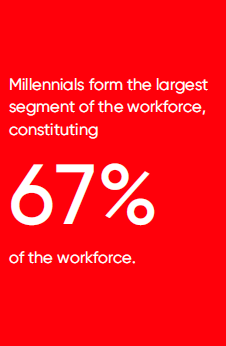
In the dynamic landscape of modern employment, the concept of employee experience has emerged as a critical factor in building a positive and productive workplace culture. As Millennials continue to make up an ever-larger segment of the workforce, understanding and adapting to their unique needs and expectations has become essential for organizations aiming to attract and retain top talent. According to the latest data from India’s Best Workplaces™ for Millennials 2024, Millennials now constitute 67% of the workforce, making them the largest generational cohort. This significant presence demands a shift in how companies approach employee sentiment, integrating flexibility, meaningful benefits, and opportunities for growth.

The Millennial Workforce: Shaping the Future of Work

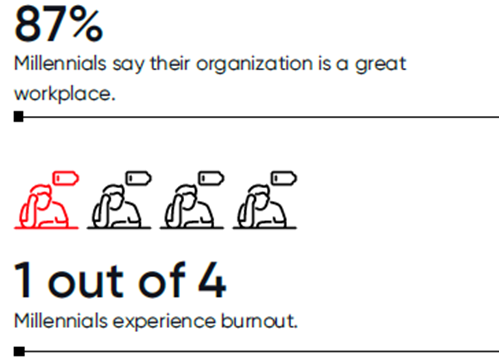
Born between 1981 and 1997, Millennials are now the dominant force in the workforce. As they progress into managerial and leadership roles, their expectations from their employers are evolving. They seek more than just a paycheck—they desire a work environment that supports work-life integration, provides career growth opportunities, and ensures fair pay. Our recent data says that 87% of Millennials express that their organization is a great workplace. Despite this positive sentiment, 1 out of 4 Millennials report experiencing burnout, highlighting a critical area for improvement.

Millennials are not a monolithic group; they are diverse in their personal and professional lives. Younger Millennials are particularly driven by career advancement, while older Millennials place a higher value on psychological and emotional safety. As this generation continues to advance into senior roles, their influence on workplace culture and expectations will only grow.

The Importance of Unique Benefits and Fair Pay

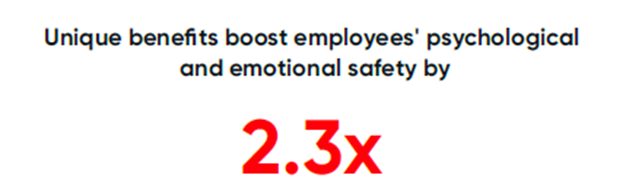
To create an exceptional employee experience, organizations must offer more than standard benefits. Millennials seek unique perks that enhance their well-being and work-life balance. Research indicates that providing unique benefits can boost employees’ psychological and emotional safety by 2.3 times. These benefits can include everything from on-site childcare and recreational spaces to comprehensive wellness programs and flexible work arrangements.

Fair pay is another crucial element. Millennials are increasingly aware of salary disparities and expect their compensation to reflect their skills and contributions. Ensuring that pay is competitive and equitable not only addresses this concern but also enhances the perception of the organization as a great place to work. Organizations that regularly benchmark salaries and adjust compensation to align with market standards can significantly improve employee satisfaction and retention.

Balancing Personal and Professional Roles

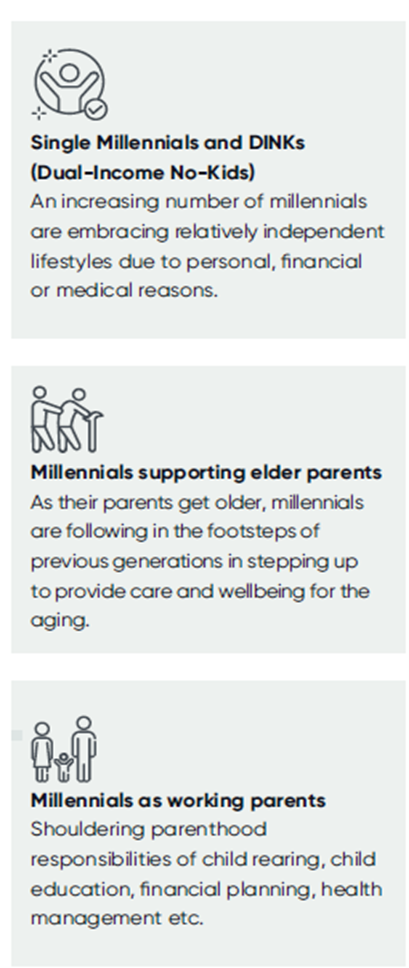
Millennials juggle various roles in their personal lives, which influences their expectations of their work environment. For instance:

  • Single Millennials and DINKs (Dual-Income No-Kids): Many Millennials are embracing independent lifestyles, whether due to personal choice or financial reasons. They value work environments that offer flexibility and support their unique living situations.
  • Millennials Supporting Elder Parents: As Millennials’ parents age, they are increasingly stepping up to provide care and support. This responsibility impacts their work-life balance and necessitates policies that accommodate their caregiving needs.
  • Millennials as Working Parents: Balancing parenthood with professional responsibilities is a significant challenge. Millennials who are parents need support in the form of flexible schedules, parental leave, and family health benefits to manage their dual responsibilities effectively.

In the workplace, Millennials are not just filling roles but are actively shaping their organizations. As individual contributors, they seek opportunities to leverage their expertise and advance their careers. Data shows that 79% of Millennials feel they are given career growth opportunities, while 80% believe they are offered training and development to enhance their leadership skills. As they move into roles such as team leads and senior executives, they are responsible for mentoring younger professionals and driving organizational success.

Strategies for Enhancing Employee Experience

Organizations looking to improve employee experience for Millennials should consider several strategies:

  1. Upgrading In-House Childcare and Recreational Spaces: Providing on-site childcare and recreational facilities can significantly benefit working parents and those with caregiving responsibilities. These amenities help employees balance their work and personal lives, enhancing their overall satisfaction and productivity.
  2. Updating Policies for Flexible Work Hours and Parental Leaves: Flexibility in work hours and comprehensive parental leave policies are crucial for supporting employees with diverse personal needs. Such policies can significantly improve work-life balance and employee well-being.
  3. Implementing Comprehensive Health, Wellness, and Financial Support Programs: A holistic approach to employee well-being includes physical, mental, and financial support. Comprehensive wellness programs that address these areas can create a more supportive and engaging work environment.
  4. Regular Salary Benchmarking: Organizations should regularly conduct salary benchmarking to compare their compensation packages with market standards. This ensures employees are paid competitively and fairly, addressing potential wage discrepancies that may arise. By aligning pay with industry trends, companies can enhance employee satisfaction, reduce turnover, and foster greater loyalty across the workforce.
  5. Equipping Managers for Open Conversations: Training managers to lead data-driven, transparent discussions about salary increments and promotion criteria is crucial. These open conversations help create a culture of trust, making employees feel valued and informed. Empowering managers with the right tools fosters transparency, boosts engagement, and promotes fairness in career advancement decisions.
  6. Reverse Mentoring Programs: Implement reverse mentoring programs where junior employees mentor senior leaders and encourage mutual learning and understanding. This initiative bridges generational gaps, fosters innovation, and allows leaders to gain fresh perspectives. In turn, younger employees feel empowered and valued, creating a more inclusive and dynamic workplace environment.
  7. Cross-Functional Project Opportunities: Offering employees opportunities to participate in cross-functional projects broadens their skills, allowing them to explore diverse areas of the organization. This exposure fosters collaboration, enhances engagement, and boosts innovation by bringing together different perspectives. It also helps employees grow professionally while increasing their contributions to the company.
  8. Developmental and Feedforward Conversations: Regular developmental conversations between managers and employees create a consistent feedback loop that promotes growth and continuous improvement. By focusing on future potential (feedforward) rather than just past performance, these conversations help employees feel supported, motivated, and better equipped to advance in their careers.
  9. Creating Personalized Development Plans: Tailoring development plans to align with individual employees’ personal goals and career aspirations is key to fostering job satisfaction and professional growth. Personalized plans ensure employees receive targeted training and opportunities, leading to a more engaged and motivated workforce that sees clear paths to advancement.

The Role of Leadership in Shaping Millennial Employee Experience

Effective leadership is vital in shaping positive workplace experiences for employees. Leaders must foster a culture of trust, respect, and collaboration to create an environment where employees feel valued and empowered. Millennials, who make up a significant portion of managerial roles in India, are themselves driving changes in leadership practices. They are seeking work environments that offer opportunities for career advancement, clear role expectations, and fair compensation.

Leadership also involves creating opportunities for professional development. Whether through formal training programs or hands-on project experience, providing employees with the resources they need to succeed is essential for maintaining high levels of engagement and performance.

The Future of Employee Experience: Embracing Change

As Millennials continue to influence the workforce, the future of workplace culture will be characterized by flexibility, inclusivity, and a focus on holistic well-being. Millennials are not only seeking career growth but also a work environment that supports their mental, emotional, and physical health.

Creating a great employee experience involves understanding and addressing the diverse needs of Millennial employees. By implementing flexible policies, offering unique benefits, and fostering a supportive work environment, organizations can build a culture that attracts top talent and supports their long-term success.

Get Certified to Showcase Your Commitment

Achieving Great Place To Work Certification is an excellent way to demonstrate your organization’s commitment to employees’ overall well-being and experience. This Certification not only enhances your employer branding but also helps attract and retain top talent. It highlights to current and prospective employees that your organization values their health, happiness, and overall well-being.

Certification serves as a benchmark for continuous improvement, helping organizations identify areas where they can further enhance employee well-being and workplace culture. By fostering a culture of trust, respect, and collaboration, organizations can create a workplace where employees feel strong, healthy, and connected.

In today’s dynamic workplace, the concept of employee engagement has evolved beyond simple metrics of productivity or job satisfaction. It has become deeply intertwined with how employees perceive themselves in their work environments. Employees no longer see their jobs as merely a means of earning a living. Instead, their work is now an integral part of their lifestyle and identity, blending professional aspirations with personal fulfillment. This shift is reshaping the way organizations think about employee engagement, leading to an increased focus on fostering workplace cultures that align with employees’ evolving values and desires. 

The Evolution of Employee Expectations 

A significant trend emerging in recent years is that employees are more discerning when choosing where to work. They evaluate whether an organization provides them with not only a solid career trajectory but also a nurturing space for their individual growth and well-being. This shift is driven by several factors: the growing availability of diverse career opportunities, heightened awareness of work-life balance, and the increasing importance of aligning personal values with organizational purposes.  

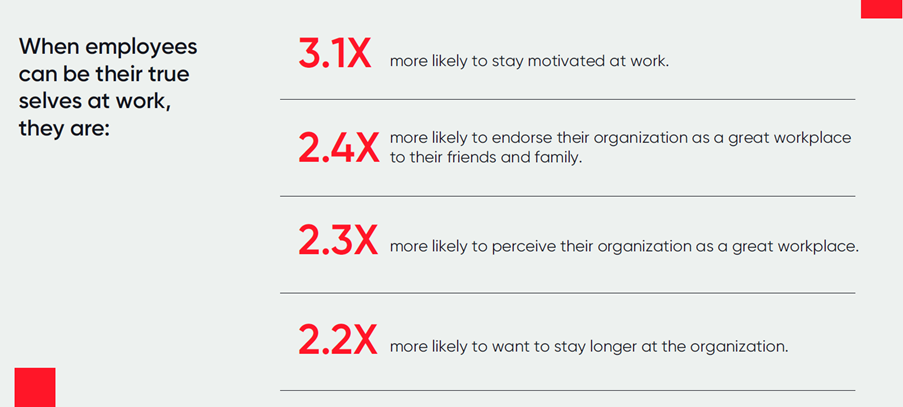
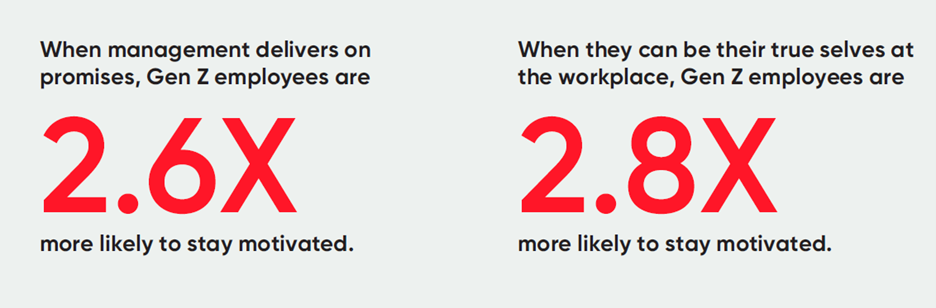
Moreover, employees today are more proactive in seeking workplaces that offer an environment where they can express their authentic selves, develop their skills, and feel genuinely supported. This authenticity is key, as employees who feel safe and empowered to bring their whole selves to work are more likely to be motivated and engaged. Our recent report says that employees who feel they can be their true selves at work are: 

  • 3.1 times more likely to remain motivated 
  • 2.4 times more likely to endorse their organization as a great workplace  
  • 2.3 times more likely to perceive their organization positively 
  • 2.2 times more likely to remain at the company for a longer duration. 

This data also underscores a crucial point: organizations that embrace authenticity and prioritize employee engagement are more likely to create a thriving, motivated workforce. But what does it mean for an organization to truly embrace authenticity?

Authenticity in the Workplace: A Critical Driver of Engagement

Authenticity in the workplace refers to creating an environment where employees feel comfortable being their true selves without the need to conform to rigid expectations or hide their identities. Authenticity is often associated with being able to express personal ideas and opinions, even if they differ from mainstream or conventional perspectives. For leaders, fostering authenticity means establishing a culture of openness, transparency, and psychological safety.

One of the most significant roles that leadership plays is modeling this authenticity. Leaders who are open about their values, challenges, and successes set a powerful example for their teams. They send the message that it is okay to be vulnerable, to take risks, and to bring one’s whole self to work. This, in turn, encourages employees to embrace their own authenticity and to feel confident in contributing new ideas, innovating, and taking ownership of their roles.

In an authentic workplace, employees are more likely to thrive because they feel supported not just in their professional duties but also in their personal growth. When employees believe that their organization genuinely cares about their well-being and overall development, they are more likely to invest in their work, leading to much higher levels of engagement, loyalty, and productivity. This is where the impact of leadership becomes most evident. By fostering a culture that values authenticity, leaders can drive meaningful change in how employees interact with their work, their colleagues, and the organization as a whole.

The Power of a Purpose-Driven Workplace

Purpose is another critical element of employee engagement. Employees want to know that their work matters—not just to the organization but also to society at large. Purpose-driven work is a powerful motivator, as it allows employees to feel the impact of their efforts in a larger context. When employees of an organization understand and align with the purpose of their organization, they are more likely to feel a sense of pride and fulfillment in their roles.

Organizations that successfully integrate purpose into their culture create a strong foundation for employee engagement. Employees nowadays are not just working for a paycheck; they are contributing to something bigger than themselves. This sense of purpose drives higher levels of commitment and motivation, as employees feel that they are part of a meaningful mission. It also fosters a sense of belonging, as employees recognize that they are working alongside others who share similar values and goals.

Learning from Marriott Hotels India Private Limited: A Best Practice Example

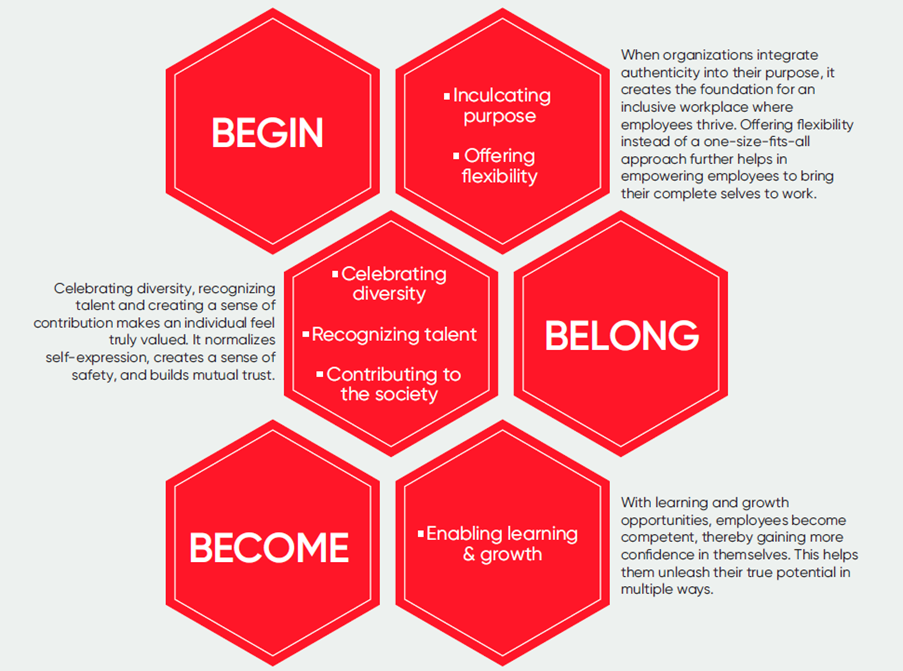
Marriott Hotels India Private Limited is an exemplary case of an organization that has successfully implemented strategies to foster employee engagement through authenticity, purpose, and belonging. Marriott’s approach to employee engagement is encapsulated in its global “Be” initiative, which was launched in 2023 to attract and retain talent in the hospitality industry. The “Be” initiative focuses on three key stages of an employee’s journey: Begin, Belong, and Become. Marriott’s strong dedication to developing a culture of respect, opportunity, and growth in its workforce is reflected in this all-encompassing strategy.

Begin: Inculcating Purpose and Offering Flexibility

The first stage, Begin, emphasizes the importance of providing employees with a strong sense of purpose from the outset of their journey. Marriott recognizes that when employees find meaning in their work, they are more likely to engage with it fully. To this end, Marriott has woven authenticity into the core of its purpose, ensuring that employees connect deeply to their roles and to the organization’s broader mission.

Flexibility is another cornerstone of the Begin phase. Marriott understands that a one-size-fits-all approach does not work in today’s diverse and dynamic workforce. Employees have different needs, lifestyles, and preferences, and Marriott’s flexible policies allow individuals to tailor their work experiences to better suit their personal circumstances. This kind of flexibility not only enhances employee satisfaction but also empowers employees to bring their full selves to work, fostering greater engagement and productivity.

Belong: Celebrating Diversity, Recognizing Talent, and Contributing to Society

The second stage, Belong, focuses on creating a sense of belonging among employees. Marriott is dedicated to recognizing and appreciating the variety of experiences, skills, and backgrounds that each employee offers. The company believes that diversity is a strength, and it has implemented initiatives to ensure that all employees feel valued for who they are, regardless of their backgrounds or identities.

Recognizing talent is another critical component of the Belong stage. Marriott takes care to identify and celebrate the unique contributions of each employee, ensuring that their efforts are acknowledged and rewarded. This recognition reinforces the company’s commitment to supporting employee development and helps build a culture of mutual respect and appreciation.

Additionally, Marriott encourages its employees to engage in meaningful contributions to society. The company offers opportunities for employees to participate in community service and charitable initiatives, fostering a sense of purpose that extends beyond the workplace. This focus on contributing to the greater good helps employees feel connected to something larger than themselves, further enhancing their sense of belonging and engagement.

Become: Enabling Learning and Growth

The final stage, Become, is centered on enabling and is focused on giving employees the opportunity to advance both personally and professionally. Marriott is aware that sustaining a driven and enthusiastic team requires investing in employee development. The organization offers a wide range of learning and development opportunities, from skill-building workshops to leadership training programs. These initiatives empower employees to continually expand their knowledge, build new skills, and advance their careers within the organization.

Marriott’s commitment to employee growth is not just about career advancement—it is also about helping employees become more confident, capable, and self-assured individuals. By giving people the chance to pursue lifelong learning and personal growth, Marriott ensures that its employees are equipped to succeed not only in their current roles but also in future opportunities. This focus on growth and development helps Marriott retain top talent and maintain its competitive edge in the hospitality industry.

The Broader Impact of Employee Engagement

Marriott’s holistic approach to employee engagement demonstrates the far-reaching impact that an engaged workforce can have on an organization. When employees feel valued, supported, and empowered, they are more likely to go above and beyond in their roles, leading to improved business outcomes. Engaged employees are more productive, provide better customer service, and contribute towards creating a positive workplace culture. Furthermore, since employees are increasingly drawn to businesses that show a commitment to the growth and well-being of their workforce, organizations that place a high priority on employee engagement will be in a far better position to bring in and hold onto the top talent.

Employee engagement also has a ripple effect that extends beyond the workplace. Employees who are engaged are more likely to be proud of their work, give back to the communities in which they live and work, and represent their companies well. This creates a virtuous cycle in which the organization’s reputation is enhanced, further attracting top talent and strengthening the company’s position in the market.

A Roadmap for Success

The path to empowering employee engagement is a journey that requires continuous effort and commitment. As Marriott Hotels India Private Limited has shown, a holistic approach that focuses on the stages of Begin, Belong, and Become can lead to a thriving, engaged workforce. By fostering a culture of authenticity, purpose, and growth, Marriott has created an environment where employees are empowered to be their true selves, contribute meaningfully, and grow both personally and professionally.

Get Certified to Showcase Your Commitment

Creating workplaces where employees feel safe, supported, and valued is critical for firms wanting to improve the culture of the workplace. Employees are more likely to put effort into their work and contribute to the success of the company as a whole when they are given the freedom to be genuine and engaged. Achieving Great Place To Work Certification is an excellent way to demonstrate your organization’s commitment to overall employee engagement. By leveraging the data and insights gained from this survey, companies can foster positive workplace cultures, retain top talent, and drive sustainable growth. As Marriott’s case demonstrates, investing in employee engagement is not just a strategy for improving morale—it is a critical driver of long-term business success.

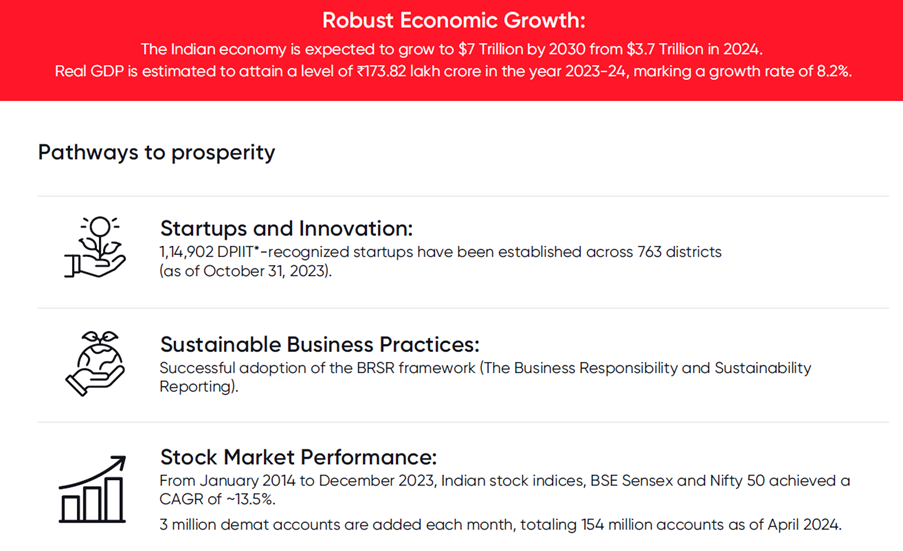
In today’s fast-paced corporate landscape, understanding the pulse of employee sentiment is more critical than ever. With the Indian economy expected to grow to $7 trillion by 2030 from $3.7 trillion in 2024, organizations face unprecedented opportunities and challenges. As businesses expand, managing employee engagement becomes a top priority to foster strong workplace cultures, retain talent, and drive sustainable growth. This is where launching an Employee Engagement Survey becomes indispensable, offering organizations the opportunity to deeply understand their workforce and align their strategies to meet emerging needs.

Economic Growth and Its Impact on Organizations

According to the government of India, the Indian economy is set on an upward trajectory, projected to achieve a real GDP growth rate of 8.2% in 2023-24, translating into 173.82 lakh crore in value. Such rapid growth brings an increase in employment opportunities, competition for talent, and challenges to organizational efficiency. For instance, as the Indian stock market indices, BSE Sensex and Nifty 50, continue their robust performance with a CAGR of approximately 13.5% from January 2014 to December 2023, businesses are seeing heightened investor expectations. Companies are under pressure to deliver results while ensuring their workforce remains engaged and motivated to contribute at their highest levels.

The statistics around Indian Economy and Stock Market for 2023

However, this economic boom is accompanied by a complex set of challenges: How can organizations manage the evolving expectations of a dynamic workforce? How can they ensure their employees remain engaged and productive amidst rapid growth and changing work environments? And most importantly, how can they stay ahead in a competitive marketplace? For organizations to thrive in this evolving environment, measuring and acting upon employee sentiment becomes a vital component of success.

The Role of Employee Engagement Surveys in Navigating Complexity

An effective Employee Engagement Survey serves as a compass, providing organizations with insights into employee sentiment, behaviors, and attitudes. It allows businesses to track the collective emotional pulse of their workforce, which directly impacts productivity, innovation, and retention. Surveys help to uncover the underlying challenges that may be affecting employee engagement, such as communication gaps, dissatisfaction with leadership, or unaddressed concerns about work-life balance. In a constantly shifting economic landscape, keeping this dialogue open is essential to fostering a culture where employees feel valued and motivated to contribute.

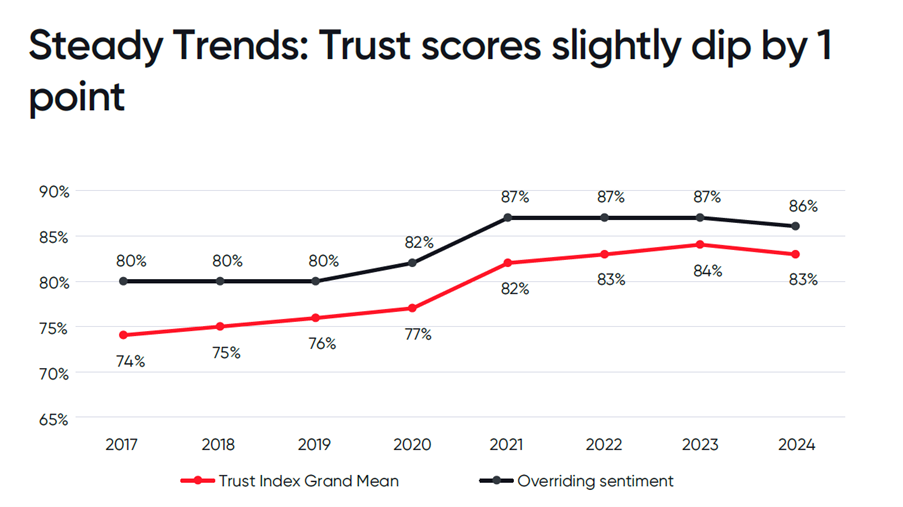
One of the most valuable insights from our 2024 survey is the analysis of employee sentiment surrounding the statement, “Taking everything into account, I would say this is a great place to work.” The data reveals that the overriding sentiment slightly dipped from 87% in 2023 to 86% in 2024, indicating a steady but slightly tempered satisfaction level among employees. While this 1% dip might seem minor, it underscores the importance of continuous monitoring and refinement of workplace practices to maintain high levels of employee satisfaction, especially in the context of rapid growth and competition.

The Trust Index Grand Mean and Overriding Sentiment for last 8 years.

Organizations that neglect this critical feedback may find themselves facing unforeseen challenges, such as increased turnover or disengagement among their workforces. On the other hand, those who actively measure and act upon employee sentiment are better positioned to create workplaces that are not only resilient but also thrive in dynamic environments.

Exploring the Five Dimensions of Workplace Culture

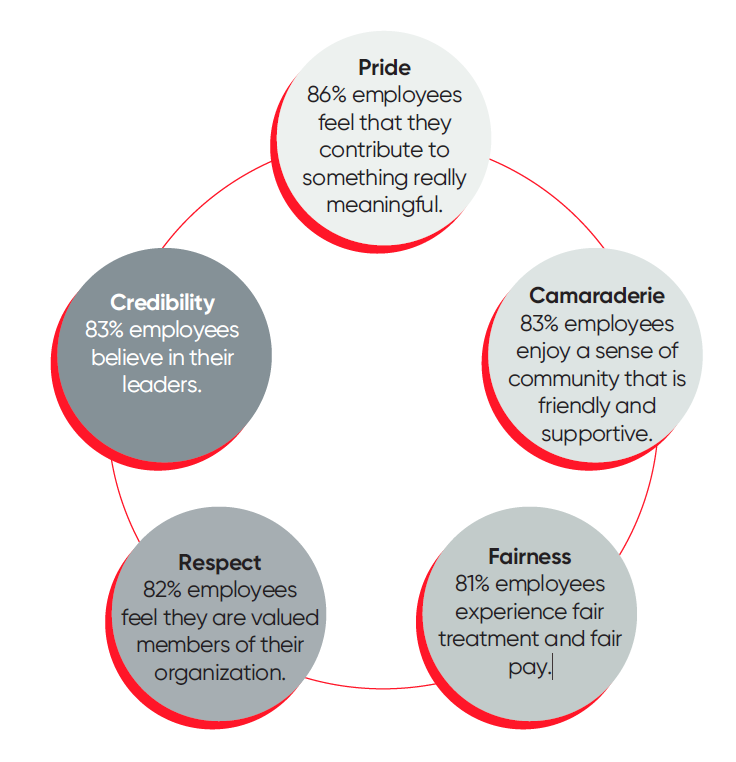
One of the cornerstones of any successful Employee Engagement Survey is its ability to assess workplace culture across multiple dimensions. The Trust Index™ Survey, for instance, focuses on five key dimensions: Pride, Camaraderie, Credibility, Respect, and Fairness. These dimensions are essential in fostering a culture of trust, belonging, and engagement that leads to stronger organizational outcomes.

Employee sentiment across the 5 pillar of the Trust Index model for both Large and SME.

1. Pride – A strong sense of pride in one’s work plays a crucial role in fostering employee engagement. This dimension reflects how positively employees regard their roles, their teams, and the company’s mission. For many, the connection to meaningful work is a significant driver of satisfaction. In fact, our latest study shows that 86% of employees feel that their contributions are truly meaningful. When employees believe their work matters, they tend to be more engaged, loyal, and motivated to perform at their best. Pride, in turn, positively influences job performance, encouraging greater productivity and success across the board.

2. Camaraderie – Building a sense of community is essential to fostering employee well-being. The Camaraderie dimension highlights the importance of connection, mutual support, and a friendly atmosphere within the workplace. Our study reveals that 83% of employees report experiencing this sense of community, which plays a vital role in enhancing job satisfaction. When employees feel a strong bond with their colleagues, their work environment becomes more enjoyable and fulfilling. Encouraging collaboration and social interaction helps strengthen these relationships, ultimately contributing to a more positive and cohesive workplace culture.

3. Credibility – Trust in leadership plays a crucial role in driving employee engagement. The Credibility dimension gauges how employees perceive their leaders’ honesty, competence, and consistency. Across both large and SME organizations, 83% of employees express confidence in their leadership. When leaders demonstrate credibility, they create an environment where employees feel assured in the company’s direction, which in turn boosts engagement and commitment. On the other hand, when credibility is lacking, it can lead to feelings of distrust, disengagement, and even higher turnover.

4. Respect – Respect is a cornerstone of any healthy workplace, reflecting how valued employees feel by management. In our study, 82% of employees believe they are appreciated members of their organization, highlighting the importance of this dimension. When employees are treated with dignity, and their contributions are recognized, it fosters a culture of inclusivity that enhances engagement. Moreover, respect is essential for creating psychological safety, where employees feel secure in expressing their ideas and taking risks without fear of negative repercussions. This supportive environment not only strengthens relationships but also drives innovation and growth.

5. Fairness – Fair treatment and equitable compensation are vital to maintaining employee satisfaction. According to our study, 81% of employees feel they receive fair treatment and pay, underscoring the importance of fairness in the workplace. This dimension evaluates how employees perceive management’s practices regarding compensation, promotions, and growth opportunities. When fairness is upheld in these areas, it builds trust in the organization, reinforcing employees’ commitment and contributing to long-term success.

Learning from the Best: 2024’s Top People Practices

Organizations that perform exceptionally well in their Employee Engagement Surveys often implement innovative people practices that prioritize employee well-being, development, and engagement. These practices not only foster a positive work environment but also demonstrate the organization’s commitment to supporting its employees. Here are some of the standout examples from the 2024 study:

Inculcating Trust at PepsiCo India

PepsiCo India has taken a creative approach to fostering trust by implementing interactive activities centered around “The PepsiCo Way” principles. For example, they have designed a Customer Centricity Dart Game that encourages employees to align their behaviors with consumer-centric values. This approach not only makes learning more engaging but also reinforces the company’s core values in a memorable way. By fostering trust through interactive and gamified activities, PepsiCo ensures that employees remain connected to the company’s mission and feel supported in their roles.

Opportunities for Growth at Allianz Group

Allianz Group’s Athlete Buddy Program stands out as a best-in-class initiative for employee development. This program pairs employees with Olympic or Paralympic athletes for one-on-one mentorship, focusing on personal growth, mental resilience, and motivation. The program provides participants with valuable insights into both personal and professional development while also fostering a growth mindset. By offering such opportunities, Allianz ensures that employees feel empowered to take charge of their development, which enhances engagement and loyalty.

Boosting Innovation at Iris Software

Iris Software’s “Community of Practitioners” initiative is a powerful example of how to foster a culture of continuous learning and innovation. The initiative provides employees with a platform to share technical knowledge and collaborate on emerging topics such as cloud computing, AI, and software development. This knowledge-sharing culture not only drives innovation but also enhances employee engagement by providing them with the tools and resources needed to stay at the forefront of industry trends.

Measuring Employee Sentiment: A Strategic Imperative

Conducting regular Employee Engagement Surveys is not just a matter of checking the pulse of employee sentiment; it’s a strategic imperative that enables organizations to align their people strategies with their broader business objectives. Surveys like these provide leaders with the data and insights needed to make informed decisions about workplace practices, culture, and policies. By acting on the feedback collected, organizations can address potential issues before they escalate, create more inclusive environments, and foster a stronger sense of belonging among employees.

Moreover, these surveys help companies track the effectiveness of their people practices over time, enabling continuous improvement. As employee expectations evolve—driven by economic factors, societal changes, and shifts in workforce demographics—organizations must remain agile and responsive to the needs of their workforce. This responsiveness is what ultimately drives long-term success in today’s competitive marketplace.

Get Certified to Showcase Your Commitment

As India’s economy continues to expand, understanding and responding to employee sentiment will be a key differentiator for successful organizations. Achieving Great Place To Work Certification is an excellent way to demonstrate your organization’s commitment to employees’ overall experience. This Certification not only enhances your employer branding but also helps attract and retain top talent.

By leveraging the data and insights gained from these surveys, companies can foster positive workplace cultures, retain top talent, and drive sustainable growth. As the examples from PepsiCo, Allianz, and Iris Software illustrate, innovative people practices can make a significant difference in employee engagement and satisfaction, creating a ripple effect that benefits both the individual and the organization.

In conclusion, staying attuned to the pulse of the workforce through regular Employee Engagement Surveys will help organizations build resilient, thriving workplaces that are poised for long-term success in an increasingly dynamic business environment.

According to Great Place To WorkⓇ ’s research, to cultivate a culture of Innovation By All, it is crucial for organizations to align their innovation practices with employee experiences. This alignment is essential to bridge the gap between the innovation approach and the desired outcomes.

MOURI Tech (P) Limited’s culture reflects this philosophy in many ways, which has enabled it to be one of the Top 50 Companies (in the Large category) in India’s Best Workplaces Building a Culture of Innovation by All 2023 list.

As a Global Enterprise Solutions company operating under the motto ‘Employee First. Customer Foremost’, MOURI Tech’s journey toward innovation has been both challenging and rewarding, marked by bold moves and strategic decisions. By Investing heavily in R&D, and embracing a “fail-fast” mentality, MOURI Tech provided its employees with the necessary freedom and resources to pursue ambitious projects.

MOURI Tech has made significant strides in innovation over the years. One of the key milestones in its innovation journey was the launch of its Artificial Intelligence (AI)-powered platform in 2018 to help businesses automate and streamline their operations using AI and ML algorithms. This platform has been a game-changer for many of MOURI Tech’s customers, enabling them to improve operational and business efficiencies, achieve significant cost savings, and gain a competitive edge in their respective industries.

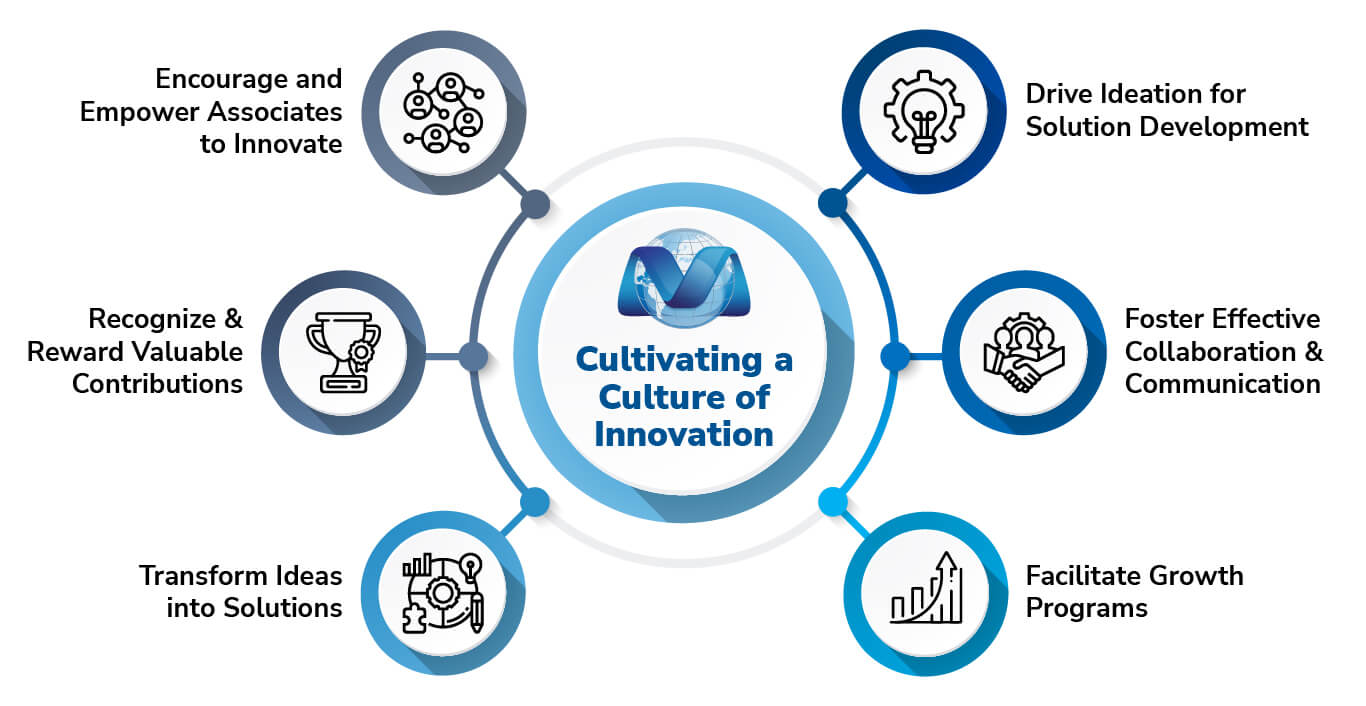
A major factor in MOURI Tech’s success in innovation has been its culture of experimentation and risk-taking approach. The company encourages its associates (as employees are referred to, here) to think outside the box and explore new ideas and concepts. Leaders here believe that the best ideas come from people who are involved directly with customers, suppliers, and products on a daily basis. MOURI Tech’s Ideation Platform has paved the way for the development of several innovative products & solutions for the clients, thereby helping MOURI Tech to maintain a consistent level of competitiveness.

mouri tech innovation blog-infographic

Here are a few examples of the impact made:

  • As reviewing multiple contracts was becoming a challenge owing to the rapid organizational growth, the Recruitment and AI teams collaborated and came up with an AI-enabled process that could wrap up reviews in 80% less time and with 40% more accuracy.
  • The Recruitment and AI teams also came together to develop an AI-based Resume Scoring Solution to decrease profile screening time by 90%.
  • An idea shared by an associate, about developing a solution that helps read through emails and create a Customer Sales Order form, thus bypassing the need to read through a huge number of emails from a vendor for orders. This has been well received in the market as an efficient, employable product.

As the technology landscape continues to evolve, MOURI Tech is well-positioned to lead the way in innovation and help organizations across the globe achieve their digital transformation goals and through it, sustained growth.

Learn more about MOURI Tech (P) Ltd, a Great Place to Work.

Great workplaces aren’t just good for employees; they’re essential for business growth. When leaders prioritize creating a positive employee experience, it has a ripple effect throughout the organization. Great Place To Work® Certification™ isn’t just a badge of honor; it signifies a commitment to fostering a thriving and agile culture that fuels innovation and performance and attracts top talent.

India’s Most Trusted Leaders understand this. They cultivate environments where employees feel valued, inspired, and empowered to develop their skills. These leaders build trust and camaraderie through open communication, ongoing development opportunities, and genuine appreciation. This not only fuels employee well-being but also sets the stage for success in an AI-driven future where agility and purpose are paramount.

The Competitive Advantage of a Great Workplace Culture

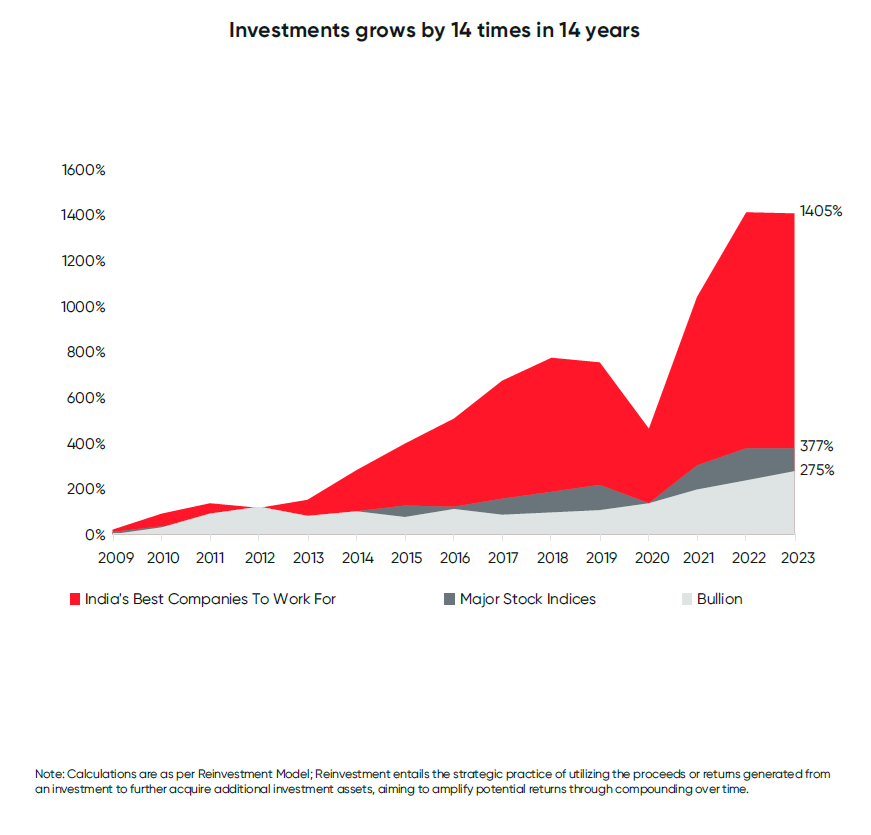
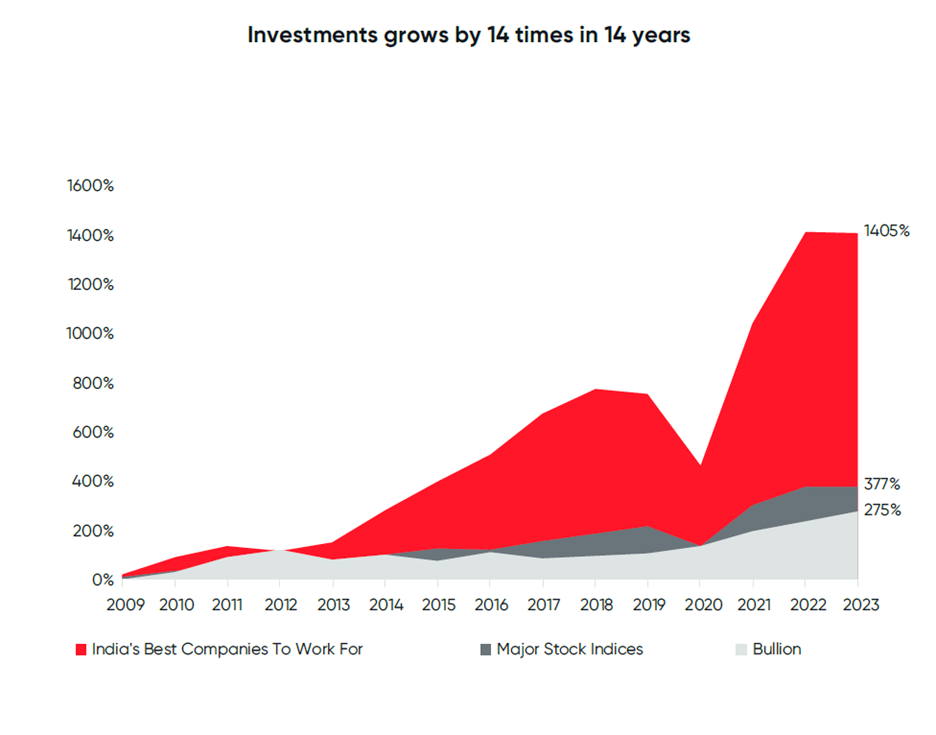
Research on India's Best Companies To Work For reveals ~14x return on investment, exceeding bullion and stock indices by 3.73 times.

In today’s competitive job market, companies with strong workplace cultures have a significant advantage. They attract and retain top talent, fostering a sense of loyalty and dedication that translates to higher productivity and innovation. Research by Great Place To Work and RSM India shows a clear correlation between a positive employee experience and strong financial performance. Companies recognized as Great Places To Work typically outperform the stock market, demonstrating the tangible benefits of investing in employee well-being and a positive workplace culture.

The Power of High-Trust Culture

Great Place To Work’s research reveals nine key leadership behaviors that create a high-trust culture. Interestingly, these behaviors aren’t limited to those at the top. While leaders play a crucial role in shaping the employee experience, everyday interactions and collaboration throughout the organization are equally important. Building a truly great workplace requires a collective effort.

The 9 High-Trust Behaviors for High-Performing Culture

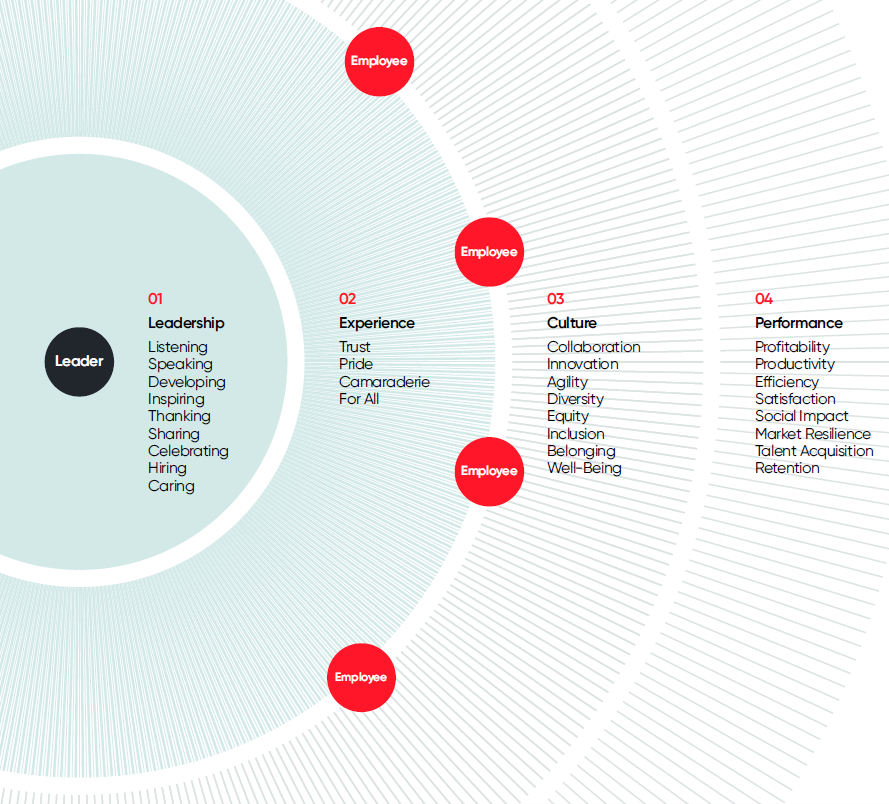
Hight Trust Behaviours of Leaders that impact the overall employee experience in an organization
  1. Active Listening: Great leaders solicit feedback, actively listen to their team’s concerns and ideas, and value their input by incorporating it into decision-making. This demonstrates respect and fosters a sense of psychological safety, where employees feel comfortable sharing their perspectives without fear of reprisal.
  2. Open Communication: Transparency and clear communication are key. Leaders should keep everyone informed about important developments and encourage a two-way flow of information. Regular town halls, Q&A sessions, and internal communication platforms can facilitate open communication and build trust.
  3. Inspiring Vision: Leaders who share the company’s vision and mission with passion are contagious. They lead by example, demonstrating enthusiasm for the work and its impact. Inspiring leaders connect individual contributions to the bigger picture, motivating employees through stories of success and the positive impact of their work.
  4. Genuine Care: Showing genuine concern for your team’s well-being builds trust and loyalty. Offer support during challenging times, promote work-life balance, and be flexible when necessary. This demonstrates that the company values its employees as people, not just cogs in a machine.
  5. The Power of Appreciation: Regularly acknowledge your team’s hard work and contributions. Personalized thank-you notes, public recognition programs, and small rewards can significantly boost morale. Feeling valued and appreciated is a key driver of employee engagement and satisfaction.
  6. Investing in Growth: Leaders who prioritize professional development opportunities empower their teams. Provide training, mentorship, and challenging projects to foster continuous learning and support career advancement. Investing in employee development shows a commitment to their long-term success within the company.
  7. Hiring for Culture Fit: Hiring individuals whose values align with the organization’s culture is crucial. Conduct thorough interviews to assess both skills and cultural fit. When employees share the company’s values, it fosters a sense of belonging and collaboration.
  8. Celebrating Success – Big and Small: Take the time to celebrate milestones and achievements, both big and small. Organize team-building activities, social events, and recognition ceremonies to build camaraderie and a sense of accomplishment. Celebrating successes reinforces positive behaviors and motivates teams to achieve even greater things.
  9. Promoting Fairness: Ensure equitable distribution of profits, compensation, bonuses, and resources. This fosters a sense of inclusion and belonging. When employees feel like they are treated fairly, it builds trust and loyalty towards the organization.

Leading by Example: Building Trust Through Action

Rahul Agrawal, CEO of Barbeque-Nation Hospitality Limited, exemplifies trust-based leadership. His people-centric approach, built on transparency and strong interpersonal relationships, fosters a stark contrast to the transactional nature of finance. This philosophy translates to stability and performance, especially during times of market uncertainty or corporate change. As Mr. Agrawal says, “Leadership is about creating an environment where trust and transparency guide our actions, ensuring our core values and relationships drive our collective success.”

Balakrishna Navuluri, COO of YASH Technologies Private Limited, embodies leadership defined by empathy and empowerment. He actively engages with employees at all levels, ensuring their voices are heard and concerns addressed. This commitment to open communication and personal connection forms the foundation of his leadership style. Mr. Navuluri emphasizes, “To drive innovation, especially in the evolving world of technology, the top three priorities are simple: learn, learn, and learn. Mastering the application of technology is not just a goal; it’s our key to unlocking potential, to solving problems we haven’t yet encountered, and creating opportunities that will shape our future.”

Building a Great Place To Work: A Journey, Not a Destination

Creating a great workplace is an ongoing process, but the benefits are undeniable. By implementing these high-trust behaviors, leaders can create a work environment where employees feel valued, empowered, and inspired to do their best work. This translates to a more engaged workforce, higher productivity, and, ultimately, a thriving and successful organization.

The Road to Greatness: Getting Started

Here are some initial steps your organization can take on the journey to becoming a Great Place To Work:

  1. Conduct an Employee Survey: Understanding your employees’ perspectives is crucial. Great Place To Work offers a validated employee experience survey tool that can provide valuable insights into employee satisfaction and areas for improvement.
  2. Define Your Core Values: Clearly defined core values serve as a compass for your organization, guiding decision-making and behavior. Involve employees in the process of defining your core values to foster ownership and alignment.
  3. Develop a Recognition and Rewards Program: A well-designed program shows appreciation for employee contributions and reinforces desired behaviors. The program should be flexible and cater to diverse preferences.
  4. Promote Work-Life Balance: Offer flexible work arrangements, encourage breaks, and create a culture that prioritizes employee well-being outside of work.
  5. Empower Employees: Give employees ownership of their work and provide opportunities for them to make decisions. This fosters a sense of responsibility and accountability, leading to higher engagement.

Conclusion: Building a Great Place To Work is an Investment in Your Future

Investing in creating a Great Place To Work is an investment in the future of your organization. By fostering a positive employee experience, you can unlock the full potential of your workforce, achieve greater innovation, and secure a competitive advantage in the years to come. Great Place To Work Certification provides a valuable framework and resources to guide you on this journey.

Embark on your journey to becoming a Great Place To Work today!

The landscape of leadership is undergoing a seismic shift. No longer is it sufficient to merely manage a team; effective leaders must now inspire, develop, and connect with their people while navigating complex challenges and opportunities. At the heart of successful leadership is the creation of a high-trust culture that makes the organization a truly great workplace.

The New Era of Leadership

Today’s leaders are confronted with a myriad of trends that are reshaping the business world. Four key areas demand their attention: embracing purpose, prioritizing sustainability, meeting the expectations of the new-age workforce, and leading in an AI-driven future. These trends are interconnected, and a holistic approach is essential for long-term success.

Purpose: The North Star of Leadership

A strong sense of purpose is no longer a nice-to-have; it’s a must-have for organizations and leaders alike. Employees are increasingly seeking work that aligns with their values and makes a positive impact on the world. By making purpose a priority, leaders can foster a more engaged, motivated, and resilient workforce.

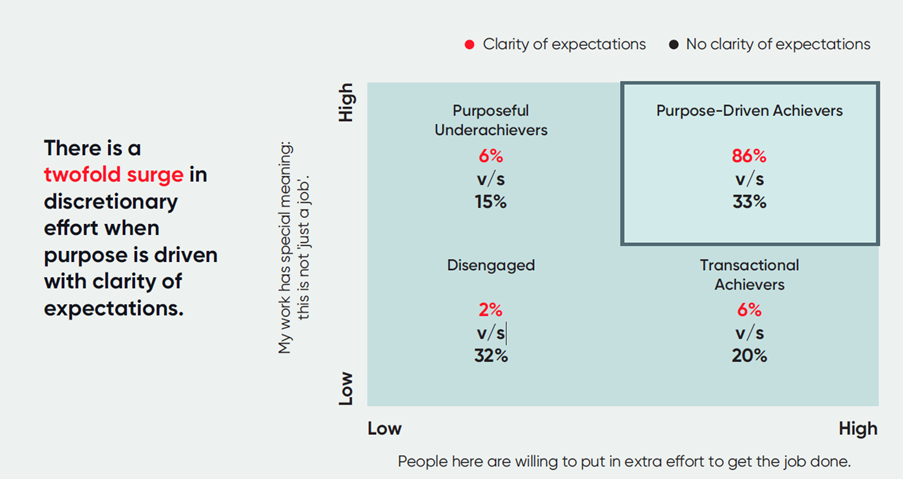
Corelation between purpose vs clarity of expectations

To embed purpose into the organizational fabric, leaders must:

  • Embrace empathy and foster inclusivity: Understanding and addressing the needs of team members is crucial for building a strong sense of purpose. Fostering a collaborative and innovative atmosphere where all individuals are appreciated and feel appreciated is crucial. This involves active listening, open communication, and a commitment to equity and diversity.
  • Communicate vision and values clearly: A shared understanding of the organization’s vision and values is fundamental to aligning everyone towards a common goal. By clearly communicating the company’s purpose and how it relates to broader societal issues, leaders can inspire employees to contribute meaningfully. Visual storytelling, interactive workshops, and regular communication channels can be employed to reinforce the organization’s purpose.
  • Commit to sustainability and innovation: Integrating sustainability into business operations and embracing new technologies demonstrates a commitment to a better future. Employees are more likely to feel a sense of purpose when they are working towards a sustainable and innovative organization. This involves setting ambitious sustainability goals, investing in green technologies, and fostering a culture of innovation.

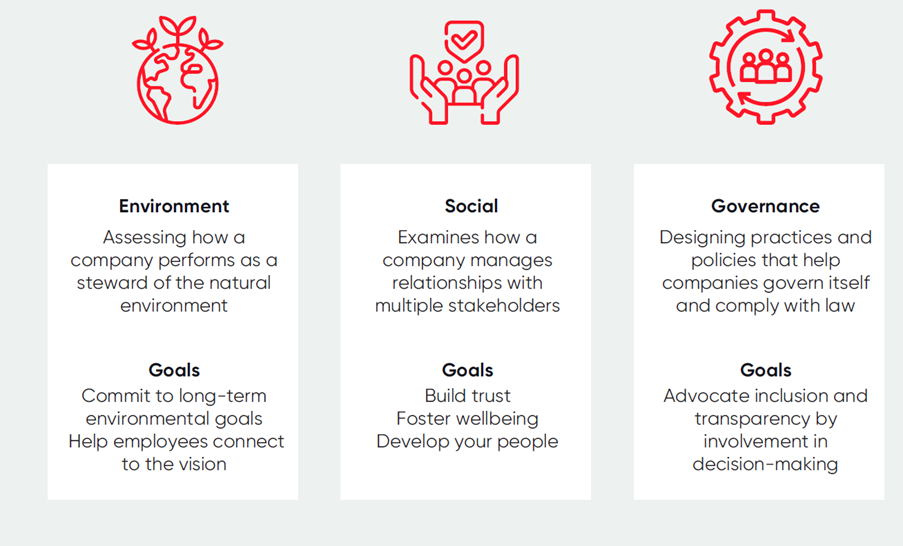
Deloitte India’s ESG Preparedness 2023 survey underscores the growing importance of sustainability. While the majority of Indian businesses recognize the impact of sustainability regulations and the benefits of ESG reporting, many are still unprepared to meet these requirements. This presents a significant opportunity for leaders to differentiate their organizations and attract talent by demonstrating a strong commitment to sustainability.

Meeting the Expectations of Gen Z

The entry of Gen Z into the workforce is fundamentally changing the dynamics of leadership. This generation brings fresh perspectives, bold expectations, and a strong desire for purpose and impact. In order to draw in and keep top talent, leaders need to modify their strategies to fit the particular requirements and goals of Generation Z.

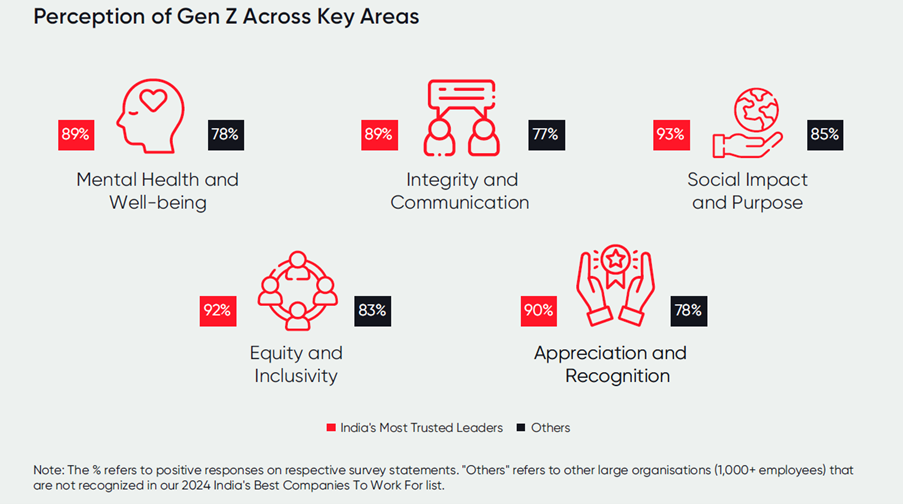
Perception of Gen Z Across Key Areas

Gen Z employees prioritize:

  • Mental health and well-being: Managers need to prioritize employee mental health by fostering a welcoming and inclusive work environment. This includes offering mental health resources, flexible work arrangements, and a culture of open dialogue about mental health challenges.
  • Integrity and communication: Trust and transparency are essential for building strong relationships with Gen Z employees. Leaders must be authentic, honest, and transparent in their communication, and they should actively seek feedback from employees.
  • Social impact and purpose: The desire to have a positive impact on the world is what motivates Generation Z. With the use of volunteer programs, CSR initiatives, and mission-driven projects, leaders can give employees chances to support social concerns.
  • Appreciation and recognition: Gen Z employees value recognition and feedback. Leaders should celebrate successes publicly, provide regular feedback, and offer opportunities for growth and development.
  • Equity and inclusivity: Creating a diverse and inclusive workplace is crucial for attracting and retaining Gen Z talent. Leaders must actively promote diversity and inclusion, challenge biases, and create a culture where everyone feels valued and respected.

By meeting the expectations of Gen Z, leaders can create a high-performance culture and build a strong talent pipeline for the future. Research shows that organizations with India’s Most Trusted Leaders enhance the Gen Z experience by 8-12% across key areas, demonstrating the positive impact of leadership on employee engagement and satisfaction.

Leading in the AI Era

The business landscape is fast changing due to artificial intelligence, and executives need to adjust to this new reality. AI can improve decision-making and automate repetitive jobs, but it’s important to strike a balance between technology and human judgment and empathy.

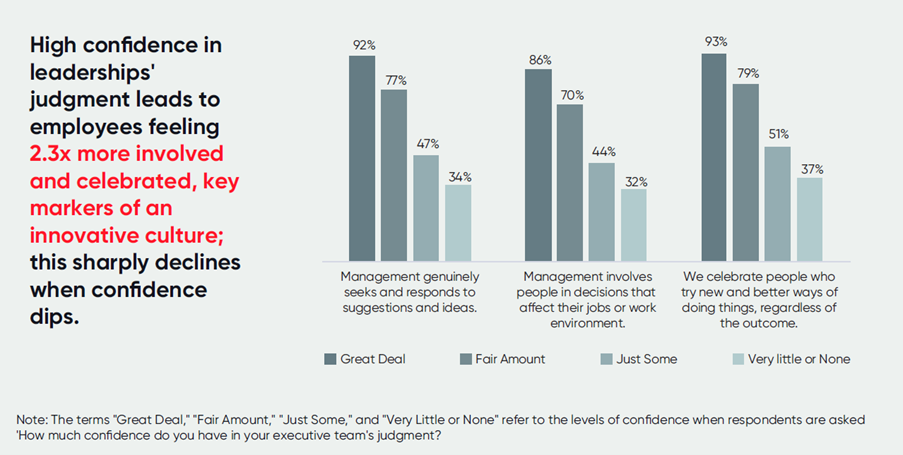
Corelation between high confidence in leadership's judgement and employees feeling involved in innovation culture.

The Indispensable Role of Trust in Leadership in AI-Driven Future

The 2024 Edelman Trust Barometer underscores the pivotal role of trust in AI implementation. While 38% of people are open to AI when managed effectively, a significant 43% are resistant to it if handled poorly. This highlights the need for transparency, accountability, and ethical considerations in AI development and deployment.

Building trust and confidence in leadership is paramount for successful AI adoption. When employees have high confidence in their leaders’ judgment, they are more likely to feel valued, involved in decision-making, and committed to innovation. Conversely, a decline in trust can lead to a significant drop in employee engagement and innovation.

3 Effective Ways to Lead an AI-Powered World

To successfully navigate the AI-driven landscape, leaders should focus on these key strategies:

  1. Invest in your People: Upskilling the workforce in AI and digital literacy is paramount. Leaders can prepare their employees to succeed in the AI era by promoting a culture of ongoing innovation and learning. Providing employees with access to AI tools, mentorship opportunities, and training programs can enable them to fully utilize AI’s potential.
  2. Communicate Transparently: To foster trust and allay worries about job stability, open and honest communication is crucial. Leaders may foster a sense of shared purpose and ownership among staff members by educating them about AI efforts, their part in the process, and the possible advantages. Addressing concerns proactively and providing opportunities for feedback can foster a supportive and collaborative environment.
  3. Leverage AI Strategically: Identifying key areas where AI can deliver the most significant impact is crucial. Focusing on customer experience, employee engagement, and supply chain optimization can yield substantial benefits. Starting with targeted AI projects can help build momentum, demonstrate value, and create a foundation for broader AI integration.

Research indicates that employees who have high confidence in their leadership team’s judgment are more likely to feel valued, involved, and celebrated. This highlights the importance of strong leadership in fostering an innovative culture.

The Interconnectedness of Leadership

The trends discussed above are interconnected and mutually reinforcing. A leader who prioritizes purpose, embraces sustainability, meets the expectations of Gen Z, and effectively leverages AI is more likely to create a high-trust culture and drive organizational success.

For example, a leader who prioritizes purpose and sustainability can attract and retain Gen Z talent who are passionate about making a positive impact on the world. By leveraging AI to analyze sustainability data and identify opportunities for improvement, leaders can demonstrate their commitment to sustainability and innovation.

Ultimately, the key to successful leadership is the ability to connect, develop, and inspire people while navigating the complexities of the modern world. Through the adoption of these trends and the acquisition of required competencies, executives can adeptly position their establishments for sustained prosperity.

The corporate world is undergoing a whirlwind of change. New technologies disrupt industries overnight, workforces become increasingly diverse, and the very definition of “work” itself is constantly evolving. In this dynamic landscape, one crucial element remains constant: the need for Great Leadership.

True leadership is beyond just implying authority; it’s about empowering and inspiring those around you. Great leaders build trust, foster a positive work culture, and act as catalysts that propel teams toward collective success. They understand that a team that trusts its leader and colleagues is more likely to be engaged, innovative, and willing to go the extra mile.

Trust: The Foundation of a Thriving Workplace

At Great Place To Work®, in collaboration with the Great Manager Institute®, we conducted extensive research that revealed a universal truth: at the heart of exceptional leadership lies an unwavering foundation of trust. This trust transcends mere words; it’s a feeling of security, respect, and psychological safety within the workplace. Employees who trust their leaders feel comfortable taking risks, sharing ideas, and offering constructive criticism. This open and collaborative environment fosters innovation and problem-solving, ultimately leading to better business outcomes.

The Science Behind Trust: Why It Matters

The benefits of trust are not just anecdotal – they are backed by hard data. According to neuroscientist Paul Zak, trust is a measurable, physiological condition that significantly impacts team productivity, morale, and overall well-being. His book, The Neuroscience of Trust, shows that trust and effective leadership can boost productivity by 50%, increase revenue by 2.5 times, and enhance innovation by 30%. Trust acts as the glue that binds teams together, fuels creativity, and sets truly exceptional workplaces apart.

The Indian Perspective of Culture of Trust

In India, this reality is reflected in the experiences of employees. A staggering 91% of employees at India’s Best Workplaces™ believe their organization fosters a great work environment. This positive perception is directly linked to the leadership that prioritizes trust and employee well-being. Employees feel valued, respected, and empowered to contribute their best work.

The Pillars of Effective People Management

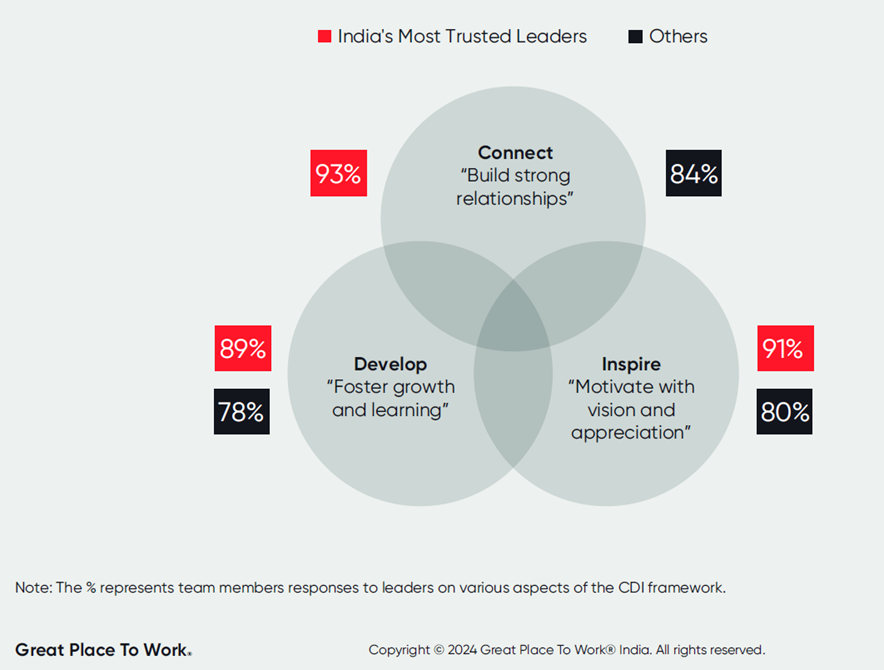
The Great Manager Institute® identifies three pillars of effective people management and leadership: Connect, Develop, and Inspire. Leaders who excel in these areas create a high-trust, high-performance culture.

The % represents team members responses to leaders on various aspects of the CDI framework.

Connect: Great leaders understand the importance of building genuine connections with their teams. This goes beyond simply knowing names; it’s about actively listening, recognizing each individual’s strengths and weaknesses, and fostering a sense of belonging. When employees feel connected to their leaders and peers, they are more likely to be engaged and invested in the team’s success.

Develop: Effective leaders see their teams as individuals with potential. They invest in their development by providing opportunities for learning and professional growth. This may include formal training programs, coaching, or mentoring relationships. Leaders who prioritize development create a culture of continuous learning, ensuring their teams have the skills and knowledge they need to succeed in an ever-changing environment.

Inspire: Great leaders are not just managers; they are also motivators. They have a clear vision for the future and the ability to communicate that vision in a way that inspires and energizes their teams. They set ambitious yet achievable goals, and they celebrate successes along the way. This inspires employees to push themselves beyond their comfort zones and achieve their full potential.

The Leadership Factor: Striking the Right Balance

Effective leadership also profoundly shapes a company’s culture. Leaders who demonstrate competence and inspire their teams cultivate a more positive workplace experience. Our research highlights the importance of striking a balance between social-cognitive functions that foster connections and task-focused networks for strategic decision-making.

The Great Manager Institute® underscores a fundamental truth: effective leadership is a triad of connection, development, and inspiration. By mastering these pillars, leaders foster team growth, strategic alignment, and a high-trust, high-performance culture – the bedrock of organizational success. Leaders who excel in all three areas play a crucial role in uniting their teams around the organization’s big picture. This is precisely what India’s Most Trusted Leaders demonstrate, excelling in all three areas – connect (+9%), develop (+11%) and inspire (+11%). Their success highlights the transformative power of fostering genuine connections, investing in employee development, and igniting a sense of purpose within their teams.

This leadership style goes beyond just management. India’s Most Trusted Leaders exemplify this approach. They empathize with their people, building trust and fostering a vibrant, enthusiastic atmosphere where team members are seen as individuals with potential. This commitment is reflected in the exceptional experiences their teams report: 93% of team members feel connected, 89% experience growth, and 91% feel inspired. These results underscore the transformative power of leadership that prioritizes genuine connection, invests in development, and ignites a sense of purpose within the team.

Leadership Effectiveness: Metrics for Retention

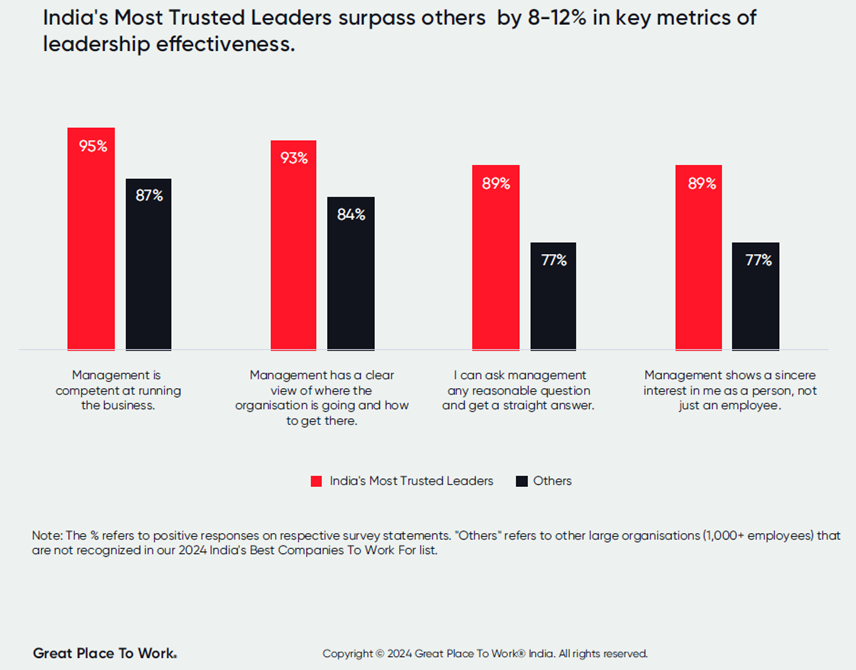
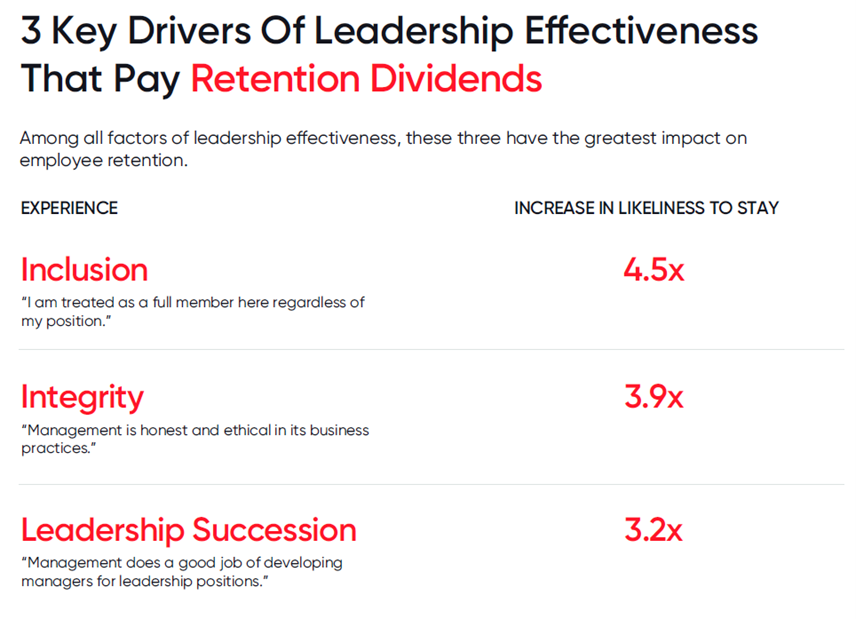
Our research also revealed that India’s Most Trusted Leaders surpass others by 8-12% in key leadership effectiveness metrics. Furthermore, three drivers of leadership effectiveness stand out for their impact on employee retention:

1. Inclusion:

The first key driver of leadership effectiveness for retention is inclusion. Leaders who prioritize inclusion create a work environment where everyone feels valued, respected, and heard, regardless of background, experience, or any other factor. This creates a sense of belonging and psychological safety, which leads to increased employee engagement and loyalty.

2. Integrity:

The second key driver is integrity. Employees trust leaders who are honest and ethical and act with integrity in all situations. When leaders walk the talk and live by their values, it builds trust and credibility. Employees are more likely to follow a leader they believe in and respect.

3. Leadership Succession Planning:

The third key driver is leadership succession planning. Effective leaders understand that they won’t be in their role forever. They proactively invest in developing future leaders within their teams. This not only ensures a smooth transition when a leadership change occurs, but it also strongly conveys to staff members that the company values their long-term development and progress.

The Ripple Effect: From Leaders to Teams

The impact of great leadership extends far beyond the individual leader. When leaders prioritize trust, connection, and development, they create a positive ripple effect throughout the organization. Employees who experience a sense of empowerment and worth are inclined to extend the same deference and thoughtfulness to their peers. This creates a collaborative and supportive work environment where everyone feels encouraged to share ideas, take risks, and learn from each other.

Building a Culture of Great Leadership

So, how can organizations cultivate a culture of great leadership? Here are a few key steps:

  • Invest in leadership development programs: Provide leaders with opportunities to hone their skills in areas such as communication, coaching, and conflict resolution.
  • Recognize and reward great leadership: Celebrate leaders who demonstrate the behaviors that contribute to a high-trust culture.
  • Promote from within: When possible, promote from within to send a message that the organization values internal talent and invests in its people’s growth.

The Future of Leadership:

In today’s dynamic business landscape, the most successful leaders will be those who are adaptable and innovative. They will need to be able to navigate change, embrace new technologies, and think creatively to solve complex problems. Great leaders will also need to be empathetic and understanding as they navigate a workforce that is increasingly diverse and multi-generational.

The Enduring Power of Great Leadership

Great leadership is not a fad; it’s a fundamental building block for success in any organization. Leaders who prioritize trust, connection, and development create a thriving work environment where employees feel valued, empowered, and inspired to do their best work. This, in turn, leads to increased productivity, innovation, and, ultimately, long-term organizational success. By investing in great leadership, organizations can empower their people and unlock their full potential, ensuring they are well-positioned to thrive in the ever-changing world of work.

According to Great Place To WorkⓇ ’s research, to cultivate a culture of Innovation By All, it is crucial for organizations to align their innovation practices with employee experiences. This alignment is essential to bridge the gap between the innovation approach and the desired outcomes.

MOURI Tech (P) Limited’s culture reflects this philosophy in many ways, which has enabled it to be one of the Top 50 Companies (in the Large category) in India’s Best Workplaces Building a Culture of Innovation by All 2023 list.

As a Global Enterprise Solutions company operating under the motto ‘Employee First. Customer Foremost’, MOURI Tech’s journey toward innovation has been both challenging and rewarding, marked by bold moves and strategic decisions. By Investing heavily in R&D, and embracing a “fail-fast” mentality, MOURI Tech provided its employees with the necessary freedom and resources to pursue ambitious projects.

MOURI Tech has made significant strides in innovation over the years. One of the key milestones in its innovation journey was the launch of its Artificial Intelligence (AI)-powered platform in 2018 to help businesses automate and streamline their operations using AI and ML algorithms. This platform has been a game-changer for many of MOURI Tech’s customers, enabling them to improve operational and business efficiencies, achieve significant cost savings, and gain a competitive edge in their respective industries.

A major factor in MOURI Tech’s success in innovation has been its culture of experimentation and risk-taking approach. The company encourages its associates (as employees are referred to, here) to think outside the box and explore new ideas and concepts. Leaders here believe that the best ideas come from people who are involved directly with customers, suppliers, and products on a daily basis. MOURI Tech’s Ideation Platform has paved the way for the development of several innovative products & solutions for the clients, thereby helping MOURI Tech to maintain a consistent level of competitiveness.

mouri tech innovation blog-infographic

Here are a few examples of the impact made:

  • As reviewing multiple contracts was becoming a challenge owing to the rapid organizational growth, the Recruitment and AI teams collaborated and came up with an AI-enabled process that could wrap up reviews in 80% less time and with 40% more accuracy.
  • The Recruitment and AI teams also came together to develop an AI-based Resume Scoring Solution to decrease profile screening time by 90%.
  • An idea shared by an associate, about developing a solution that helps read through emails and create a Customer Sales Order form, thus bypassing the need to read through a huge number of emails from a vendor for orders. This has been well received in the market as an efficient, employable product.

As the technology landscape continues to evolve, MOURI Tech is well-positioned to lead the way in innovation and help organizations across the globe achieve their digital transformation goals and through it, sustained growth.

Learn more about MOURI Tech (P) Ltd, a Great Place to Work.

The Indian economy is on a phenomenal growth trajectory. Expected to reach a staggering $7 trillion by 2030, it presents unparalleled opportunities for businesses and individuals. But in this dynamic landscape, what truly sets successful companies apart? Our latest India’s Best Companies To Work For 2024 report reveals a compelling truth: a strong workplace culture is the secret sauce for achieving sustainable success.

The report unveils a powerful connection between employee experience and financial performance. A study by RSM demonstrates that investing in India’s Best Companies To Work For has yielded a remarkable ~14X return on the initial investment for shareholders. This outperforms both bullion and stock indices by a factor of 3.73, highlighting the tangible financial benefits of fostering a positive work environment.

Trusting in Best Workplaces yields 14X returns

However, creating a great workplace goes beyond just numbers. It’s all about creating an environment where workers feel appreciated, empowered, and motivated to give their best effort. Our research delves into several key aspects that define a thriving work environment:

The Fairness Factor: A Critical Gap

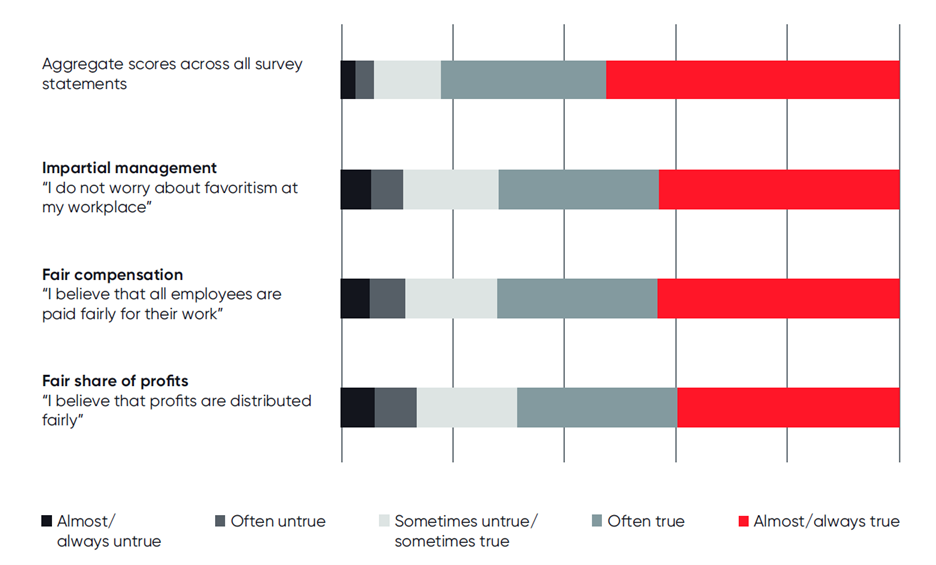
Significant inconsistencies in experience of fairness.

While every individual experiences workplace culture slightly differently, a significant inconsistency emerges in the area of fairness. Employees report discrepancies in favoritism by managers, fair compensation, and a fair share of profits. This lack of perceived fairness can negatively impact employee morale and potentially lead to higher attrition. Interestingly, these concerns are more pronounced among women employees, highlighting the need for focused efforts toward achieving pay parity and a genuinely equitable work environment.

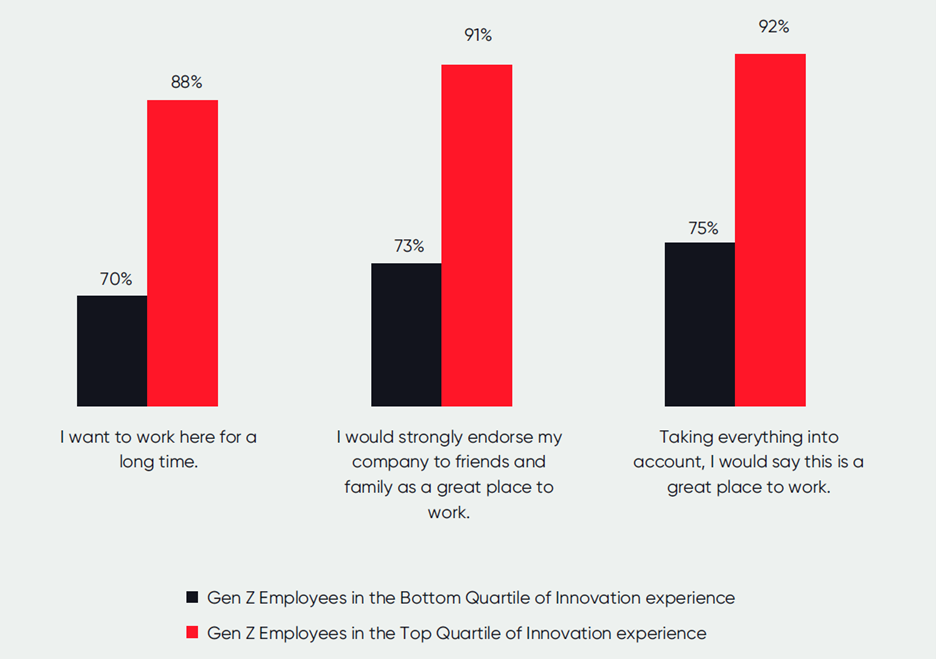
Gen Z: The Innovation Engine

Gen Z thrives in innovative workplaces, leading to higher retention and satisfaction.

Generation Z, the digital-native generation, is entering the workforce in large numbers. Our research identifies them as a key driver of innovation. When Gen Z employees have a positive experience with innovation at work, they are 18% more likely to stay with their current employer, advocate for the company, and perceive the workplace culture positively. This emphasizes how crucial it is to create an atmosphere that values innovation, creativity, and experimentation.

Authenticity: The New Workplace Currency

The traditional notion of work as simply a job is evolving. Today, employees seek a workplace that allows them to be their authentic selves. Our findings reveal that when employees feel comfortable bringing their true selves to work, they are 3.1 times more likely to stay motivated. Leaders who prioritize authenticity create a space where employees feel valued, respected, and empowered to contribute their unique perspectives.

Mix of perceptions in the Trust Index Grand Mean for most major industries

The report also examines how workplace culture experiences vary across different industries. While industries like IT, Hospitality, and Financial Services show a dip in the Trust Index Grand Mean (a measure of overall employee experience), the decline is most prominent in the Education and Training sector. Conversely, industries like Non-profits, Biotech & Pharmaceuticals, and Advertising & Marketing have witnessed a slight improvement.

Leadership Imperative: Addressing the Diversity Gap

Regardless of an employee’s role, gender, tenure, or generation, leaders play a key role in providing a constant and healthy workplace culture. The report highlights specific demographics that require focused attention:

  • Job Role:

There’s a positive correlation between employee experience and job roles. As employees progress in their careers, their experience with the company culture improves.

  • Tenure:
Employee culture experience dips mid-career, but rebounds for long-term employees.

Interestingly, employees new to an organization (within 2 years) report a high initial experience, followed by a dip in satisfaction between 2-5 years. This suggests a potential onboarding and mid-career support gap that needs to be addressed. The trend then reverses, with the highest tenure employees reporting the best workplace experience.

  • Generation:
Work culture survey finds Gen X thrives, while Millennials and Gen Z seek improvement.

Gen X employees report the most positive experience, while there’s significant room for improvement for Gen Z and Millennials.

  • Gender:
Men report more positive work culture than women.

A concerning trend reveals that male employees report a more positive cultural experience than their female counterparts. This emphasizes the necessity of focused efforts to establish a more welcoming and equal work environment for women.

Empowering Gen Z: Keeping the Spark Alive

Gen Z thrives under leaders who deliver and embrace authenticity.

With their strong awareness and access to opportunities, Gen Z employees require specific strategies to stay motivated. Our research suggests that Gen Z thrives when management delivers on promises and when they feel comfortable expressing their authentic selves at work. Companies can significantly improve Gen Z retention by fostering a culture of transparency and encouraging employees to be their true selves.

Psychological Safety for Women: Key Drivers

The report also explores factors that contribute to the psychological and emotional well-being of women employees. It identifies several key areas where leaders can focus their efforts:

  • Supportive Work Environment: Fostering a culture of support and collaboration where women feel comfortable seeking help and guidance from colleagues and mentors.
  • Respectful Communication: Encouraging open communication and ensuring all voices, regardless of gender, are heard and valued.
  • Work-Life Balance: Implementing flexible work arrangements and policies that enable women to manage their professional and personal.
  • Trust in Leadership: When leaders’ actions align with their words, and they consistently deliver on promises, it fosters trust. In such environments, leadership welcomes diverse perspectives, even if they challenge existing views. They effectively address employee concerns, making employees feel safe and confident in their leadership’s trustworthiness.

Taking Action: Building a Culture that Thrives

The insights from our India’s Best Companies To Work For 2024 report paint a clear picture: a strong workplace culture is not just a feel-good initiative; it’s a strategic investment with a tangible return. Following are some actionable steps leaders can take to cultivate a thriving work environment:

  • Prioritize Fairness: Leaders must champion fair treatment for all employees. This includes transparent performance evaluations, equal opportunities for growth, and addressing any concerns about favoritism or pay disparity. Foster open communication channels where employees feel comfortable raising concerns about fairness issues.
  • Embrace Innovation: Create an environment that encourages experimentation, risk-taking, and creative problem-solving. Invest in training programs that empower employees with the skills and resources to innovate. Celebrate successes and recognize innovative ideas, regardless of their source.
  • Empower Authenticity: Promote a culture where employees feel comfortable expressing their unique perspectives and ideas. Encourage open communication and respect diverse viewpoints. Recognize and leverage the strengths that each individual brings to the team.
  • Bridge the Generational Divide: Recognize the unique needs and preferences of different generations. Tailor leadership styles and communication approaches resonate with Gen Z, Millennials, and Gen X employees. For Gen Z, create opportunities for continuous learning and development and encourage open communication with leadership.
  • Champion Diversity and Inclusion: Implement initiatives that promote gender equality and create a truly inclusive workplace. Actively seek diverse perspectives in decision-making processes and empower women to take on leadership roles. Offer mentorship programs that connect women with experienced professionals and provide career development opportunities.
  • Invest in Well-being: Implement policies and plans that promote each employee’s mental, physical, and overall health. Offer more flexible work schedules and encourage employees to take breaks to help foster a work-life balance. Build a culture where employees feel comfortable asking for help when they need it and make mental health resources accessible to them.

Conclusion: The Road to Success is Paved with Culture

Building a strong workplace culture is an ongoing journey. Leaders may foster an environment where employees feel appreciated, engaged, and inspired to give their all by placing a high priority on equity, creativity, authenticity, and employee well-being. As our research demonstrates, a positive workplace culture not only improves employee satisfaction and retention but also translates into tangible business benefits. In the dynamic and competitive Indian market, companies that prioritize culture will be best positioned to attract and retain top talent, drive innovation, and achieve sustainable success in the years to come.

This blog highlights just a glimpse of the valuable insights available in India’s Best Companies To Work For 2024. To understand the full picture and learn more about the best workplaces in India, download the complete report.