Key Takeaways:

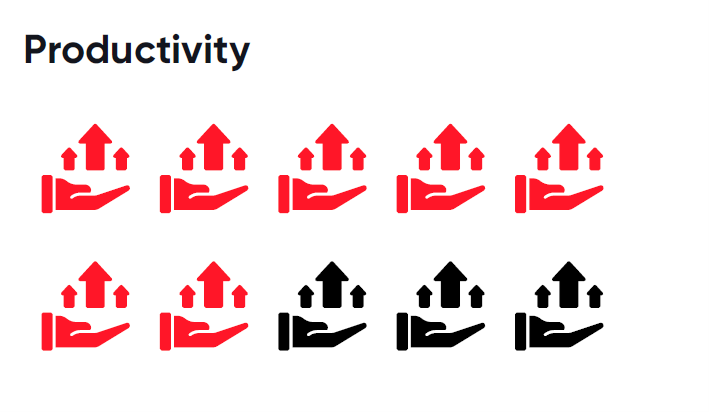
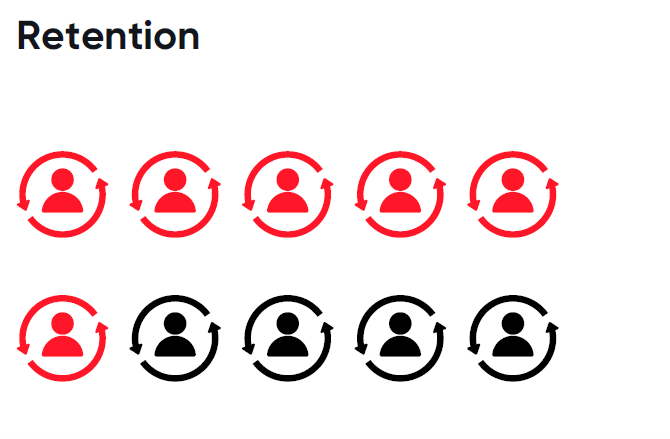
1. Positive workplace culture drives engagement, retention, and productivity.
2. Core values, trust, and inclusion are the foundation of a strong culture.
3. Recognition, transparency, and social connection boost morale and loyalty.

One of the most crucial things you can do for your employees is to create a positive work environment. Each of the stories we have heard about terrible jobs or bad employers has one thing in common: a hostile work environment. Work culture refers to the shared values, beliefs, attitudes, behaviors, and practices that shape how work is done within an organization or workplace. It encompasses the norms and expectations regarding how people interact, communicate, make decisions, and approach work.

A good workplace culture fosters positive morale, collaboration, and productivity. It can significantly result in a balanced workload and reduced stress levels, and can also help improve job satisfaction, cooperation, employee performance, employee retention, and overall organizational success.

To build a positive workplace culture, organizations must focus on clear values, open communication, trust, and employee recognition. A strong culture improves engagement, retention, and overall business success. Here are actionable strategies to create a thriving workplace environment.

What is the Foundation of a Strong Workplace Culture?

Determining the organization’s mission and values and incorporating them into everything the company does can add meaning and purpose to employees’ work and improve their motivation and performance. Defining what’s important to the company and its people when establishing values is also crucial, as it helps to align everyone around a shared vision and goals and creates a sense of belonging and shared purpose that can help to drive success. Overall establishing clear core values is an important step for any organization looking to build a strong workplace culture.

Stay Connected: Maintain Open and Transparent Communication Channels

Encourage open communication between employees and managers to foster a positive company culture. It can be achieved by ensuring supervisors are approachable and provide frequent feedback, providing communication tools such as feedback boxes and team messaging platforms.

Transparency in company performance and decision-making is also important to earn employee trust and loyalty. You can achieve this by openly sharing updates and announcements through internal newsletters or monthly company meetings while providing opportunities for employees to ask questions and share opinions. It helps build a positive company culture and fosters trust between employees and management.

Fostering Diversity and Inclusion in the Workplace.

Fostering diversity and inclusion in the workplace can lead to many positive effects, such as increased creativity and innovation, improved problem-solving and decision-making, better employee engagement and retention, and a stronger brand reputation. Additionally, it can enhance collaboration, promote a more positive work environment, and help businesses reach a broader range of customers.

Establish a positive and inclusive work culture by embracing individuals from all backgrounds, celebrating differences, promoting inclusive language through pronoun sharing, setting up a diversity committee, and integrating diversity and inclusion into the recruitment strategy with the help of the HR department to sustain these values as the company expands.

Why Trusting Your Employees Matters?

Trusting your employees matters because it builds a positive workplace culture by promoting employee autonomy, ownership, and accountability.

Trust also fosters open communication, teamwork, and innovation, leading to better problem-solving and decision-making. When employees feel trusted, they are more likely to take risks and bring new ideas to the table, creating a culture of continuous learning and growth. Additionally, trust can enhance relationships between managers and employees, leading to a more positive work environment and improved overall performance.

What is the Importance of Celebrating Milestones?

Many businesses give their staff monthly or yearly targets. But did you realize that recognizing personal accomplishments can also promote a great company culture? Whether it’s meeting specific sales goals, obtaining a promotion, or winning an award, it’s just as vital for employees to recognize and celebrate success as it is for businesses. Every employee should have mentors and positive role models who are enthusiastic about them and proud of their accomplishments.

Also Read: Why HR Leaders Need Employee Feedback Platforms?

Recognizing personal milestones can increase employee commitment to the company in the long term. Positive role models and mentors can provide support and encouragement, further enhancing the employee experience. The more investment in employee happiness and success, the more commitment to the company’s goals and values.

Implementing a Firm Zero Tolerance Policy to Uphold Standards

Implementing a firm zero-tolerance policy to uphold standards can bring about a significant shift in the work culture of an organization. It sets clear expectations of conduct and behavior, which creates a sense of accountability among employees. This, in turn, fosters a positive work environment where everyone is committed to upholding the organization’s values and principles.

With a zero-tolerance policy in place, employees are less likely to engage in inappropriate or unethical behavior, knowing that the consequences will be severe. It creates a sense of trust and respect among colleagues, which translates into a more cohesive team. As the organization becomes known for its high standards of professionalism, it can attract top talent and foster loyalty among its current employees. The result is a workplace culture that is driven by integrity, excellence, and mutual respect, where everyone is committed to achieving common goals.

Boost Team Morale with Fun Social Outings

One effective way to boost morale and promote a positive culture is by organizing fun social outings for the team. These outings allow employees to bond, build relationships, and get to know each other outside the office environment. The social outings could be anything from a picnic to a team-building event like rock climbing or bowling. These activities allow team members to work together in a relaxed setting while having fun and engaging in friendly competition.

It is also an opportunity for management to show appreciation and build a connection with their employees. By investing time and resources in social outings, an organization can create a sense of community and foster a more cohesive team. These events can also help reduce workplace stress and improve mental health, leading to a more productive and engaged workforce.

People invest in the organization’s future and work hard to generate opportunities that will be beneficial for the business when they are proud of the positive workplace culture. Companies can build a sense of pride and ownership among employees by recognizing and rewarding individuals who are actively working to create a great workplace culture and helping those around them.

So, Become Great with our workplace culture solutions!

Frequently Asked Questions

1. What are the key elements of a positive workplace culture?

Core values, trust, open communication, diversity, and recognition are essential for creating a positive workplace culture.

2. How to build a positive workplace culture?

To build a positive workplace culture, organizations must focus on clear values, open communication, trust, and employee recognition.

3. How can leaders promote a positive work environment?

Leaders can foster positivity by modeling company values, maintaining transparency, and recognizing employee contributions regularly.

4. What role does trust play in workplace culture?

Trust encourages autonomy, collaboration, and innovation, leading to higher engagement and better performance.
Key Takeaways:

1. Great Place To Work® Certification helps you attract and retain top talent.
2. Benchmark and improve your workplace culture using data.
3. Boost employer brand and qualify for top workplace awards.
4. Build employee pride and stakeholder trust.
5. Showcase your achievement with a globally recognized badge.

Great Place To Work Certification™ is the most trusted recognition for workplace culture, proving your organization values trust, equity, and employee well-being. It sends a message to the rest of the world that they have developed a positive workplace culture. This Certification is also the industry benchmark for an inclusive culture in any company where recognition is based on merit and career paths are skill-based.

Getting Certified™ in workplace culture will help people understand what it takes to create a healthy and productive environment for employees and to make sure that people are happy at work.

Why does the Great Place To Work Certification Matter?

Here are the top 8 reasons why an organization should consider becoming Great Place To Work Certified.

1. Increase your offer acceptance rate by attracting the best talents in the industry

Today, strong organizational culture is an essential need for any prospective candidate. The organizational policies show how valuable work-life balance and employee well-being are for the employer. And the Great Place To Work Certification thus acts as a benchmark in evaluating job proposals against employer claims. A positive work environment makes employees feel safe and appreciated, which in turn helps them perform better at their job.

Also Read: What Are the Best Employee Retention Strategies for Retaining Top Talent?

An employee’s happiness at the workplace is directly linked to their productivity and creativity. Thus, everyone wants to work in an environment that has a great culture and values system. Earning this Certification signifies that existing employees support the leadership and culture of their company. It demonstrates to applicants that management appreciates their employees, and so they would happily advocate for their company to others.

2. Quantify and enhance your company culture against key metrics

The Great Place To Work Certification is designed to help companies quantify and enhance their corporate culture against certain set standards. The goal is to create an environment where employees are engaged, motivated, and productive. The results of the Trust Index™ Survey are the gold standard for determining the employee experience in any organization. These results play a vital role in earning the Certification. The survey analysis will help you to get into your employees’ minds and understand their perceptions of your strengths and potential improvement areas in terms of organizational culture.

3. Reaffirm the values and culture of your organization

Earning the Certification is a great way to show your commitment to building a strong organizational culture. It helps to reaffirm the values that your organization stands for and ensure that they are being upheld. The Certification process verifies the practices and policies of an organization, ensuring that they are in line with the Great Place To Work gold standards. It also helps to create a High-Trust, High-Performance Culture in the organization where employees feel valued and respected, leading to an increase in productivity and job satisfaction. Since employee opinions drive the results, it serves as a reminder that, indeed, your organization is a Great Place To Work. With this Certification, you can be sure that your organization is upholding its core values and culture for all employees.

4. Build employee pride

Organizations must earn this badge to build a sense of pride among their employees. This will help them to convey how much the organization values their efforts and is ready to incorporate changes for employee wellbeing. The result of this survey also helps to create an environment where employees can feel motivated and inspired to do their best work. This in turn can lead to better customer service and improved overall morale in the workplace.

5. Proudly display your badge of honor

This Certification is a badge of honor for any organization that has earned it. The Certification is an internationally recognized symbol of excellence in the workplace culture and reflects the commitment of the Certified organizations toward creating an inclusive, diverse, and equitable work environment for all. It also helps organizations demonstrate their dedication towards providing employees with opportunities for personal and professional growth, as well as recognition for their efforts in making positive changes in the workplace. A badge is awarded to each Certified company. You can use it to keep your achievements in the public’s, your partners’, and employees’ eyes. Therefore, many businesses proudly display the badge on their job postings, social media accounts, and email signatures.

6. Become qualified for prestigious top company culture awards

Great Place To WorkCertification is an important milestone that organizations can earn to become qualified for prestigious top company culture awards. It also helps organizations stand out from the competition by showcasing their commitment to creating a positive work culture that supports employee growth and development.

7. Flaunt your company profile page on our website

The organizations can flaunt their company profile page on our website to declare that they are Great Place To Work Certified. It will help them build trust with potential employees, customers, and investors, as well as create a positive brand image. We create a profile page for each Certified company. You can disclose information about your business and any other achievements earned from the Best Workplaces lists. Moreover, to give tangible proof of their outstanding corporate culture. Certified organizations frequently link their profiles to the career page of their website.

8. Create goodwill and a sense of trust among your shareholders, employees, and other business stakeholders

The organization can create goodwill and a sense of trust among shareholders, employees, and other stakeholders by communicating with them about their Certification. Companies can also showcase their commitment to creating a work environment where everyone feels respected and supported and can reach their potential.

Your journey to Becoming Great starts here!
As you can see, with Certification, Recognition is merely the icing on the cake. Make your employees and associates proud, hire the best candidates, and identify any shortcomings in your HR policies.

Learn more about how to Get Certified!

Frequently Asked Questions

1. What is Great Place To Work Certification?

Great Place To Work Certification is a globally recognized certification that validates a company’s commitment to creating a high-trust, high-performance workplace culture.

2. How long does Great Place To Work Certification last?

The certification is valid for 12 months, after which companies can renew by completing the Trust Index™ Survey and Culture Brief™ again.

3. Why should companies get Great Place To Work Certified?

Certification helps attract talent, improve culture, and enhance brand reputation while qualifying for prestigious workplace awards.

4. Who is eligible for Great Place To Work Certification?

To earn the Certification, the company must have its headquarters in India and have a minimum of 10 employees. If the employee strength is between 10 to 99, the organization must be operating for over 2 years and shall be a private limited company.

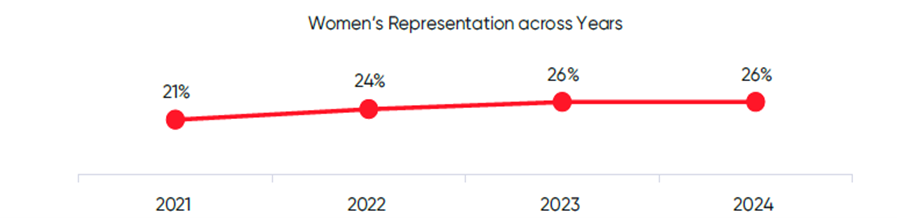
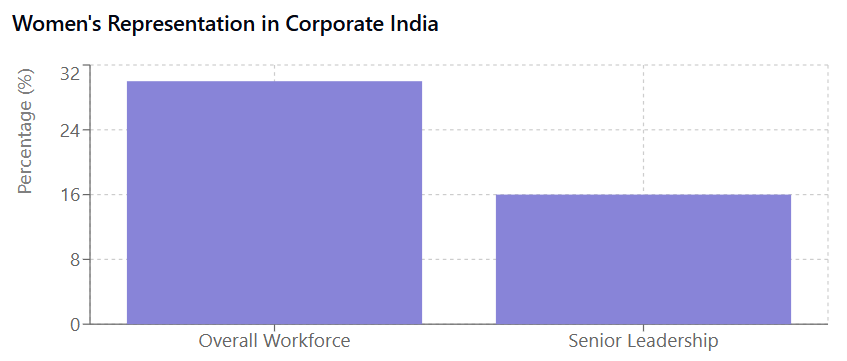
In an era where workplace diversity has become a strategic imperative, organizations face a critical challenge: creating an environment where women can truly flourish. Despite decades of progress, the corporate landscape still presents significant hurdles for women professionals. This reality is reflected in current statistics, with women’s representation in the Indian workforce remaining below 30%, and an even more concerning figure of just 16% in senior leadership positions. These numbers not only highlight the gender gap but also underscore the urgent need for transformative change in workplace cultures across industries.

A bar chart showing the stark contrast between overall workforce representation (30%) and senior leadership representation (16%)

The Current State of Women in the Workplace

The modern workplace is at a crucial turning point. While organizations are increasingly recognizing the value of gender diversity, there’s a significant gap between intention and implementation. The lower representation of women, particularly in leadership roles, isn’t just a numbers game – it’s a reflection of deeper cultural and structural challenges that need addressing.

What makes this situation more complex is the declining workplace sentiment levels among women professionals. This trend signals that beyond mere representation, organizations need to focus on creating environments where women feel valued, supported, and empowered to grow. The challenge isn’t simply about hiring more women; it’s about fundamentally transforming workplace cultures to ensure they can thrive and advance in their careers.

The Power of Belonging: A Game-Changer for Retention

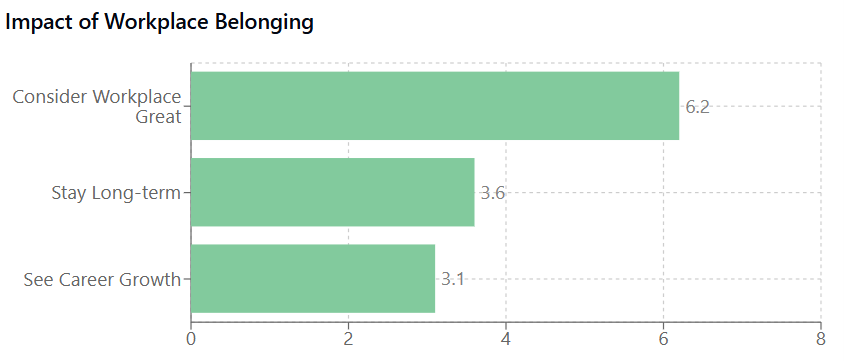
A horizontal bar chart displaying the multiplier effect of workplace belonging. Shows how women are 6.2x more likely to consider their workplace great, 3.6x more likely to stay long-term, and 3.1x more likely to see career growth

Research reveals a compelling correlation between workplace belonging and women’s professional success. When women experience a strong sense of belonging in their workplace, the impact is transformative:

  • They are 6.2 times more likely to consider their workplace great
  • The likelihood of long-term retention increases by 3.6 times
  • They are 3.1 times more likely to identify clear career growth opportunities

These statistics underscore a fundamental truth: creating an inclusive environment isn’t just about meeting diversity quotas – it’s about fostering a culture where women can envision and achieve their full professional potential. Organizations that successfully create this sense of belonging often see improved innovation, creativity, and overall business performance.

Creating Equitable Experiences: Beyond the Basics

The conversation about workplace equity has evolved beyond the traditional focus on equal pay. Today’s professional women seek comprehensive fairness across all aspects of their work experience. Organizations that have successfully created consistent experiences across genders show remarkable differences in employee satisfaction:

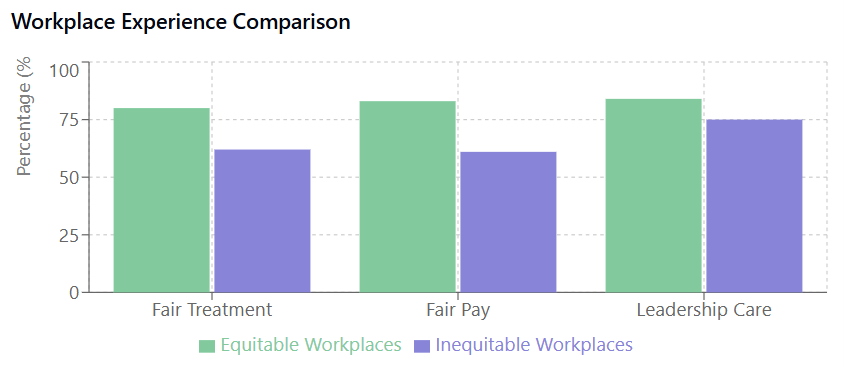
  • 80% of women in equitable workplaces report impartial treatment from management
  • 83% believe they receive fair compensation
  • In contrast, only 62% report fair treatment in organizations with inconsistent experiences
  • Similarly, just 61% feel fairly compensated in less equitable environments
A comparative bar chart showing the differences between equitable and inequitable workplaces. Visualizes the gaps in fair treatment, fair pay, and leadership care

Leading organizations are taking proactive steps to address these disparities. They conduct regular pay parity audits, implement structured promotion processes, and ensure equal access to high-visibility projects and opportunities. These initiatives create a foundation of trust and transparency that is essential for retaining top female talent.

The Emotional Quotient: Care and Well-being at Work

One of the most significant findings in recent workplace studies is the importance of emotional well-being and genuine care in retaining female talent. In leading workplaces:

  • 84% of women feel their leadership genuinely cares for them
  • This figure drops to 75% in other organizations

This 9% gap represents more than just numbers – it reflects the difference between a workplace that treats well-being as a priority versus one that views it as an afterthought. Progressive organizations are implementing comprehensive well-being programs that address both physical and mental health needs. These programs often include:

  • Flexible work arrangements that accommodate various life situations
  • Mental health resources and counseling services
  • Stress management workshops and wellness initiatives
  • Support groups and networking opportunities
  • Regular check-ins and feedback sessions with leadership

Supporting Life Transitions: A Critical Retention Strategy

Organizations must recognize that supporting women through various life transitions isn’t just about providing benefits – it’s about creating a culture that acknowledges and accommodates life’s different stages. This includes:

  1. Comprehensive support systems for returning professionals
  2. Flexible arrangements for caregiving responsibilities
  3. Inclusive policies that recognize diverse family structures
  4. Mentorship programs during critical career transitions
  5. Extended parental leave policies covering various family situations
  6. Phased return-to-work programs
  7. Childcare support and resources

These support systems demonstrate an organization’s commitment to long-term career development and help women navigate personal and professional challenges without sacrificing either aspect of their lives.

Bridging the Perception Gap

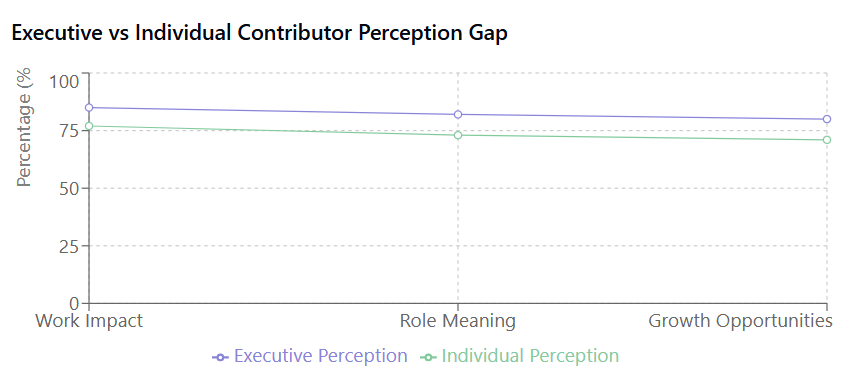
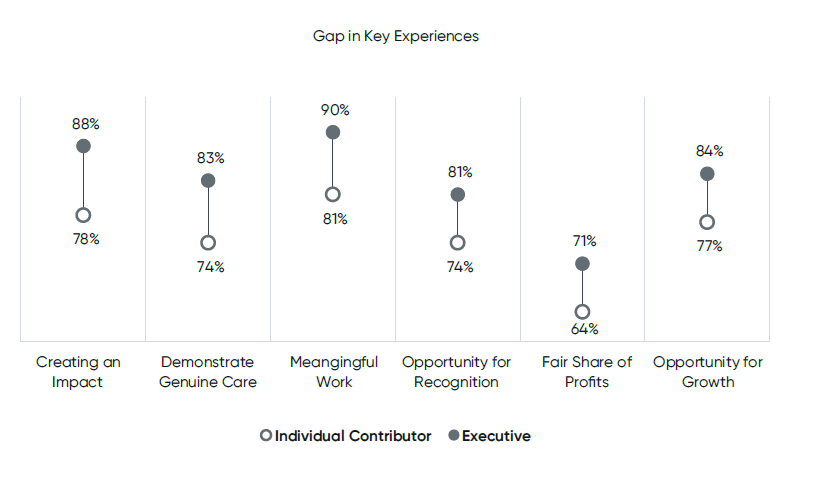
A notable challenge in many organizations is the disconnect between executive perception and ground reality. Current data shows a consistent 7-10% gap in how executives and individual contributors perceive:

  • Impact of their work
  • Meaningfulness of their roles
  • Available growth opportunities
  • Access to resources and support
A line chart showing the perception gap between executives and individual contributors. Illustrates the 7-10% gap across different aspects like work impact, role meaning, and growth opportunities

This perception gap needs to be actively addressed through structured feedback mechanisms and regular communication channels. Organizations can bridge this gap by:

  • Implementing regular pulse surveys
  • Creating safe spaces for honest feedback
  • Establishing mentorship programs
  • Ensuring transparent communication about opportunities and challenges
  • Regular town halls and open forums with leadership

The GRIT Framework: A Path Forward

For organizations committed to transforming their workplace culture, the GRIT framework offers a structured approach:

Goals:

  • Set clear, measurable targets for women’s representation
  • Establish regular progress tracking mechanisms
  • Communicate achievements and challenges transparently
  • Create accountability at all leadership levels

Role Models & Resources:

  • Ensure visible leadership commitment
  • Allocate adequate resources for diversity initiatives
  • Showcase successful women leaders
  • Create mentorship and sponsorship programs

Implementation & Monitoring:

  • Create robust tracking systems
  • Establish regular feedback loops
  • Make real-time adjustments based on data
  • Measure both quantitative and qualitative outcomes

Training:

  • Provide comprehensive bias awareness programs
  • Equip managers with tools to support women’s career progression
  • Regular updates on best practices
  • Specialized leadership development programs

Looking Ahead: The Future of Workplace Culture

The journey toward creating truly inclusive workplaces is ongoing. While progress has been made, organizations must maintain momentum by:

  1. Continuously evaluating and updating their diversity strategies
  2. Ensuring leadership remains actively engaged in inclusion initiatives
  3. Creating platforms for women to share their experiences and success stories
  4. Developing innovative approaches to address emerging workplace challenges
  5. Investing in technology and tools that support inclusive practices
  6. Building partnerships with organizations that champion women’s advancement
  7. Measuring and celebrating progress while acknowledging areas for improvement

The transformation of workplace culture isn’t just about implementing policies – it’s about creating an environment where women can thrive, lead, and inspire. Organizations that successfully navigate this transformation will not only retain top female talent but will also build more resilient, innovative, and successful businesses for the future. The time for incremental changes has passed; what’s needed now is bold, decisive action to create workplaces that truly work for everyone.

Get Certified to Showcase Your Commitment

Achieving Great Place To Work® Certification™ is an excellent way to demonstrate your organization’s commitment to employees’ overall well-being and experience. This Certification not only enhances your employer branding but also helps attract and retain top talent. It highlights to current and prospective employees that your organization values their overall well-being, fostering an environment where they feel appreciated and supported.

By implementing a culture of trust, respect, and collaboration, you can create a workplace where employees feel valued and connected. Certification also provides a benchmark for continuous improvement, helping you identify areas where you can further enhance employee well-being and overall workplace culture. 

For All Summit Mumbai 2025: Vision to Value – Building Workplaces That Matter

Join us on February 6, 2025, in Mumbai for an enlightening day filled with insights on creating sustainable, humane, and inclusive workplaces. Learn from industry leaders about purpose-driven cultures, innovative HR practices, and adaptive leadership strategies.

Get your passes today – https://testg.in/for-all-summit

In an era where the IT & IT-BPM industry faces unprecedented challenges, the concept of Best Workplaces has evolved far beyond general perks like recreational centers or complementary meals. Today’s workplace culture stands at a critical crossroads, shaped by economic uncertainties, technological disruption, and shifting employee expectations. As organizations navigate through these turbulent times, building resilient workplace cultures has become more crucial than ever. The recent wave of layoffs and structural changes has created a complex landscape where trust, engagement, and cultural stability hang in delicate balance.

The Trust Paradox

The IT & IT-BPM sector, once a beacon of stability and growth, now grapples with a complex paradox. While 82% of employees find meaning in their work and feel they make a difference, organizations face growing challenges in maintaining engagement and trust. This disconnect points to a deeper truth: workplace culture isn’t just about satisfaction metrics—it’s about creating an environment where trust and purpose flourish together.

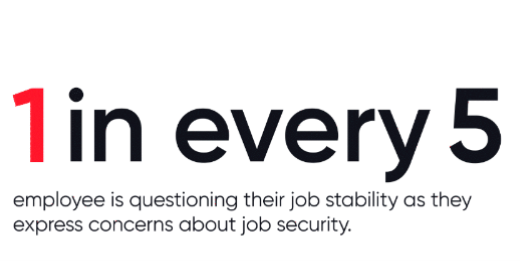
Image stating stats that 1 in every 5 employee is having concerns around their job security.

Recent trends reveal a concerning pattern of disengagement, particularly among younger generations. The rise of “silent quitting” and burnout, affecting 29% of IT employees—a 3% increase from the previous year—signals a critical need for cultural transformation. The primary culprits? Inflexibility and limited involvement in decision-making processes. This disengagement manifests not just in productivity metrics but in the subtle erosion of workplace relationships and collaborative spirit.

The Cultural Impact of Economic Uncertainty

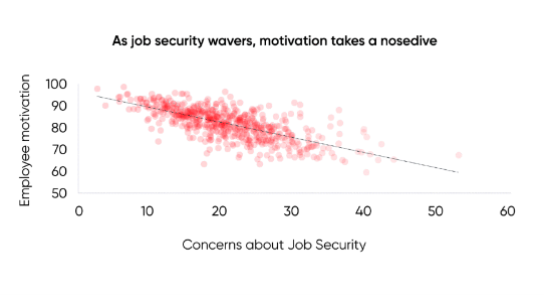
Graph showing the declining motivation among employees as concerns around job security increases.

The tech industry’s recent turbulence has created ripple effects throughout organizational cultures. When job security wavers, the impact extends far beyond immediate workforce concerns—it fundamentally alters how employees engage with their work and connect with their organizations. However, this period of disruption also presents an opportunity for forward-thinking organizations to redefine their cultural foundations and emerge stronger.

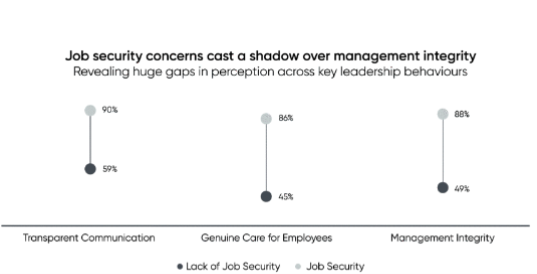
Graph showing impact of lack of job security sentiment among employees on confidence on leadership decisions.

The I.M.P.A.C.T. Framework: Building Tomorrow’s Best Workplaces

Data showing the effect of I.M.P.A.C.T. framework.

Forward-thinking organizations are adopting comprehensive approaches to rebuild and strengthen their workplace cultures. The I.M.P.A.C.T. framework emerges as a blueprint for creating sustainable, engaging work environments:

I – Innovation through Collaboration

Despite the recognized value of cross-functional collaboration, only 23% of companies currently implement cross-functional teams effectively. This gap represents an untapped opportunity. Best Workplaces understand that innovation thrives when diverse perspectives converge, making collaborative environments a cornerstone of their culture. Organizations that successfully foster cross-functional collaboration report higher rates of innovation and employee satisfaction.

M – Meaningful Purpose

The data speaks volumes: 82% of employees find meaning in their work isn’t just a statistic—it’s a competitive advantage. Leading organizations are intentionally connecting individual roles to broader organizational goals, creating a sense of purpose that transcends daily tasks. This alignment becomes particularly crucial during periods of uncertainty, providing stability through shared mission and values. Best Workplaces actively cultivate this sense of purpose through clear communication of organizational impact and regular reinforcement of how individual contributions matter.

P – Promoting Internal Growth

The most resilient workplace cultures prioritize internal development, with 70% of organizations elevating their current leadership from within. This approach does more than fill positions—it builds institutional knowledge, strengthens cultural continuity, and demonstrates a tangible commitment to employee growth. Internal promotion strategies create visible career pathways that motivate employees and foster long-term commitment to organizational success.

A – Active Feedback Integration

In an age of rapid change, the ability to listen and adapt becomes crucial. While 80% of companies conduct engagement surveys, the true differentiator lies in how organizations act on this feedback. Best Workplaces stand out by closing the feedback loop, demonstrating that employee voices shape organizational direction. They create systematic approaches to not just collecting but implementing feedback, making it a cornerstone of their cultural evolution.

C – Communication for Empowerment

Perhaps the most telling is that only 30% of companies provide communication training to managers. This statistic illuminates a critical gap in workplace culture development. Effective communication serves as the bedrock of empowerment, enabling managers to delegate meaningfully and employees to contribute authentically. Best Workplaces invest heavily in developing communication capabilities across all organizational levels, recognizing their role in building trust and engagement.

T – Transparency as Trust’s Foundation

With 78% of companies maintaining defined grievance redressal processes, the framework for trust exists. However, true workplace culture excellence demands going beyond processes to create environments where transparency and accountability become natural elements of daily operations. Leading organizations are redefining transparency through regular updates on organizational direction, clear communication about challenges, and honest dialogue about both successes and failures.

As organizations chart their path forward, several key trends are reshaping the landscape of workplace culture:

1. Hybrid Work Evolution

The future workplace transcends physical locations, demanding cultures that foster connection and collaboration across digital and physical spaces. Best Workplaces are reimagining collaboration tools and practices to maintain cultural cohesion in hybrid environments. They’re developing innovative approaches to ensure remote employees feel as connected and engaged as their in-office counterparts.

2. Skills-First Culture

Traditional hiring models are giving way to skills-based approaches, emphasizing continuous learning and adaptability. Organizations are creating cultures where skill development becomes part of the daily workflow rather than an occasional training event. This shift requires new approaches to performance evaluation and career development that prioritize capabilities over credentials.

3. Purpose-Driven Sustainability

Environmental and social responsibility are emerging as powerful engagement drivers. Best Workplaces are integrating sustainability into their cultural DNA, recognizing its role in attracting and retaining purpose-driven talent. They’re creating initiatives that align organizational success with positive social impact, meeting the growing demand for meaningful work.

4. Accountability Culture

The most successful organizations are building cultures where accountability flows both ways—leaders to employees and employees to organization. This reciprocal relationship strengthens trust and drives engagement. Best Workplaces are implementing transparent metrics and regular check-ins to ensure accountability becomes a cultural strength rather than a management tool.

Addressing Generational Expectations

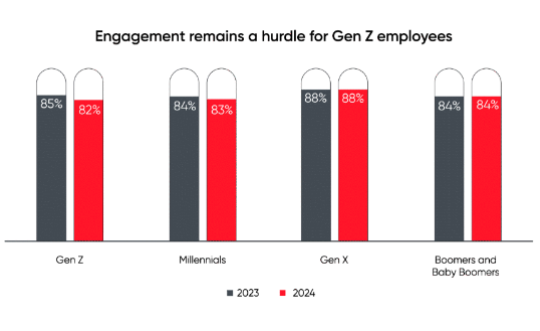
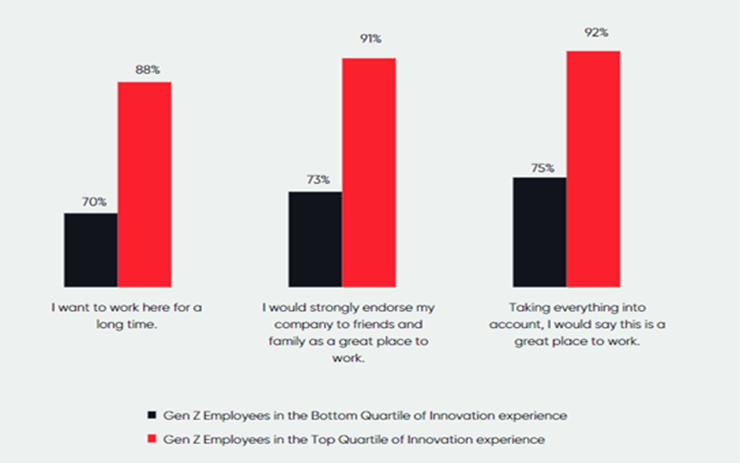
Graph representing level of engagement among the Gen Z employees

Modern workplace cultures must navigate diverse generational expectations, particularly as Gen Z enters the workforce with distinct preferences and values. Best Workplaces recognizes that creating inclusive cultures means understanding and accommodating different generational perspectives on work, success, and engagement. This understanding shapes everything from communication styles to career development approaches.

Building Resilience Through Culture

The path to becoming a Best Workplace isn’t linear. It requires constant attention, adaptation, and authentic commitment to creating environments where employees can thrive. As the IT industry continues to evolve, organizations that prioritize cultural resilience will find themselves better equipped to navigate future challenges.

The signs of strain are clear—from burnout to disengagement—but so are the opportunities for transformation. By focusing on trust, purpose, and meaningful connection, organizations can build workplace cultures that don’t just weather storms but emerge stronger from them.

Success in this endeavor requires more than policies and programs; it demands a fundamental shift in how organizations view and nurture their workplace culture. The Best Workplaces of tomorrow will be those that recognize culture as their most strategic asset, investing in it with the same rigor they apply to technological innovation.

As we look ahead, the question isn’t whether workplace culture matters—it’s how organizations will adapt their cultures to meet the evolving needs of their workforce while maintaining the trust and engagement that drive sustainable success. In this journey, the I.M.P.A.C.T. framework offers not just a roadmap but a foundation for building the resilient, engaging workplaces the future demands.

Get Certified to Showcase Your Commitment

Achieving Great Place To Work® Certification™ is an excellent way to demonstrate your organization’s commitment to employees’ overall well-being and experience. This Certification not only enhances your employer branding but also helps attract and retain top talent. It highlights to current and prospective employees that your organization values their overall well-being, fostering an environment where they feel appreciated and supported.

By implementing a culture of trust, respect, and collaboration, you can create a workplace where employees feel valued and connected. Certification also provides a benchmark for continuous improvement, helping you identify areas where you can further enhance employee well-being and overall workplace culture.  

For All Summit Mumbai 2025: Vision to Value – Building Workplaces That Matter

Join us on February 6, 2025, in Mumbai for an enlightening day filled with insights on creating sustainable, humane, and inclusive workplaces. Learn from industry leaders about purpose-driven cultures, innovative HR practices, and adaptive leadership strategies.

Get your passes today – https://testg.in/for-all-summit

Banner for registering for the Great Place To Work® For All™ Summit 2025

In today’s rapidly evolving professional landscape, the concept of work has transformed significantly. No longer is it merely a means to earn a living; instead, it has become an integral part of our identity and lifestyle choices. This shift in perception has profound implications for how organizations approach workplace culture and what makes a truly great place to work.

Transforming Workplace Culture: Beyond Traditional Employment

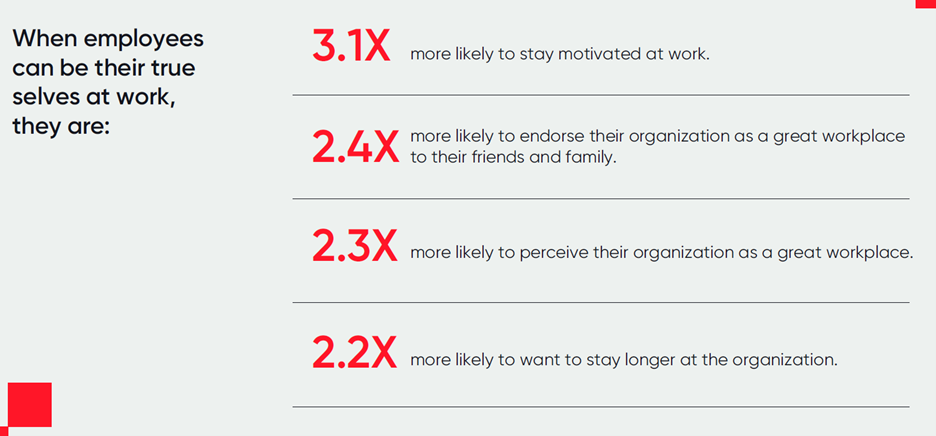
Graphic showing that when employees feel authentic at work, they are 3.1x more motivated, 2.4x more likely to recommend their workplace, 2.3x more likely to see it as great, and 2.2x more likely to stay longer. Features minimal design with red highlights.

The modern workforce seeks more than just competitive compensation. They desire an environment where they can thrive, grow, and most importantly, be themselves. Recent studies reveal a compelling statistic: employees who feel they can be their authentic selves at work are 3.1 times more likely to maintain high motivation levels. This finding underscores the critical importance of creating a workplace culture that celebrates individuality and promotes genuine self-expression.

The ROI of Creating a Great Place To Work

The impact of positive workplace culture extends beyond employee satisfaction – it significantly affects the bottom line. A remarkable study by RSM demonstrates this correlation perfectly: shareholders’ investments in India’s Best Companies To Work For have generated approximately 14 times returns on initial investment, outperforming both bullion and stock indices by a factor of 3.73. This data presents a compelling business case for organizations to prioritize creating exceptional workplace environments.

Measuring Success: Key Dimensions of Workplace Culture Excellence

Recent findings from India’s Best Companies To Work For 2024 report provide valuable insights into the various dimensions that shape workplace excellence. While Pride maintains its position as the highest-scoring dimension, there’s been a notable one-point decrease in scores forCredibility, Respect, Camaraderie, and Fairness compared to the previous year. This shift signals a crucial moment for organizations to reassess and strengthen their approach to workplace culture.

Creating an Inclusive Great Place To Work: Understanding Employee Experiences

Creating a great workplace isn’t about implementing one-size-fits-all solutions. Great Place To Work® emphasizes the importance of delivering consistent positive workplace culture experiences across all employee segments. Recent research reveals interesting patterns in how different demographics experience their workplace:

Workplace Culture Across Job Roles

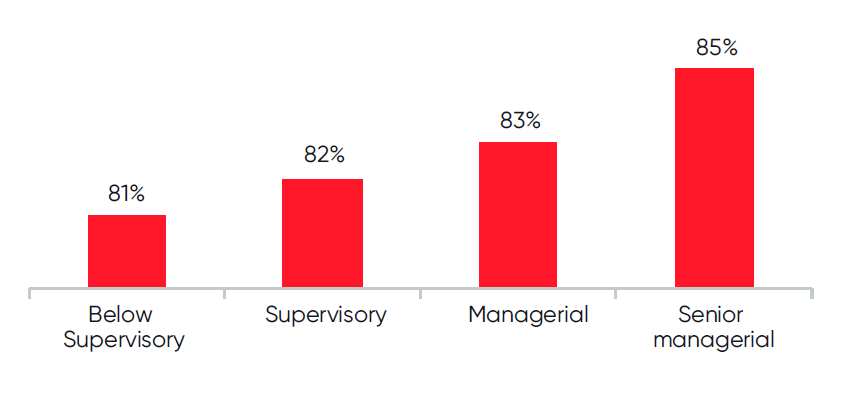
Bar chart showing Trust Index scores by job role: Below Supervisory at 81%, Supervisory at 82%, Managerial at 83%, and Senior Managerial at 85%. The chart highlights an increasing trend in trust scores as employees advance to higher roles.

Analysis shows that the Trust Index™ Grand mean demonstrates an upward trend as employees progress to higher positions. This pattern suggests that organizations must work harder to ensure junior employees feel equally valued and supported in their workplace culture.

Employee Tenure and Workplace Culture Experience

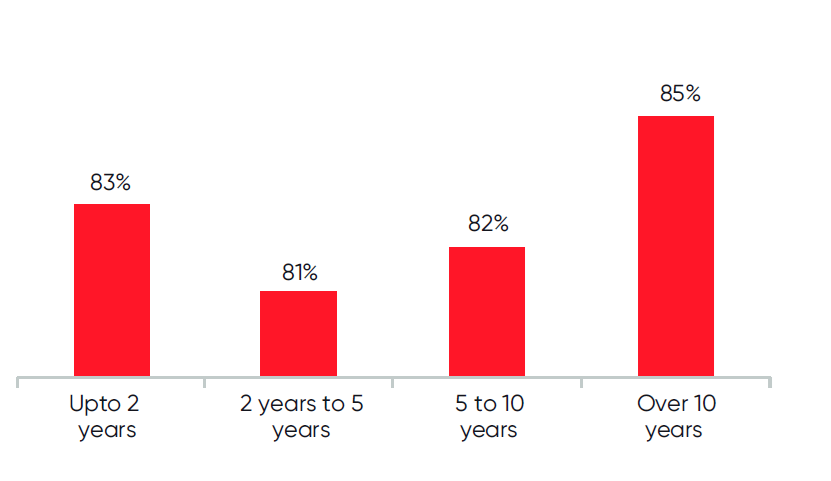
Bar chart showing workplace culture scores by tenure: Up to 2 years at 83%, 2 to 5 years at 81%, 5 to 10 years at 82%, and over 10 years at 85%. It highlights a dip in scores between 2 to 5 years, followed by an upward trend.

Employee experience follows an interesting pattern based on tenure:

  • First 2 years: High cultural engagement
  • 2-5 years: Notable dip in experience
  • Beyond 5 years: Steady increase, with longest-serving employees reporting the most positive experiences

Generational Differences in Great Place To Work Experiences

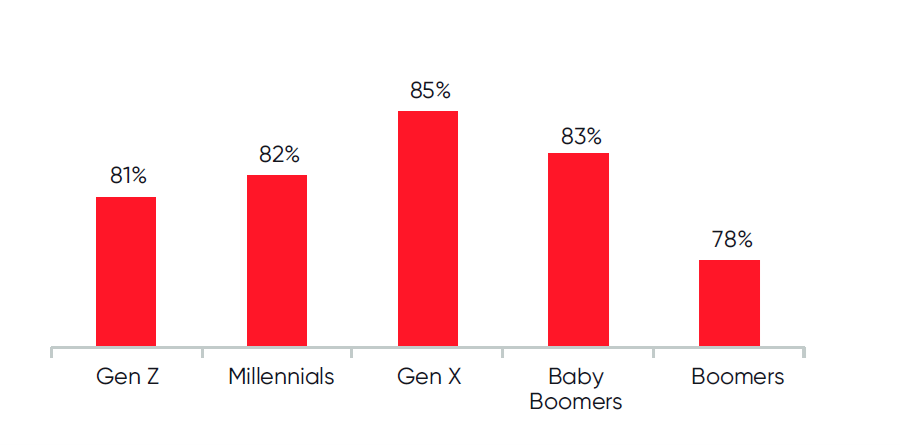
Bar chart highlighting generational workplace culture experiences. Gen X employees report the most positive experience, while there is significant room for improvement in the culture experience of Gen Z and Millennial employees.

Different generations experience workplace culture uniquely:

  • Gen X employees report the most positive experiences
  • Gen Z and Millennial employees show room for improvement in their cultural experience

Gender Equity in Workplace Culture

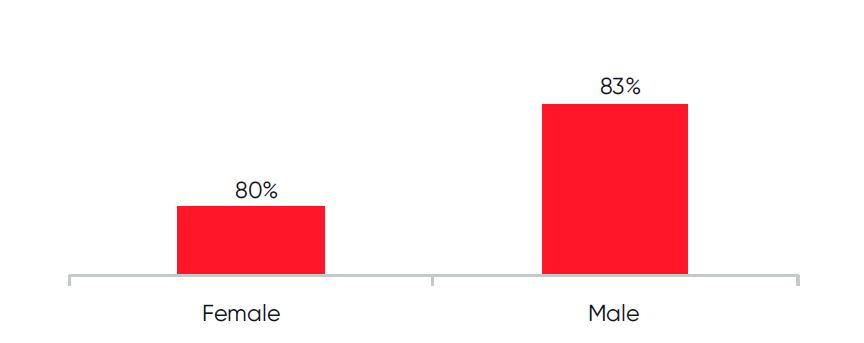
Bar chart indicating that male employees (83%) report a more positive workplace culture experience compared to female employees (80%).

The data reveals that male employees generally report more positive cultural experiences than their female colleagues. This disparity calls for targeted initiatives to create more inclusive and equitable workplace environments that support all employees equally. Organizations must implement concrete measures such as:

  • Mentorship programs specifically designed for women leaders
  • Regular pay equity audits and transparent compensation policies
  • Flexible work arrangements that support work-life integration
  • Clear career progression paths and leadership development opportunities
  • Zero-tolerance policies for workplace discrimination and harassment.

The Impact of Technology on Workplace Culture

As organizations evolve into digital-first environments, technology plays an increasingly crucial role in shaping workplace culture. A great workplace in the modern era must effectively balance digital transformation with human connection. Key considerations include:

Digital Collaboration and Communication

  • Implementation of tools that facilitate seamless communication across teams
  • Creation of virtual spaces that foster camaraderie and informal interactions
  • Integration of technologies that support hybrid and remote work models
  • Ensuring digital accessibility and inclusion for all employees

Maintaining Human Connection

  • Balancing automated processes with meaningful human interactions
  • Creating opportunities for face-to-face collaboration when possible
  • Developing digital wellness initiatives to prevent burnout
  • Fostering virtual team-building activities that strengthen relationships

Employee Well-being as a Cornerstone of Workplace Culture

A truly great place to work prioritizes holistic employee well-being. This encompasses:

Mental Health Support 

  • Access to counseling and mental health resources 
  • Stress management programs and workshops 
  • Regular check-ins and open dialogue about mental health 
  • Training for managers to recognize and support mental health concerns 

Physical Wellness 

  • Comprehensive health insurance coverage 
  • Fitness programs and wellness challenges 
  • Ergonomic workspace solutions 
  • Regular health check-ups and preventive care initiatives 

Financial Well-being 

  • Financial planning resources and education 
  • Retirement planning support 
  • Emergency savings programs 
  • Student loan assistance programs

Strategies for Building a Great Place To Work 

As organizations strive to become a great place to work, they must recognize that workplace culture is not static but dynamic. The key to success lies in: 

  • Authentic Leadership in Workplace Culture: Encouraging leaders to model authentic behavior and create safe spaces for employees to be themselves 
  • Consistent Employee Experience: Working to eliminate disparities in how different employee groups experience the workplace 
  • Targeted Culture Interventions: Developing specific programs to address gaps in employee experience based on tenure, generation, and gender 
  • Evolving Workplace Culture: Continuously adapting workplace practices to meet changing employee expectations 

Future of Great Places To Work: The Path Forward 

Creating a great place to work requires more than surface-level changes or periodic initiatives. It demands a fundamental commitment to understanding and responding to employee needs across all demographics. Organizations that succeed in this endeavor not only create more engaged and productive workforces but also position themselves for superior business performance. 
The evolution of work from a mere job to a lifestyle choice presents both challenges and opportunities. Organizations that embrace this shift and work deliberately to create inclusive, authentic workplace cultures will find themselves better positioned to attract, retain, and engage top talent. 

As we look to the future, it’s clear that the most successful organizations will be those that view workplace culture as a strategic priority rather than a nice-to-have. They will be the ones that consistently deliver positive experiences across all employee segments, fostering environments where everyone can thrive and contribute their best work. 

Creating Tomorrow’s Great Places To Work 

Creating a great place to work is both an art and a science. It requires careful attention to data and demographics while maintaining a human-centered approach that recognizes and celebrates the individuality of each employee. As workplace culture continues to evolve, organizations must: 

  1. Stay attuned to changing employee expectations and needs 
  1. Embrace technological advances while maintaining human connection 
  1. Foster inclusive environments that support all employee groups 
  1. Implement comprehensive well-being programs 
  1. Maintain consistent measurement and improvement processes 

Organizations that successfully navigate these challenges while maintaining authentic and positive workplace cultures will not only attract and retain top talent but also achieve superior business results. The future belongs to those who recognize that being a great place to work is not just a designation, but a continuous journey of improvement and adaptation. 

Get Certified to Showcase Your Commitment

Achieving Great Place To Work Certification™ is an excellent way to demonstrate your organization’s commitment to employees’ overall well-being and experience. This Certification not only enhances your employer branding but also helps attract and retain top talent. It highlights to current and prospective employees that your organization values their overall well-being, fostering an environment where they feel appreciated and supported.

By implementing a culture of trust, respect, and collaboration, you can create a workplace where employees feel valued and connected. Certification also provides a benchmark for continuous improvement, helping you identify areas where you can further enhance employee well-being and overall workplace culture.  

For All Summit Mumbai 2025: Vision to Value – Building Workplaces That Matter

Join us on February 6, 2025, in Mumbai for an enlightening day filled with insights on creating sustainable, humane, and inclusive workplaces. Learn from industry leaders about purpose-driven cultures, innovative HR practices, and adaptive leadership strategies.

Get your passes today – https://testg.in//for-all-summit

Banner for registering for the Great Place To Work® For All™ Summit 2025

In today’s workplace landscape, Diversity, Equity, Inclusion, and Belonging (DEIB) are more than buzzwords. They are essential elements for fostering a thriving organizational culture. According to the 2024 report by Great Place To Work®, India’s best workplaces have made significant strides in these areas, demonstrating how a strong DEIB framework can benefit employees and businesses alike. Below, we explore data-driven insights from the DEIB 2024 report, highlighting its impact on individual growth, business success, and societal progress.

The Business Value of DEIB

Great Place To Work’s 2024 data shows that organizations investing in DEIB see a tangible positive impact on business outcomes. More than 70% of organizations in the report believe prioritizing DEIB has spurred greater innovation, reduced attrition, and increased productivity. Employees who feel a sense of belonging through DEIB are 4.3 times more likely to look forward to coming to work, underscoring how inclusive environments foster both engagement and motivation. When diversity is prioritized, employees are empowered to bring unique perspectives, boosting creativity and revenue growth.

The image shows that organizations focusing on diversity, equity, inclusion, and belonging have seen improvements in work quality and employee productivity. When employees feel a sense of belonging, they are 4.3 times more likely to look forward to coming to work.

The correlation between DEIB and organizational loyalty is also noteworthy. Employees who experience a blend of diversity, equity, and inclusion are 3.4 times more likely to remain with their organization long-term. By enhancing workplace culture, companies can improve employee experiences, increase retention, and strengthen their reputation as an employer of choice.

The image highlights that organizations prioritizing diversity, equity, inclusion, and belonging have seen reduced attrition rates among diverse groups. When employees feel a sense of belonging, they are 3.4 times more likely to stay with the organization long-term.

Enhancing Employee Well-being and Growth

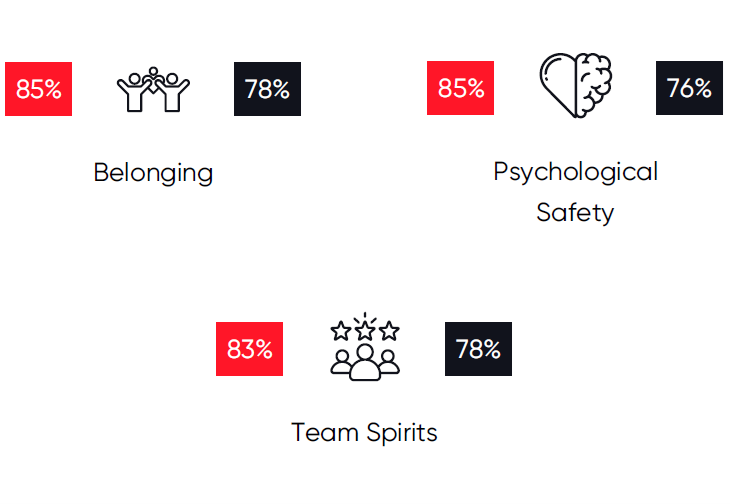
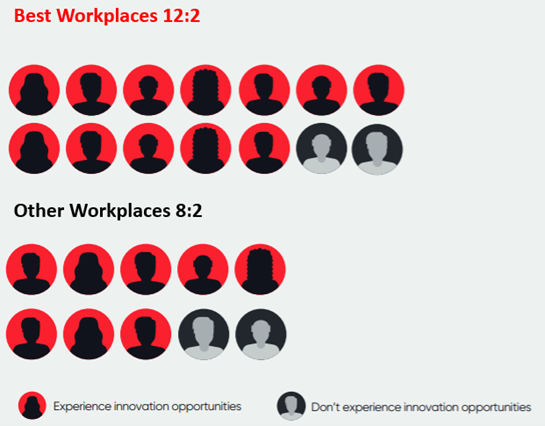
Great workplaces in India are also fostering employee well-being and career growth. The report indicates that the best workplaces are rated significantly higher in areas such as psychological safety, team spirit, and work-life balance. Specifically, 85% of employees in these best workplaces feel a sense of belonging, compared to only 78% in other organizations. This strong sense of community is further strengthened by initiatives aimed at supporting mental health and enabling employees to learn from their mistakes. These programs help individuals feel safe, valued, and supported, leading to higher productivity and job satisfaction.

Best workplaces in DEIB show an increase in scores for belonging, psychological safety and team spirits.

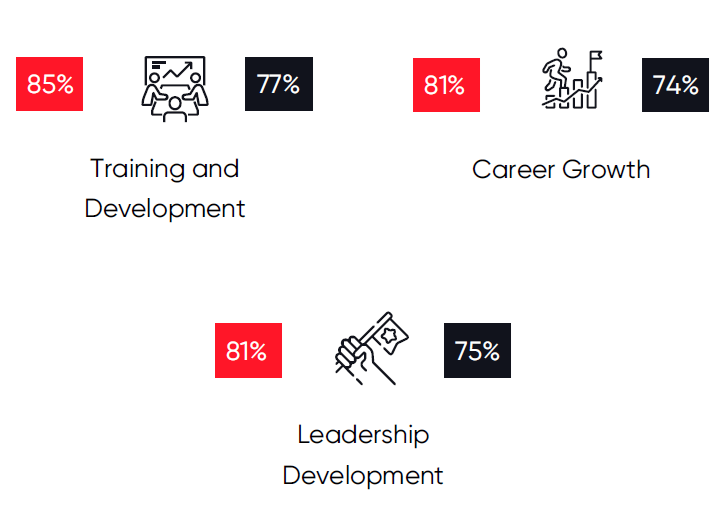
Leadership development and career advancement are essential elements of DEIB-focused workplaces. In the best workplaces, 81% of employees report having access to growth opportunities and leadership training. Such practices empower individuals to advance within the organization, build relevant skills, and ultimately contribute to a more inclusive workplace culture. These initiatives create an environment where employees feel motivated and recognized, increasing their commitment to the company.

Employees at best workplaces feel very positive about their learning and development opportunities.

Addressing Representation Gaps and HEGs

Despite the progress, representation for Historically Excluded Groups (HEGs) remains an area where many organizations can improve. The report highlights gaps in workforce representation for groups such as LGBTQIA+ individuals, persons with disabilities, and veterans. Best practices from leading organizations include targeted hiring strategies, equitable pay structures, and leadership opportunities for HEGs. When companies take action to close these gaps, they make strides toward a truly inclusive environment.

Among the HEGs, the LGBTQIA+ community and persons with disabilities are two groups where representation often lags. Organizations that succeed in DEIB make a concerted effort to include these groups, not only in hiring but in career advancement and leadership roles. By fostering such inclusion, these organizations can bridge the gap between intent and action, providing equitable opportunities for all employees.

Building an Inclusive Culture through DEIB Initiatives

For DEIB initiatives to succeed, organizations must go beyond policymaking and foster an inclusive culture. The best workplaces are characterized by authenticity and transparency, with policies that actively support inclusion. Companies like Lowe’s India and Axis Bank are implementing impactful programs that enhance DEIB in meaningful ways. Axis Bank’s “HouseWorkIsWork” campaign, for example, addresses the challenges faced by homemakers reentering the workforce, tapping into an often-overlooked talent pool. Similarly, Lowe’s conducts interactive experiences to raise awareness about disabilities, including activities like “Dialogue in the Dark,” which educates employees on challenges faced by visually impaired individuals.

These inclusive practices are crucial for creating a workplace where everyone feels respected and valued. By fostering a culture of inclusivity, companies can unlock employees’ potential and promote a supportive work environment. Such initiatives illustrate that DEIB is not just a compliance measure but a cornerstone of long-term growth and success.

Overcoming Barriers to DEIB Implementation

Implementing DEIB is challenging, especially in diverse cultural landscapes like India. According to the report, legal, cultural, and economic barriers often hinder DEIB efforts. For example, outdated stereotypes about gender roles and stigmas associated with disabilities continue to persist in the workplace. To overcome these challenges, companies must adopt targeted strategies, including anti-discrimination policies and accessibility improvements, to create an environment where everyone can thrive.

One approach highlighted in the report is the creation of Employee Resource Groups (ERGs) for HEGs, which provide a platform for underrepresented employees to voice their concerns, build connections, and receive support. Additionally, organizations like Infosys have made significant strides in accessibility, implementing ramps, braille-enabled lifts, and gender-neutral washrooms across their campuses. Such structural changes address economic and cultural barriers, enabling employees from diverse backgrounds to succeed.

Creating Sustainable DEIB Impact through Leadership

True progress in DEIB requires leadership commitment and accountability. Inclusive leadership is essential for embedding DEIB principles throughout the organization. Leaders must model inclusive behaviors, actively listen to employees, and make transparent decisions that reflect their commitment to diversity. The report emphasizes the role of inclusive leaders who practice empathy, fairness, and allyship, creating an environment where diverse voices are valued.

Leaders who prioritize DEIB initiatives strengthen the company’s foundation and cultivate a workforce that feels valued and engaged. By embedding DEIB values in all levels of decision-making, companies not only foster a culture of belonging but also build resilience and adaptability for future challenges. This leadership-driven approach is integral for ensuring the sustainability of DEIB efforts.

Measuring and Tracking DEIB Progress

Tracking DEIB progress is crucial for maintaining momentum and identifying areas for improvement. According to the report, data collection on metrics such as gender diversity, pay equity, and promotion rates is essential for evaluating DEIB initiatives’ effectiveness. Organizations are encouraged to gather employee feedback, conduct regular audits, and monitor HEG representation. For instance, conducting annual equal-pay audits and publishing the findings, as seen in Fractal Analytics, helps maintain transparency and accountability in pay practices.

Monitoring progress allows organizations to align their DEIB goals with business outcomes, ensuring that inclusion efforts are not only impactful but sustainable. This approach also encourages continuous improvement, as companies can adapt their strategies based on feedback and emerging challenges.

The Broader Impact of DEIB on Society

Investing in DEIB has benefits beyond individual organizations. When businesses embrace diversity and inclusion, they contribute to broader societal change by creating opportunities for marginalized communities. The report highlights that 79% of organizations believe their DEIB efforts positively impact the communities they support, with employees reporting a sense of pride in their social contributions.

Organisations that invest in DEIB, are able to see direct impact on community outreach.

The alignment of DEIB initiatives with Sustainable Development Goals (SDGs), such as gender equality and decent work, illustrates how organizations can make a meaningful social impact. By addressing inequalities and promoting fair employment practices, companies contribute to a more just and inclusive society, amplifying the ripple effects of DEIB efforts across communities.

The Great Place To Work report underscores that DEIB is an essential strategy for creating supportive workplaces, fostering innovation, and achieving sustainable growth. The experiences of India’s best workplaces show that organizations that prioritize DEIB not only enhance their competitive advantage but also contribute to a fairer and more inclusive world. By continuing to advance DEIB practices, companies can unlock employees’ full potential, drive positive business outcomes, and make a lasting impact on society.

Get Certified to Showcase Your Commitment    

Achieving Great Place To Work Certification™ is an excellent way to demonstrate your organization’s commitment to employees’ overall well-being and experience. This Certification not only enhances your employer branding but also helps attract and retain top talent. It highlights to current and prospective employees that your organization values their overall well-being, fostering an environment where they feel appreciated and supported.

By implementing a culture of trust, respect, and collaboration, you can create a workplace where employees feel valued and connected. Certification also provides a benchmark for continuous improvement, helping you identify areas where you can further enhance employee well-being and overall workplace culture.

For All Summit Mumbai 2025: Vision to Value – Building Workplaces That Matter

Join us on February 6, 2025, in Mumbai for an enlightening day filled with insights on creating sustainable, humane, and inclusive workplaces. Learn from industry leaders about purpose-driven cultures, innovative HR practices, and adaptive leadership strategies. Get your passes today – https://testg.in/for-all-summit

Banner for registering for the Great Place To Work® For All™ Summit 2025

In an era where workplace dynamics are rapidly evolving, organizations are increasingly turning to company culture consulting for building environments where trust and transparency aren’t just buzzwords but foundational elements of success. Through comprehensive workplace culture surveys and expert guidance, businesses are discovering that a strong cultural framework can dramatically impact their bottom line while fostering an engaged, productive workforce. 

The Building Blocks of Strong Company Culture 

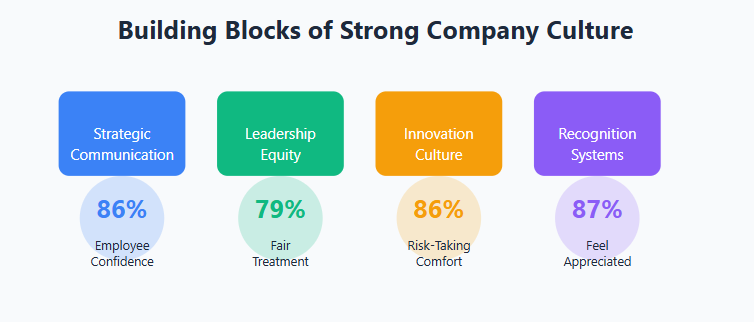
Before diving into specific strategies, let’s visualize the key elements that contribute to a successful company culture:

Building Blocks of Strong Company Culture

The above chart highlights the four fundamental pillars of strong company culture and their impact on organizational success. Let’s explore how professional company culture consulting can help organizations build trust and drive success through data-backed strategies and proven methodologies.

1. Strategic Communication Framework Development

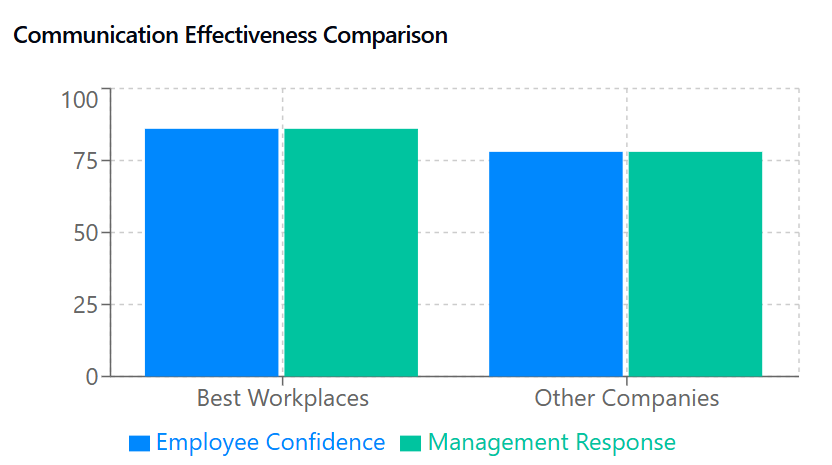
Company culture consulting begins with establishing robust communication channels. Modern consultants leverage workplace culture surveys to identify communication gaps and implement targeted solutions. These assessments often reveal surprising insights – organizations with strong communication frameworks see up to 86% of their employees feeling confident in approaching management with questions and concerns.

Communication Effectiveness Comparison

What sets successful companies apart is their shift from passive to proactive communication strategies:

  • Regular pulse checks through customized surveys
  • Structured feedback loops between management and employees
  • Multi-channel communication platforms that accommodate diverse working styles
  • Training programs that enhance leadership communication skills
  • Real-time feedback mechanisms for immediate issue resolution
  • Cross-functional communication protocols

Culture consultants help organizations move beyond traditional open-door policies to create dynamic, two-way communication channels that foster genuine dialogue and understanding. This transformation often involves implementing sophisticated communication technologies and developing clear escalation pathways for critical issues.

2. Equity-Focused Leadership Development

Workplace culture surveys consistently show that perceived fairness is a critical driver of employee trust. Professional culture consulting helps organizations develop equitable leadership practices through:

  • Unconscious bias training programs
  • Standardized decision-making frameworks
  • Transparent promotion and advancement criteria
  • Regular equity audits and assessments
  • Inclusive leadership development programs
  • Mentorship and sponsorship initiatives
  • Clear performance evaluation metrics

Data shows that in organizations with strong equity practices:

  • 79% of employees report fair treatment without favoritism
  • 82% observe minimal office politics and backstabbing
  • Higher rates of employee retention and satisfaction
  • Improved cross-departmental collaboration
  • Enhanced team performance metrics

Culture consultants work with leadership teams to implement systems that ensure consistent, fair treatment across all organizational levels, leading to improved trust and engagement. They also help establish accountability measures to maintain these practices long-term.

3. Innovation-Enabling Risk Management

Modern company culture consulting emphasizes creating psychological safety – an environment where calculated risks and honest mistakes are viewed as steppingstones to innovation. This approach includes:

  • Developing failure response protocols
  • Creating innovation incentive programs
  • Implementing learning-focused performance reviews
  • Establishing innovation labs and experimental projects
  • Building cross-functional innovation teams
  • Creating safe spaces for experimental initiatives
  • Developing risk assessment frameworks

Workplace culture surveys reveal that organizations embracing this approach see:

  • 86% of employees feeling comfortable taking calculated risks
  • Increased rates of product and process innovation
  • Higher levels of creative problem-solving
  • Stronger team collaboration and knowledge sharing
  • Reduced fear of failure among team members
  • Improved project success rates
  • Enhanced organizational adaptability

Culture consultants help organizations strike the perfect balance between risk management and innovation enablement, creating an environment where creativity thrives without compromising operational stability. They also assist in developing metrics to measure innovation success and adjust strategies accordingly.

4. Recognition System Architecture

Expert company culture consulting places significant emphasis on developing comprehensive recognition frameworks. Through detailed workplace culture surveys, consultants help organizations design recognition systems that:

  • Align with company values and objectives
  • Incorporate both formal and informal recognition channels
  • Ensure equal access to recognition opportunities
  • Create transparent criteria for awards and acknowledgments
  • Implement peer-to-peer recognition programs
  • Develop team-based recognition initiatives
  • Establish recognition budgets and resources

Organizations implementing structured recognition systems report:

  • 87% of employees feeling appreciated for their efforts
  • 85% believing in fair access to recognition opportunities
  • Increased employee motivation and engagement
  • Stronger team morale and workplace satisfaction
  • Higher retention rates among top performers
  • Improved cross-functional collaboration
  • Enhanced employer branding

Consultants work with organizations to create recognition frameworks that celebrate both individual and team achievements, fostering a culture of appreciation and mutual respect. They also help develop metrics to measure the impact of recognition programs on employee engagement and performance.
5. Collaborative Decision-Making Integration

Modern company culture consulting emphasizes the importance of inclusive decision-making processes. Through comprehensive workplace culture surveys, consultants help organizations:

  • Identify key decision-making bottlenecks
  • Develop inclusive decision-making frameworks
  • Create feedback mechanisms for major organizational changes
  • Implement collaborative planning processes
  • Establish cross-functional decision-making committees
  • Design stakeholder engagement protocols
  • Build consensus-building methodologies

Organizations that adopt inclusive decision-making practices see:

  • 83% of employees feeling involved in decisions affecting their work
  • Higher rates of employee buy-in for organizational changes
  • Improved implementation success rates for new initiatives
  • Stronger cross-functional collaboration
  • Reduced resistance to change
  • Enhanced problem-solving capabilities
  • More innovative solutions to complex challenges

Culture consultants guide organizations in creating decision-making processes that balance efficiency with inclusivity, ensuring all voices are heard while maintaining operational effectiveness.

The Transformative Impact of Professional Culture Consulting

When organizations invest in comprehensive company culture consulting and regular workplace culture surveys, the results are remarkable:

  • Double the rates of employee psychological safety
  • Significantly higher levels of innovation and creativity
  • Stronger employee retention and satisfaction
  • Improved organizational performance and productivity
  • Enhanced market competitiveness
  • Better talent attraction and retention
  • Stronger organizational resilience

The key to success lies in the systematic approach that professional culture consulting provides:

  1. Regular assessment through detailed workplace culture surveys
  2. Data-driven strategy development
  3. Customized implementation plans
  4. Continuous monitoring and adjustment
  5. Long-term support and guidance
  6. Adaptive strategy refinement
  7. Stakeholder engagement at all levels

The Data Behind Successful Culture Transformation

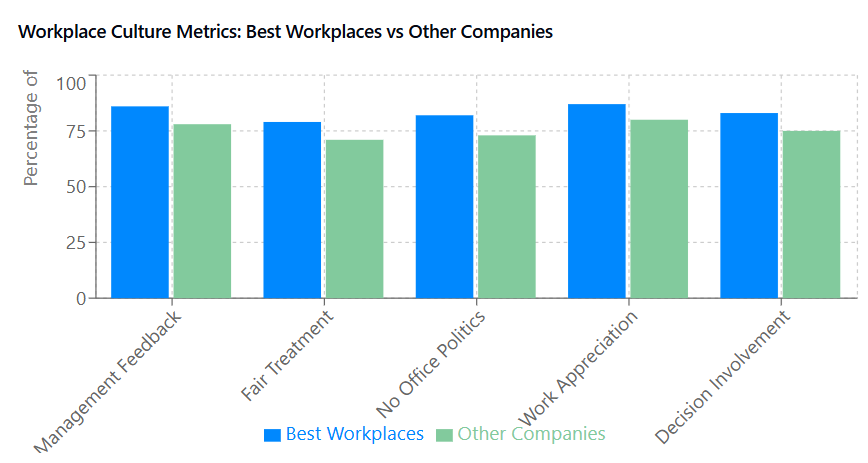
When we compare organizations that invest in company culture consulting with those that don’t, the differences are striking:

Workplace Culture Metrics: Best Workplaces vs Other Companies

As the data clearly shows, organizations that prioritize culture through professional consulting and regular workplace culture surveys consistently outperform their peers across key metrics:

  • Communication effectiveness is 86% higher
  • Fair treatment perception increases by 79%
  • Employee voice and participation improves by 83%

Looking Ahead: The Future of Company Culture Consulting

As workplace dynamics continue to evolve, company culture consulting is becoming increasingly sophisticated. Modern consultants leverage advanced analytics, artificial intelligence, and predictive modeling to help organizations:

  • Anticipate cultural challenges before they arise
  • Develop proactive solutions to emerging issues
  • Create adaptive cultural frameworks that evolve with the organization
  • Build resilient, future-ready workplace environments
  • Implement data-driven decision-making processes
  • Foster inclusive and equitable work environments
  • Create sustainable cultural transformation

Through regular workplace culture surveys and expert guidance, organizations can create environments where trust, innovation, and success naturally flourish. Investment in professional company culture consulting pays dividends not just in improved employee satisfaction and retention, but in sustainable business success and competitive advantage.

Remember: Building a strong company culture is not a destination but a journey. With the right consulting partner and a commitment to regular assessment through workplace culture surveys, organizations can create environments where every employee feels valued, heard, and empowered to contribute their best work. The future belongs to organizations that prioritize cultural excellence and embrace the transformative power of professional culture consulting.

Get Certified to Showcase Your Commitment    

Achieving Great Place To Work Certification is an excellent way to demonstrate your organization’s commitment to employees’ overall wellbeing and experience. This Certification not only enhances your employer branding but also helps attract and retain top talent. It highlights to current and prospective employees that your organization values their health, happiness, and overall wellbeing.    
By implementing a culture of trust, respect, and collaboration, you can create a workplace where employees feel strong, healthy, and connected. Certification also provides a benchmark for continuous improvement, helping you identify areas where you can further enhance employee well-being and overall workplace culture.  

For All Summit 2025: Vision to Value – Building Workplaces That Matter

Join us on February 6, 2025, in Mumbai for an enlightening day filled with insights on creating sustainable, humane, and inclusive workplaces. Learn from industry leaders about purpose-driven cultures, innovative HR practices, and adaptive leadership strategies.

Get your passes today – https://testg.in/for-all-summit

Banner for registering for the Great Place To Work® For All™ Summit 2025

In an era where workplace diversity has evolved from aspiration to imperative, India’s Best Workplaces are setting in women’s empowerment. The landscape of corporate India is undergoing a remarkable transformation, with progressive organizations recognizing that gender diversity isn’t just about meeting quotas—it’s about fostering environments where women can truly thrive and lead. This transformation is reshaping organizational cultures and creating new standards for workplace excellence.
The Numbers Tell a Compelling Story 

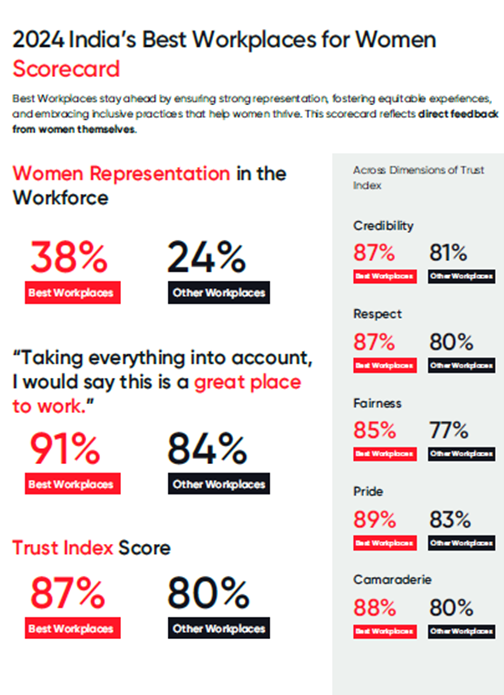
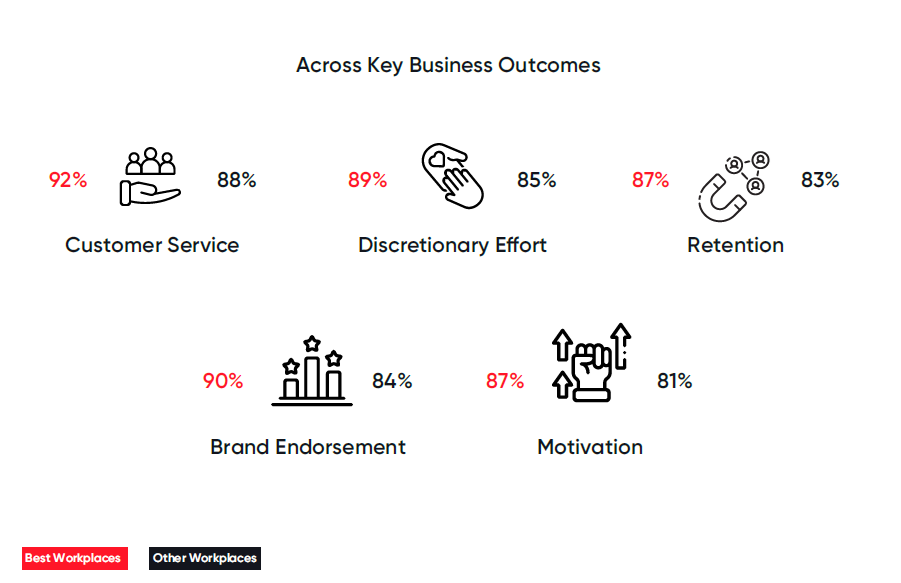
The stark contrast between Best Workplaces and other organizations reveals a telling narrative. With women comprising 38% of their workforce—significantly higher than the 24% seen in other workplaces—these leading organizations demonstrate their commitment to gender diversity through action, not just words. This commitment translates directly into workplace satisfaction, with 91% of women in Best Workplaces rating their organizations as “great places to work” compared to 84% in other workplaces.

2024 India’s Best Workplaces for Women Scorecard

These statistics aren’t just numbers—they represent thousands of women finding fulfillment and success in their professional lives. The higher Trust Index score of 87% in Best Workplaces, compared to 80% in other organizations, indicates a fundamental difference in how women experience their work environment, from daily interactions to career development opportunities.

The Power of Belonging: A Catalyst for Transformation

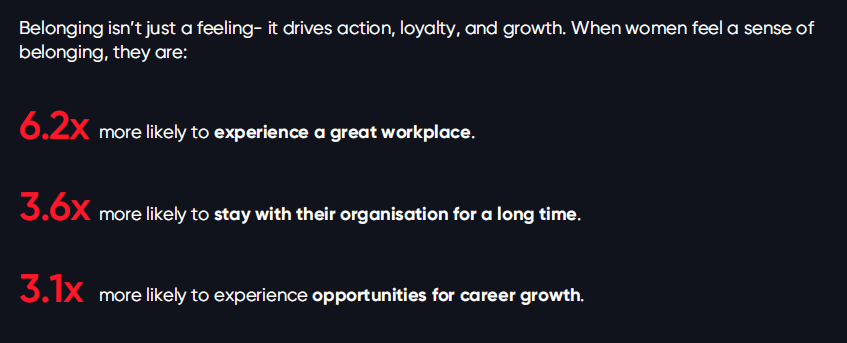
Perhaps the most striking finding is the profound impact of creating environments where women feel they truly belong. Organizations that successfully balance diversity, equity, and inclusion witness an 11% higher sense of belonging among their female employees. This isn’t merely a feel-good metric—it translates into tangible outcomes. Women who experience this sense of belonging are 6.2 times more likely to consider their workplace exceptional, 3.6 times more likely to commit to long-term careers with their organizations, and 3.1 times more likely to see clear paths for career advancement.

When Organisation get the Balance Right, Belonging Strengthens, Leading to a Transformed Culture

The ripple effects of strong belonging extend beyond individual satisfaction. When women feel genuinely integrated into their workplace community, they’re more likely to contribute innovative ideas, take on leadership roles, and mentor others, creating a virtuous cycle of empowerment and growth.

Blueprint for Success: Measuring What Matters

Best Workplaces are adopting sophisticated approaches to tracking and improving women’s workplace experiences. Their metrics span the entire employee lifecycle, from recruitment to leadership development:

Leadership and Retention

Forward-thinking organizations are moving beyond basic headcount metrics. They’re examining women’s participation in strategic discussions, tracking the promotion of women to senior roles from within, and monitoring the effectiveness of flexible work arrangements. Critical attention is paid to post-maternity return rates and the use of support services, ensuring that parenthood doesn’t become a career obstacle.

The most successful organizations are also monitoring the frequency of women’s inclusion in key meetings and strategy discussions, recognizing that visibility and voice are crucial components of leadership development.

Development and Growth

Success in women’s empowerment requires a deliberate focus on growth opportunities. Best Workplaces track participation in leadership programs, monitor the gender distribution in promotion pools, and ensure equitable access to recognition and rewards. This systematic approach helps identify and nurture high-potential female talent, creating robust leadership pipelines.

Recruitment and Onboarding Excellence

Progressive organizations are reimagining their talent acquisition strategies, focusing on gender-balanced candidate pools and diverse interview panels. They track the gender ratio of applicants, shortlisted candidates, and new hires, particularly for leadership positions. Special attention is paid to early engagement scores and retention rates by gender, ensuring that women feel supported from day one.

Innovation in Action: Leading Practices from Top Organizations

Several organizations are pioneering innovative approaches to women’s empowerment:

Addressing the Broken Rung 

Max Life Insurance’s ROAR program tackles a critical challenge in women’s career progression—the transition to first-time management roles. By focusing on communication skills, executive presence, and leadership capabilities, the program helps women overcome self-limiting beliefs and build strong foundations for leadership careers. The program’s emphasis on practical skills like power dressing, body language, and elevator pitches demonstrates a comprehensive approach to leadership development.

Supporting Mid-Career Transitions

R1 RCM Global Private Limited’s Winspire program demonstrates the power of targeted intervention at crucial career junctures. This seven-month development initiative has achieved remarkable success, with 40% of participants advancing to senior roles, proving that structured support can significantly impact career trajectories. The program’s combination of classroom sessions, self-paced learning, and senior leader interactions creates a comprehensive learning experience.

Comprehensive Maternity Support

Happiest Minds’ MoMentum program takes a holistic approach to supporting working mothers through three crucial phases: pre-maternity preparation, during-leave engagement, and post-maternity transition. This comprehensive support system helps talented women navigate one of the most challenging periods in their careers while maintaining their professional momentum. The program’s inclusion of mental health support and peer networking through WhatsApp groups shows attention to both practical and emotional needs.

Building Leadership Pipelines

Tata AIG’s Blue-League Journey exemplifies how organizations can systematically develop women leaders. Their four-month transformative program, focusing on personal growth, people management, execution, and business acumen, creates a structured pathway for high-potential women to advance into leadership roles. The program’s competitive selection process and comprehensive curriculum demonstrate a serious commitment to leadership development.

Fostering Community and Connection

Voya India’s MAAERI Women’s Network Council shows how organizations can create powerful platforms for women to connect, learn, and grow. Through panel discussions with senior leaders and sessions addressing critical topics like unconscious bias, the initiative helps women navigate workplace challenges while building strong professional networks.

What Will It Take to Create Real Impact?

While Best Workplaces have shown impressive progress in women’s empowerment, creating lasting change requires a systematic approach across multiple dimensions. Here’s a comprehensive framework for organizations seeking to make a real difference:

Track and Manage experience, Sensitizing People Managers, Measure and communicate key and Leadership Commitment

1. Track and Manage Experiences

Organizations must go beyond surface-level metrics to truly understand women’s workplace experiences. This requires:

  • Establishing Robust Feedback Mechanisms: Creating anonymous channels where women can voice concerns and suggestions without fear of retribution. Psychological safety is crucial for gathering honest feedback that can drive meaningful change.
  • Implementing Focus Groups and Listening Sessions: Regular sessions where women can share their experiences and expectations directly with leadership create valuable dialogue and ensure that initiatives are aligned with real needs.

2. Sensitizing People Managers

People managers play a pivotal role in shaping workplace experiences and retention decisions. Key focus areas include:

  • Addressing Unconscious Bias: Regular training sessions for all employees, especially people managers, help identify and mitigate unconscious biases that can affect decisions around hiring, promotions, and day-to-day interactions.
  • Life Stage Sensitivity: People managers must understand and support women during critical life stages and personal milestones. Their responses during these crucial moments often influence women’s decisions to stay with or leave an organization. This understanding should extend to providing flexible arrangements and support systems when needed.

3. Measure and Communicate Impact

What gets measured gets managed. Organizations should:

  • Set Clear, Measurable Goals: Establish specific targets for women’s representation at various levels, success metrics for women-specific initiatives, and engagement metrics for women at work.
  • Implement Regular Reporting: Conduct quarterly reviews to assess progress against these goals, ensuring transparency and accountability. This regular monitoring allows organizations to adjust strategies promptly when needed.

4. Demonstrate Leadership Commitment

Leadership commitment is the cornerstone of successful women’s empowerment initiatives:

  • Clear Communication: Leaders must clearly articulate their commitment to diversity and inclusion, creating a culture that genuinely values women’s contributions.
  • Resource Allocation: Demonstrate commitment through concrete actions by allocating specific budgets and resources for women’s development initiatives.
  • Leading by Example: Leaders set the organizational tone through their actions—or inaction. They can foster an inclusive culture by:
    • Actively sponsoring women in their careers
    • Challenging biases when they observe them
    • Using inclusive language consistently
    • Ensuring equal opportunities for growth and advancement
    • Modeling behaviors that support women’s professional development

Driving Business Excellence Through Women’s Empowerment

The data is clear: organizations that excel in women’s empowerment aren’t just doing the right thing—they’re building more successful businesses. Higher trust index scores (87% in Best Workplaces versus 80% in others) indicate stronger organizational cultures. These companies are better positioned to attract and retain top talent, foster innovation through diverse perspectives, and build more resilient organizations.

Moreover, organizations with strong women’s empowerment initiatives often see improvements in decision-making, innovation, and customer understanding, as diverse perspectives lead to more comprehensive solutions and strategies.

Beyond Numbers to Lasting Impact

The journey toward true workplace equality requires more than policies and programs—it demands a fundamental shift in organizational culture. India’s Best Workplaces are showing that when organizations commit to genuine change, the results are transformative. They’re creating environments where women don’t just participate—they thrive, lead, and shape the future of work.

As we look ahead, the message is clear: women’s empowerment in the workplace isn’t just a gender issue—it’s a business imperative that shapes organizational success in the modern economy. Organizations that recognize and act on this reality today will be the leaders of tomorrow. The blueprint for success exists; the challenge now lies in scaling these proven practices across industries and organizations to create a more equitable and prosperous future for all.

Get Certified to Showcase Your Commitment

Achieving Great Place To Work Certification™ is an excellent way to demonstrate your organization’s commitment to employees’ overall wellbeing and experience. This Certification not only enhances your employer branding but also helps attract and retain top talent. It highlights to current and prospective employees that your organization values their health, happiness, and overall wellbeing.    

By implementing a culture of trust, respect, and collaboration, you can create a workplace where employees feel strong, healthy, and connected. Certification also provides a benchmark for continuous improvement, helping you identify areas where you can further enhance employee well-being and overall workplace culture.  

For All™ Summit 2025 Mumbai: Vision to Value – Building Workplaces That Matter

Join us on February 6, 2025, in Mumbai for an enlightening day filled with insights on creating sustainable, humane, and inclusive workplaces. Learn from industry leaders about purpose-driven cultures, innovative HR practices, and adaptive leadership strategies.

Get your passes today – https://testg.in/for-all-summit

Banner for registering for the Great Place To Work® For All™ Summit 2025

In an era where organizational success hinges on innovation and adaptability, one truth stands increasingly clear: companies that empower women don’t just promote equality—they catalyze extraordinary business outcomes. While the dialogue around women’s participation in the workforce has intensified, recent data reveals both promising developments and persistent challenges that demand our attention. The historical contributions of women as the backbone of economies and societies have often gone unrecognized, but today’s organizations are beginning to understand that when women are empowered to participate fully, the ripple effects transform entire industries.

The Current Landscape: Progress and Plateaus

Womens representation across years

The journey of women in the workforce tells a story of both advancement and stagnation. After steady growth from 2021 to 2023, women’s representation has hit a concerning plateau at 26%, with merely 16% occupying executive or C-suite positions. This stagnation signals a crucial reality: passive progress is no longer sufficient to drive meaningful change. The steep decline in workforce participation over the last decade, driven by cultural expectations, deep-rooted social norms, and caregiving responsibilities, highlights the complexity of the challenge we face.

Representation of Women across Industries in 2024

The disparity becomes even more pronounced across sectors. While education and non-profit organizations lead with nearly 50% women representation, traditional male-dominated industries like manufacturing, transportation, and construction continue to lag significantly behind.

Women Representation across Role Levels

More troubling still is the World Economic Forum’s projection that achieving gender parity in economic participation could take up to 131 years at the current pace. This timeline serves as a stark reminder that transformative action is needed now.

Beyond Numbers: The Experience Gap 

Raw representation statistics tell only part of the story. Recent sentiment analysis reveals a growing emotional disconnect in women’s workplace experiences. A concerning trend shows fewer women feeling appreciated or believing in management’s commitment to their words. Only 65% feel they receive fair compensation from their company’s profits, highlighting a widening chasm between leadership and employees. This disconnect is further amplified by increasing perceptions of favoritism and workplace politics.

Workplace Culture Experience of Women

While 95% of women report feeling physically safe at work, true engagement stems from deeper factors: feeling valued, heard, and treated fairly.

Gap in Key Experiences

The transition from individual contributors to leadership positions remains a significant hurdle, evidenced by a 7% gap in growth opportunities between executives (84%) and individual contributors (77%). This disparity in career development opportunities underscores the need for more equitable advancement pathways across all organizational levels.

Understanding the Retention Challenge 

Social and workplace conditions often contribute to women’s workforce attrition. The Global Gender Gap Report indicates this is a widespread issue across industries, particularly in countries like India. Research consistently shows that fairness, growth opportunities, and recognition are key drivers affecting women’s intent to stay in the workplace. Organizations must recognize that creating an environment where women can thrive requires addressing these fundamental aspects of the work experience.

Best Workplaces: Setting the Gold Standard

What sets Best Workplaces apart in this landscape? The answer lies in their comprehensive approach to women’s empowerment. These organizations have demonstrated that supporting women’s advancement isn’t just about meeting quotas—it’s about fostering an environment where women can thrive at every level. Their success is built on understanding that having women as role models across all levels is crucial for building a strong pipeline of leadership talent.

Experiences of Women Employees Across Key Business Outcomes

The results speak volumes: Best Workplaces boast twice the number of women CEOs compared to other organizations. Their success extends beyond leadership demographics, with 90% of employees expressing pride in their company’s brand and 92% reporting high customer satisfaction. Perhaps most tellingly, 87% of employees indicate strong intent to stay, while 89% consistently go above and beyond in their contributions. These organizations report up to 9% more positive experiences in key areas that drive retention compared to other workplaces.

The Blueprint for Change

Creating an inclusive workplace requires a strategic, multi-faceted approach that addresses both systemic barriers and individual needs:

1. Strategic Recruitment

Successful organizations implement targeted recruitment strategies, including:

  • Setting clear diversity targets aligned with organizational goals
  • Using gender-neutral language in job postings to eliminate unconscious bias
  • Implementing blind hiring processes to ensure fair evaluation
  • Developing comprehensive returnship programs for women rejoining the workforce
  • Showcasing success stories of women within the organization to inspire others

2. Engagement and Development

Retention hinges on creating an environment where women can flourish:

  • Offering flexible work arrangements that accommodate various life stages
  • Providing equal growth opportunities through transparent promotion processes
  • Establishing mentorship programs that connect women with senior leaders
  • Creating women’s networks and resource groups for peer support
  • Implementing focused leadership development initiatives
  • Ensuring equal access to high-visibility projects and opportunities
  • Providing comprehensive support for work-life integration

3. Measurement and Accountability

Progress requires regular monitoring and adjustment:

  • Establishing robust feedback mechanisms at all organizational levels
  • Conducting regular focus groups to understand women’s experiences
  • Setting measurable goals with clear timelines and accountability
  • Maintaining transparent reporting on diversity metrics
  • Analyzing retention data to address attrition causes
  • Implementing regular pay equity audits
  • Tracking promotion rates and career progression patterns

The Business Case for Women’s Empowerment

The impact of women’s empowerment extends far beyond social responsibility. Best Workplaces consistently demonstrate superior outcomes in:

  • Customer service excellence through diverse perspectives
  • Brand loyalty from both employees and customers
  • Employee discretionary effort and innovation
  • Workplace motivation and team collaboration
  • Innovation and problem-solving through diverse thinking
  • Market understanding and product development
  • Overall organizational resilience and adaptability

Looking Ahead: The Path Forward

As we navigate the evolving workplace landscape, organizations must move beyond surface-level initiatives to create lasting change. This requires:

1. Leadership Commitment:

  • Beyond verbal support, leaders must allocate resources and lead by example
  • Regular communication of commitment to diversity and inclusion
  • Active participation in mentorship and sponsorship programs
  • Personal accountability for diversity goals

2. Cultural Transformation:

  • Organizations need to address unconscious biases through comprehensive training
  • Create systems that support women through various life stages
  • Foster an environment where speaking up is encouraged and valued
  • Develop inclusive policies that consider diverse needs and perspectives

3. Sustainable Progress:

  • Regular measurement and communication of key metrics
  • Continuous adjustment of strategies based on feedback and results
  • Integration of diversity goals into business strategy
  • Development of long-term talent pipelines

The message is clear: organizations that genuinely commit to women’s empowerment don’t just contribute to social progress—they position themselves for sustained success in an increasingly competitive business landscape. As we look to the future, the question isn’t whether to prioritize women’s empowerment, but how quickly organizations can adapt to this imperative for change.

The time for incremental progress has passed. Organizations must take bold steps to create workplaces where women don’t merely participate but lead, innovate, and transform. In doing so, they won’t just be supporting women’s advancement—they’ll be securing their own path to excellence in the modern business world. The success of Best Workplaces proves that when organizations create truly inclusive environments, everyone wins—employees, customers, and the bottom line.

Get Certified to Showcase Your Commitment    

Achieving Great Place To Work® Certification™ is an excellent way to demonstrate your organization’s commitment to employees’ overall wellbeing and experience. This Certification not only enhances your employer branding but also helps attract and retain top talent. It highlights to current and prospective employees that your organization values their health, happiness, and overall wellbeing. 

By implementing a culture of trust, respect, and collaboration, you can create a workplace where employees feel strong, healthy, and connected. Certification also provides a benchmark for continuous improvement, helping you identify areas where you can further enhance employee well-being and overall workplace culture.

For All Summit 2025: Vision to Value – Building Workplaces That Matter

Join us on February 6, 2025, in Mumbai for an enlightening day filled with insights on creating sustainable, humane, and inclusive workplaces. Learn from industry leaders about purpose-driven cultures, innovative HR practices, and adaptive leadership strategies.

Get your passes today – https://testg.in/for-all-summit 

Banner for registering for the Great Place To Work® For All™ Summit 2025

In today’s fast-paced business landscape, organizations that prioritize workplace innovation culture are setting themselves apart from the competition. These forward-thinking companies understand that fostering an environment where creativity thrives is not just a nice-to-have – it’s a necessity for long-term success. Let’s explore how the best workplaces and innovation go hand in hand, and what leaders can do to cultivate this powerful combination.

The Power of a Workplace Innovation Culture

At its core, a workplace innovation culture is one that empowers every employee to contribute ideas, take calculated risks, and drive positive change. It’s a mindset that permeates every level of the organization, from entry-level staff to C-suite executives. When done right, this approach can lead to groundbreaking products, streamlined processes, and a more engaged workforce.

Innovation ratio between Best Workplaces and Other Workplaces

Research consistently shows that companies with strong innovation cultures outperform their peers. According to a recent study, organizations recognized as “Best Workplaces” demonstrate a significantly higher capacity for innovation compared to their counterparts. This advantage translates into tangible benefits, including increased market share, improved employee retention, and enhanced adaptability in the face of industry disruptions.

Key Elements of Innovation-Driven Workplacestion Day 

1. Leadership That Inspires

Innovation starts at the top. Leaders in the best workplaces understand that their role is not just to manage, but to inspire. They paint a compelling vision of the future and invite their teams to help bring it to life. These leaders:

– Communicate clearly and often about the importance of innovation

– Lead by example, demonstrating a willingness to embrace new ideas

– Provide the resources and support necessary for innovation to flourish

Confidence in leadership leading to higher innovation in best workplaces.

2. Psychological Safety

For employees to feel comfortable sharing novel ideas, they need to know that failure is not only accepted but expected as part of the innovation process. The best workplaces create an atmosphere of psychological safety where team members can take risks without fear of ridicule or punishment. This safety net encourages experimentation and learning from mistakes.

3. Cross-Functional Collaboration

Innovation rarely happens in a vacuum. The most innovative companies break down silos and encourage collaboration across departments. They create opportunities for diverse teams to come together, share perspectives, and tackle challenges collectively. This cross-pollination of ideas often leads to unexpected and exciting breakthroughs.

4. Continuous Learning and Development

In a rapidly evolving business environment, stagnation is the enemy of innovation. The best workplaces prioritize ongoing learning and development for all employees. This might include:

– Regular training sessions on emerging technologies

– Mentorship programs that pair experienced innovators with up-and-coming talent

– Resources for self-directed learning and skill development

5. Recognition and Rewards

Innovative thinking should be celebrated and rewarded. The best workplaces understand the power of positive reinforcement and create systems to recognize both big wins and small improvements. This could involve financial incentives, public acknowledgment, or opportunities for career advancement tied to innovative contributions.

The Gen Z Factor: Attracting Tomorrow’s Innovators

As the workforce continues to evolve, companies are recognizing the unique value that Gen Z employees bring to the table when it comes to innovation. Born into a world of rapid technological advancement, this generation is naturally inclined towards creative problem-solving and digital fluency.

Contribution of Gen Z in Innovation

The best workplaces are tailoring their innovation strategies to engage and retain Gen Z talent. This includes:

– Providing cutting-edge tools and technologies

– Offering flexible work arrangements that support work-life integration

– Creating opportunities for meaningful impact and social responsibility

Research indicates that organizations excelling in workplace innovation see an 18% advantage in Gen Z retention and positive brand perception. By fostering an environment where young professionals can thrive and contribute their unique perspectives, these companies are securing their innovative edge for years to come.

Measuring Innovation Culture Success

While cultivating a workplace innovation culture is crucial, it’s equally important to measure its effectiveness. Best workplaces employ various metrics to gauge their innovation prowess:

– Number of new ideas generated and implemented

– Time-to-market for new products or services

– Employee engagement scores related to innovation initiatives

– Revenue generated from recent innovations

By tracking these key performance indicators, organizations can continually refine their approach and ensure they’re creating an environment that truly fosters creativity and forward thinking.

Strategies for Building Your Own Innovation Powerhouse

Ready to transform your workplace into an innovation incubator? Here are some actionable steps to get started:

  1. Conduct an Innovation Audit: Assess your current culture and identify areas for improvement.
  2. Invest in Employee Development: Launch programs that enhance creative thinking and problem-solving skills across all levels of the organization.
  3. Create Innovation Spaces: Designate physical or virtual areas where teams can collaborate and brainstorm freely.
  4. Implement an Idea Management System: Develop a structured process for collecting, evaluating, and implementing employee ideas.
  5. Foster Open Communication: Encourage regular feedback sessions and transparent discussions about the company’s innovation goals and progress.
  6. Embrace Failure as a Learning Opportunity: Share stories of “productive failures” and the lessons learned from them.
  7. Partner with External Innovators: Collaborate with startups, universities, or industry disruptors to inject fresh perspectives into your organization.

The Future of Workplace Innovation

As we look ahead, it’s clear that the most successful companies will be those that can adapt quickly and innovate consistently. By fostering a workplace innovation culture, organizations can position themselves at the forefront of their industries, ready to tackle whatever challenges the future may bring.

Remember, building a culture of innovation is not a one-time effort but an ongoing journey. It requires commitment, patience, and a willingness to evolve. But for those companies willing to invest in creating truly innovative workplaces, the rewards – in terms of employee satisfaction, market leadership, and long-term success – are well worth the effort.

In conclusion, the best workplaces understand that innovation is not just about breakthrough technologies or revolutionary products. It’s about creating an environment where every employee feels empowered to contribute their best ideas and drive positive change. By prioritizing a workplace innovation culture, these organizations are not just preparing for the future – they’re actively shaping it.

Get Certified to Showcase Your Commitment

Achieving Great Place To Work® Certification™ is an excellent way to demonstrate your organization’s commitment to employees’ overall wellbeing and experience. This Certification not only enhances your employer branding but also helps attract and retain top talent. It highlights to current and prospective employees that your organization values their health, happiness, and overall wellbeing.    

By implementing a culture of trust, respect, and collaboration, you can create a workplace where employees feel strong, healthy, and connected. Certification also provides a benchmark for continuous improvement, helping you identify areas where you can further enhance employee well-being and overall workplace culture.  

For All Summit 2025: Vision to Value – Building Workplaces That Matter

Join us on February 6, 2025, in Mumbai for an enlightening day filled with insights on creating sustainable, humane, and inclusive workplaces. Learn from industry leaders about purpose-driven cultures, innovative HR practices, and adaptive leadership strategies.

Get your passes today – https://testg.in/for-all-summit 

Banner for registering for the Great Place To Work® For All™ Summit 2025