The ever-evolving landscape of the workplace is now firmly situated within the creative economy, where innovation, knowledge, and adaptability reign supreme. Recent findings from a comprehensive study conducted by RSM India illuminate the pivotal role that best workplaces play in this transformative environment. In this article, we will delve into the interplay between best workplaces and the creative economy, exploring how these workplaces have yielded remarkable returns and created a breeding ground for innovation, productivity, and inclusivity. 

Best Workplaces: A Beacon in the Creative Economy

The creative economy, marked by the dominance of intangible assets, knowledge, and innovation, is where the best workplaces shine. Data points from our India’s Best Companies To Work For (Top 100) report reaffirm the substantial influence of best workplaces in this new creative economy scenario. 

1. 14X Cumulative Returns on Investment:

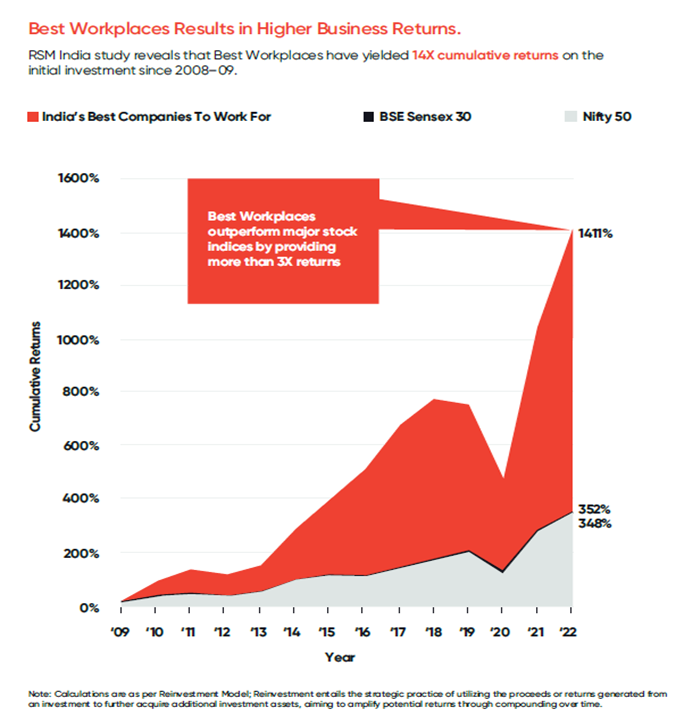
The RSM India study underscores that the best workplaces have yielded an extraordinary 14X cumulative return on the initial investment since 2008-09. This monumental financial achievement not only exemplifies the robust financial benefits but also signifies the value of nurturing employee well-being and development. 
Higher Business Returns

2. 3X Outperformance of Stock Indices:

Returns of Best workplaces also excel compared to major stock indices by 3X. The substantial financial success of these workplaces is rooted in their innovative, engaged, and productive work culture

3. Equitable Experience and Enhanced Productivity and Innovation:

A hallmark of the best workplaces is their commitment to delivering an equitable experience across demographics. This commitment results in an 8% increase in productivity and a remarkable 10% boost in innovation. The cultivation of a diverse and inclusive environment empowers every individual to contribute unique perspectives and ideas, thereby driving innovation and productivity.
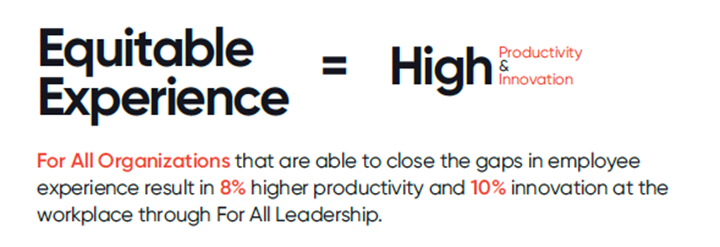
For All Organizations

4. Leadership that Inspires Meaning:

In organizations led by For All leaders, leadership is a driving force that ignites a sense of purpose and meaning among employees. On average, it results in 62% more employees discovering meaning in their jobs, feeling like they are making a difference, and being a part of a better future. This sense of purpose fuels engagement and motivation, thereby improving performance.

5. Maximizing Employee Potential in a High-Growth Economy:

In a high-growth phase of the Indian economy, the focus on enabling employees to maximize their potential is of paramount importance. Best workplaces prioritize the development and growth of their employees to harness the opportunities presented by a dynamic and evolving economy.

The Role of Best Workplaces in Navigating the Creative Economy

Best workplaces, as the data suggests, serve as vital catalysts in navigating the creative economy. They act as fertile grounds for innovation, engagement, and productivity, where employees are encouraged to unleash their full potential. Here’s how other organizations can be successful in the creative economy, too.

1. Cultivating Creativity:

In the creative economy, creativity is the most precious asset.  Other organizations should cultivate creativity through a supportive and inclusive culture where diverse ideas are not merely welcomed but celebrated.

2. Continuous Learning:

Other organizations must champion continuous learning, ensuring that employees remain relevant and adaptable in a swiftly changing landscape. They offer opportunities for skill development and personal growth.

3. Entrepreneurial Mindset:

Other organizations must foster an entrepreneurial mindset, empowering employees to take calculated risks, experiment with new ideas, and drive innovation.

4. Innovation in Organizational Culture:

Other organizations must invest in creating a culture of innovation where employees are encouraged to present new ideas, processes, and solutions.

5. Remote Work Strategies:

Other organizations must adapt to the rise of remote work by providing the tools and resources necessary for employees to work effectively from any location. They shift the focus to results, not physical presence, promoting flexibility and productivity.

6. Collaboration with the Gig Economy:

Other organizations must also acknowledge the potential of the gig economy and actively seek opportunities to collaborate with independent workers, freelancers, and entrepreneurs to tap into their expertise and skills.

In the dynamic landscape of the creative economy, the best workplaces emerge not only as thriving environments but also as pivotal drivers of innovation, productivity, and financial success. The data points from the RSM India study provide clear evidence of the tangible advantages of investing in a positive work culture. As the Indian economy enters a high-growth phase, enabling employees to maximize their potential becomes imperative. Other organizations, with their emphasis on inclusivity, innovation, and meaningful leadership, can stand as the forerunners as well. In this new creative economy scenario, maximizing potential is not just an aspiration but a guiding principle for success. Embrace the values of the best workplaces and set the stage for a future of work that is not only dynamic but also deeply fulfilling.
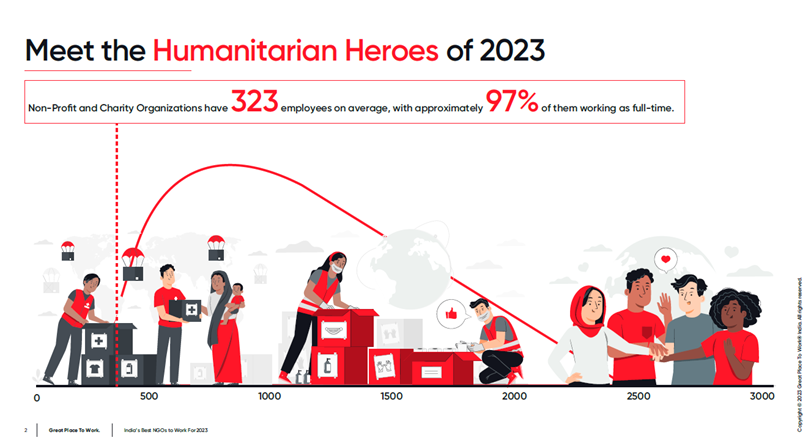
Humanitarian Heroes

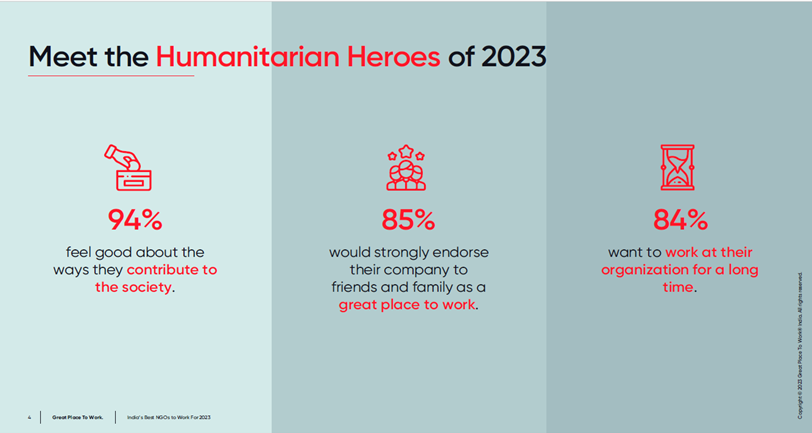
Non-profit and charity organizations have long been at the forefront of humanitarian efforts, striving to make the world a better place. Their employees play a crucial role in driving these missions forward. In 2023, a remarkable 94% of non-profit employees reported feeling good about the way they contribute to society, setting them apart from other industries.

This article explores the factors that make these organizations a beacon for workplace contentment, from employee endorsements to their strong desire for long-term commitment. We will also examine key statistics from our recent India’s Best NGOs to Work For 2023 report that paint a picture of the evolving landscape of non-profit organizations in 2023. To get more insights into these findings, you can download the full report from our website.

The Heart of Employee Satisfaction in Non-Profits

The statistics for employee satisfaction in non-profit organizations are nothing short of impressive. With a significant majority of employees experiencing satisfaction in their contributions to society, it’s clear that content employees drive the heart of humanitarian efforts. This high level of satisfaction is a testament to the fulfilling nature of work within these organizations. One of the most striking findings is that 85% of non-profit employees would strongly endorse their organization to friends and family as a great place to work. This level of endorsement reflects the deep sense of pride and commitment that employees feel towards their work. It’s not just a job; it’s a vocation that they are eager to share with others.

Humanitarian Heroes

Moreover, 84% of employees in non-profit organizations express a strong desire to work at their organization for a long time. This desire for long-term commitment showcases the stability and sense of belonging that non-profits offer to their employees. They are not just seeking a paycheck but a fulfilling career and a meaningful mission.

Diversity and Inclusion

Humanitarian Heroes

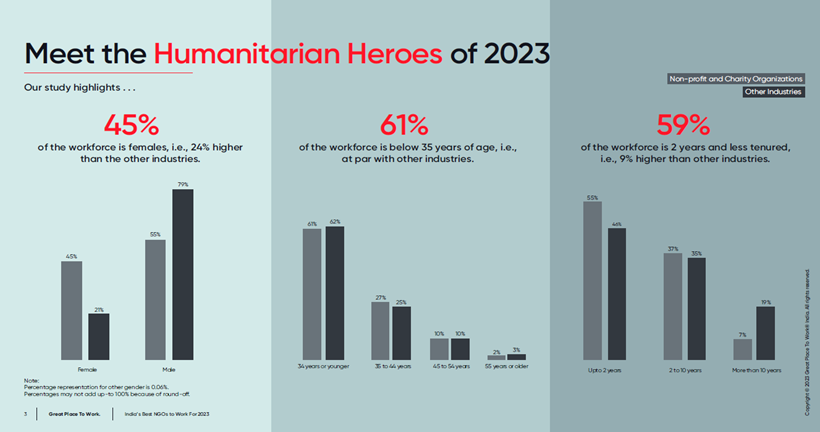
Non-profit organizations are also making significant strides in promoting diversity and inclusion. In 2023, 45% of the workforce in these organizations is comprised of females, marking a 24% higher representation than in other industries. This gender diversity is a testament to the inclusive culture that non-profits are cultivating. It is not just about doing good in the world; it’s also about creating a diverse and equitable workplace.

Non-profit and Charity Organizations

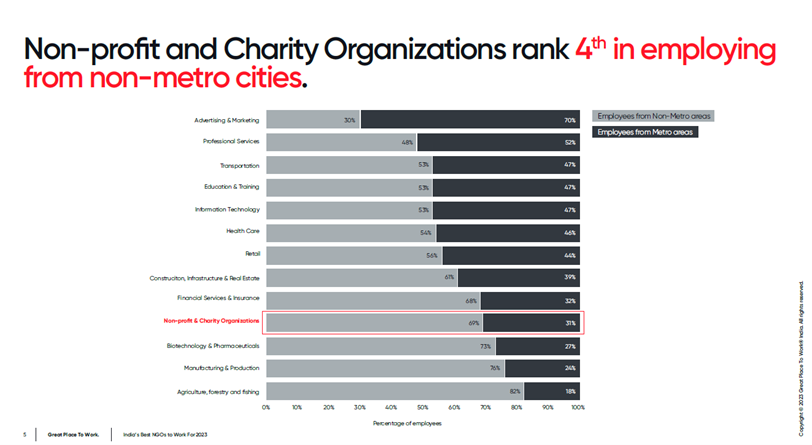
Another interesting fact is that 69% of employees in non-profit organizations hail from non-metro cities. This indicates that non-profits are reaching out and providing opportunities to individuals from all walks of life, not just those in urban areas. It’s a testament to the inclusive and diverse workforce that characterizes these organizations.

Comparing Non-Profits to Other Industries

Working for good Vs Working for profit

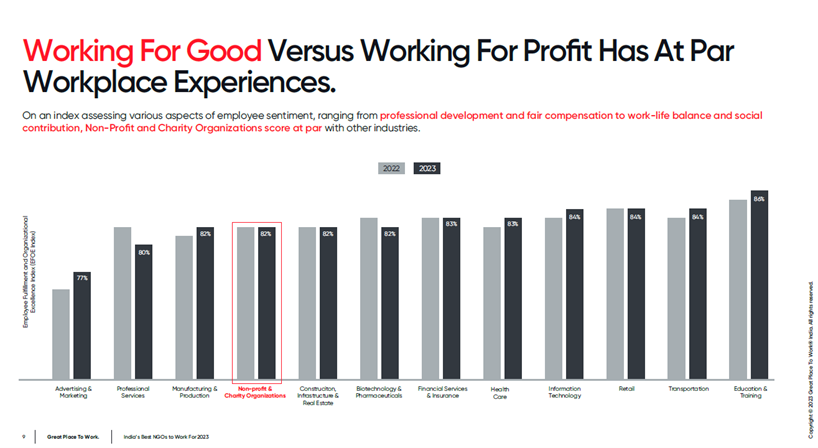
Non-profit and charity organizations score at par with other industries when it comes to various aspects of employee sentiment. These aspects include professional development, fair compensation, work-life balance, and social contribution. It’s clear that non-profits are not lagging behind; they are standing shoulder-to-shoulder with their counterparts in the for-profit sector.

What Sets the Best Non-Profits Apart?

To understand what makes certain non-profits stand out, we need to look at some key differentiators. In 2023, 7% more employees in the Best Workplaces in NGOs report feeling good about the ways they contribute to society compared to employees in other non-profit organizations. This suggests that the best non-profits excel not only in their missions but also in the way they engage and inspire their employees.

One significant difference is in the perception of management. There is a 6-7% difference in perception around management in the Best Workplaces in NGOs compared to the other workplaces. This indicates that effective leadership and management are critical in creating a positive and inspiring work environment within non-profits.

The change everywhere also provide better benefits, a fun working environment, and a work-life balance. These factors contribute to the high level of employee satisfaction and retention in these organizations. It’s not just about the mission; it’s also about how the organization supports and values its employees.

Talent Rentention in Best Workplaces

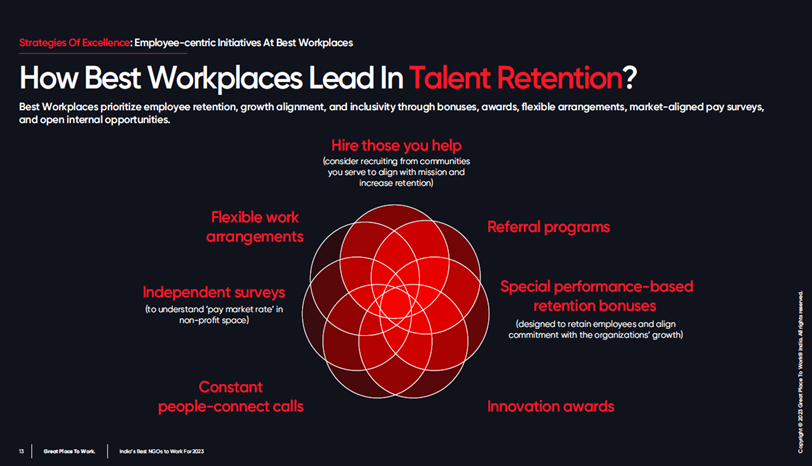
Non-profit and charity organizations are thriving in 2023, not only in terms of their societal contributions but also in their commitment to employee satisfaction. The diversity and inclusion efforts within non-profits are also commendable, with a higher representation of females and employees from non-metro cities. Non-profits are breaking barriers and creating opportunities for individuals from various backgrounds.

As we’ve seen, the best non-profits distinguish themselves by fostering a positive work culture, excelling in management, and providing attractive benefits. They set the gold standard for employee satisfaction within the sector.

In conclusion, non-profit and charity organizations are not only the heart of humanitarian efforts but also the heart of employee satisfaction. If you want to learn more about the insights and data behind these findings, you can download the full report from our website. Non-profits are not just changing the world; they are also changing the lives of those who work for them, one satisfied employee at a time.

Organizations are beginning to see the value of green efforts in an era characterized by increased awareness of environmental challenges and a growing demand for sustainability. These initiatives not only contribute to a more sustainable future but also play a crucial role in employee engagement and workplace culture. In this blog, we’ll delve into the relationship between green initiatives and employee engagement and how they collectively foster a sustainable workplace culture.

The Growing Importance of Green Initiatives

Sustainability has moved from being a buzzword to a fundamental aspect of corporate responsibility. Organizations are facing increasing pressure to take action as major concerns persist from climate change, resource depletion, and environmental degradation. The adoption of green initiatives represents a proactive approach to these challenges, and it’s becoming clear that sustainability isn’t just a moral imperative; it’s also a smart business move.

Green initiatives can take many forms, from energy-efficient practices to waste reduction, eco-friendly product development, and carbon footprint reduction. However, the successful integration of these initiatives into an organization’s culture relies heavily on employee engagement.

Employee Engagement: The Heart of Sustainability

An employee’s emotional attachment to their company is known as employee engagement. In addition to being content with their work, engaged employees have a strong sense of purpose and commitment to the company’s core values. This emotional commitment can be harnessed to fuel green initiatives and sustainability efforts.

1. Alignment with Organizational Values: When an organization clearly communicates its commitment to sustainability, it attracts employees who share those values. Such employees are more likely to actively participate in green initiatives because they resonate with the company’s goals.

2. Innovation and Problem Solving: Employee engagement increases the likelihood that they will actively look for solutions to issues, particularly sustainability-related ones. They will come up with innovative ideas for reducing waste, saving energy, and decreasing the company’s carbon footprint.

3. Collaboration: Sustainability efforts often require cross-departmental collaboration. Engaged employees are more likely to work together seamlessly to achieve common goals, whether it’s reducing plastic waste or creating a greener supply chain.

4. Ownership and Accountability: Engaged employees take ownership of their work and are accountable for their actions. This extends to their involvement in green initiatives. They feel responsible for the success of sustainability efforts and are more likely to ensure they are implemented effectively.

5. Well-being and Motivation: Organizations that prioritize sustainability often create healthier and more motivating work environments. Access to natural light, green spaces, and eco-friendly practices can improve employee well-being, which, in turn, boost engagement.

Tangible Benefits of Employee Engagement in Sustainability

The synergy between green initiatives and employee engagement doesn’t just benefit the environment. It also yields substantial advantages for organizations:

1. Cost Savings: Engaged employees are more conscious of resource usage and are more likely to identify opportunities for cost savings. This can translate to significant reductions in operational expenses, especially in the areas of energy, water, and waste management.

2. Improved Reputation: Companies with strong sustainability programs and engaged employees build better reputations. This can lead to increased customer loyalty, attracting a broader customer base, and providing a competitive edge in the market.

3. Talent Attraction and Retention: Organizations that prioritize sustainability and employee engagement are more attractive to potential employees. Engaged employees are also less likely to leave, resulting in reduced turnover and the associated costs.

4. Innovation: Engaged employees often drive innovation. They are more likely to suggest, develop, and implement new ideas, products, or processes that support sustainability, which can lead to a competitive advantage.

5. Regulatory Compliance: By involving engaged employees in sustainability efforts, organizations are better positioned to comply with evolving environmental regulations, avoiding potential fines and legal issues.

Building a Sustainable Workplace Culture

To foster a sustainable workplace culture that revolves around green initiatives and employee engagement, organizations can take several steps:

1. Leadership Commitment

Sustainability must start at the top. Leaders should demonstrate their commitment to green initiatives by integrating them into the organization’s mission, vision, and strategic plans. When employees see that leaders are invested in sustainability, they are more likely to embrace it themselves.

2. Clear Communication

Effective communication is key to engaging employees in green initiatives. Organizations should clearly communicate their sustainability goals, the progress they’ve made, and how employees can contribute. Regular updates, emails, and meetings can help maintain this communication.

3. Training and Education

Invest in sustainability training for employees at all levels. This can include workshops, seminars, and online courses that help employees understand the importance of sustainability and their role in achieving it.

4. Employee Involvement

Empower employees to actively participate in sustainability efforts. This can include forming green teams, task forces, or committees to brainstorm, plan, and execute green initiatives. Involve employees in decision-making processes related to sustainability.

5. Recognition and Rewards

Employee contributions to green projects should be recognized and appreciated. Recognition programs, bonuses, or extra time off can motivate employees to continue their sustainability efforts.

6. Measurable Goals and Tracking

Set clear, measurable goals related to sustainability and regularly track progress. Use key performance indicators (KPIs) to evaluate the impact of green initiatives and share this data with employees to showcase their achievements.

7. Celebrate Success

When milestones are achieved, celebrate them as a team. Recognize and appreciate the collective effort of employees in making the workplace more sustainable. This not only raises spirits but also demonstrates how important sustainability is.

8. Continuous Improvement

Sustainability is an ongoing journey. Encourage employees to continuously seek opportunities for improvement and innovation in sustainability efforts. This keeps the workplace culture dynamic and evolving.

The Road Ahead

In an age where environmental sustainability is no longer optional but essential, green initiatives and employee engagement go hand in hand. Organizations that prioritize both not only contribute to a better planet but also enjoy numerous benefits, including cost savings, improved reputation, and a more dedicated and innovative workforce.

As we move forward, the role of green initiatives in fostering a sustainable workplace culture will continue to grow.Businesses who ignore this trend run the risk of falling behind, but those that actively include their staff in the cause and promote sustainability will be at the forefront of a prosperous and environmentally sensitive future. The time to act is now, and the rewards are significant for those who do.

Key Takeaways:

1. The impact of technology on the workplace can be seen as increased collaboration.

2. Respect and Pride are key cultural dimensions amplified by tech.

3. Digital tools foster innovation through feedback and learning.

Technology has transformed workplace culture by enabling flexibility, collaboration, and innovation. From remote work tools to recognition platforms, technology shapes how employees connect, learn, and thrive in modern organizations. Workplace culture is a dynamic entity shaped by various factors, including leadership, values, traditions, and, more recently, technology. The digital age has brought about profound changes in how businesses operate, and this transformation is reflected in the way workplace culture is both created and sustained. This blog will explore how workplace culture is changing, with a particular emphasis on the impact of technology and its vital role in promoting innovation. It is interesting to note that as India’s innovation prowess has surged, there is a direct correlation with the five dimensions of workplace culture, particularly the profound influence of Respect and Pride.

India’s Remarkable Journey in Innovation

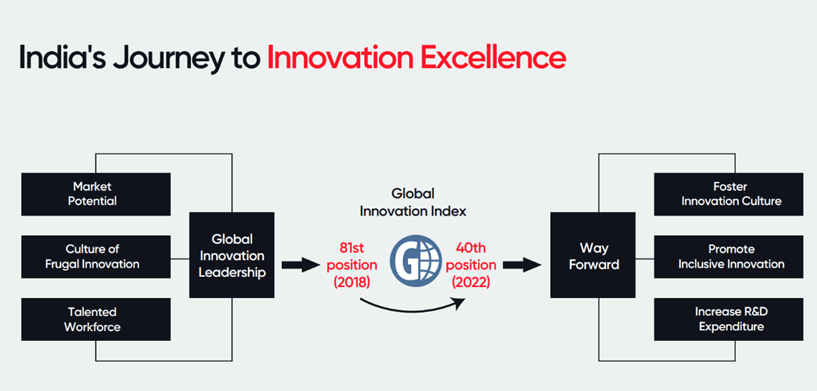
India's Journey to Innovation Excellence

Before we dive deep into the impact of technology on workplace culture, it’s essential to acknowledge India’s impressive journey towards innovation excellence. In just four years, India’s ranking on the Global Innovation Index improved significantly, soaring from the 81st position in 2018 to the 40th position in 2022. India’s dedication to innovation and its capacity to leverage both human capital and technological strength are demonstrated by this amazing leap. It highlights the profound influence of innovation on India’s economic growth and global competitiveness. As India advances on the global innovation stage, the role of technology in shaping workplace culture becomes more evident.

What Are the Dimensions of Workplace Culture?

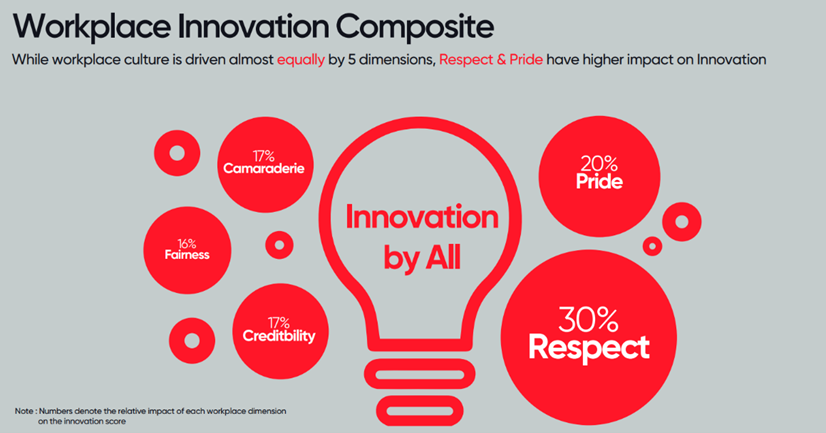
Workplace culture is a complex amalgamation of various elements, but research has shown that five key dimensions largely drive it. According to our Best Workplaces™ Building a Culture of Innovation report, these dimensions are:

1. Camaraderie (17%)

2. Pride (20%)

3. Fairness (16%)

4. Credibility (17%)

5. Respect (30%)

Workplace Innovation Composite

These dimensions are not mutually exclusive; rather, they work together to shape the overall culture of a workplace. The striking revelation from this data is the disproportionate influence of Respect and Pride, which contribute significantly to the innovation score of an organization.

The Power of Respect and Pride in Fostering Innovation

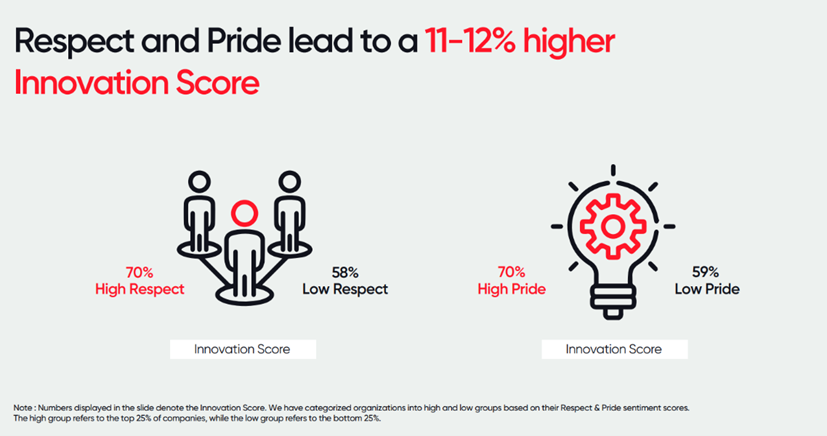
Respect and Pride

While all five dimensions play a role in shaping workplace culture, Respect and Pride stand out as catalysts for innovation. Research reveals that these two dimensions lead to an 11-12% higher Innovation Score when compared to the others. But what makes Respect and Pride so powerful in fostering innovation, and how does technology factor into this equation?

1. Respect: The Foundation of a Positive Workplace Culture

Respect, as a dimension of workplace culture, goes beyond basic courtesy and politeness. It encompasses how employees are treated, valued, and recognized within the organization. In an era where technology-driven communication is the norm, respect becomes crucial in maintaining a positive workplace culture.

Technology, when used correctly, can foster a culture of respect. It can ensure that all employees have a voice, that their opinions are heard, and that they are acknowledged for their contributions. Digital platforms, such as collaboration tools and feedback systems, enable employees to communicate with their peers and superiors, transcending hierarchies. This inclusivity helps create a culture where employees feel respected and valued and, in turn, are more likely to contribute their innovative ideas.

2. Pride: The Fuel for Innovation

Pride in one’s workplace is a potent driver of innovation. It reflects an emotional connection to the organization’s mission, values, and achievements. Technology, through various means, can boost this sense of pride.

For instance, the use of technology for celebrating milestones, recognizing individual and team achievements, and sharing success stories can instill a strong sense of pride in the workforce. Moreover, modern workplaces that leverage technology for innovative projects and initiatives often find that employees take pride in being part of an organization that embraces cutting-edge solutions.

The Role of Technology in Fostering Innovation

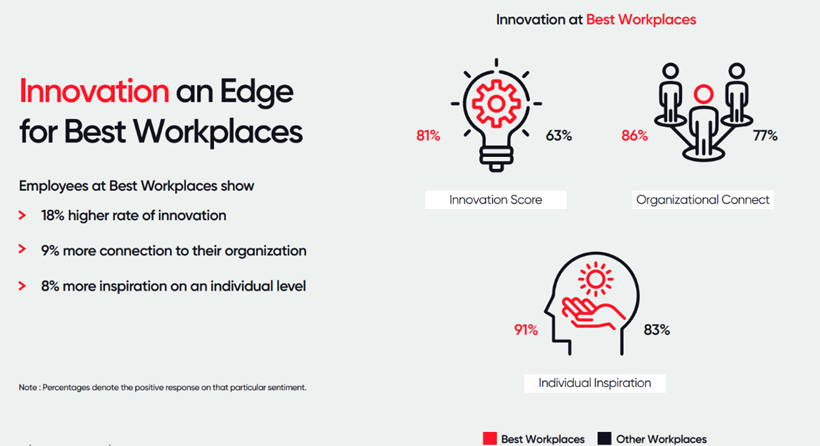
Edge for Best Workplaces

In today’s digital age, technology is an integral part of the workplace, with the potential to either positively or negatively impact the culture. Here are several ways technology influences workplace culture and, in turn, innovation:

1. Remote Work and Flexibility

Technology has expedited the adoption of remote work and flexible schedules, especially in the wake of the COVID-19 epidemic. This shift has brought both challenges and opportunities. While remote work can be isolating, it also allows for more individualized work styles and schedules, enhancing employee satisfaction and, consequently, innovation.

2. Collaborative Tools

The rise of collaborative tools, such as Slack, Microsoft Teams, and Google Workspace, has transformed the way teams work together. These platforms enable seamless communication, file sharing, and project management, breaking down silos and promoting cross-functional collaboration, which is a critical aspect of innovation.

3. Feedback and Recognition Platforms

Technology-driven feedback and recognition platforms, like performance management software and employee recognition apps, provide a structured way for employees to give and receive feedback. They facilitate continuous learning and development, ultimately contributing to a culture of improvement and innovation.

4. Learning and Development

The availability of online courses, webinars, and e-learning platforms has made learning and development more accessible. Employees who feel empowered to enhance their skills and knowledge are more likely to contribute fresh ideas and innovative solutions to the organization.

5. Innovation and Creativity Tools

Numerous software tools exist that are intended to promote creativity and innovation. These range from brainstorming apps to idea management platforms, which encourage employees to think outside the box and contribute to a culture of innovation. Technology is a powerful driver of change, and its influence on workplace culture is undeniable. Organizations must use technology to its fullest capacity in order to foster a work environment where respect and pride are valued above all else as India continues to lead the world in innovation. These dimensions are not only vital for employee satisfaction but also for fostering a culture of innovation, which is key to India’s continued success in the global innovation landscape. Embrace the transformative power of technology, foster a positive workplace culture, and contribute to the future of innovation excellence in India.

Frequently Asked Questions

1. How does technology improve workplace culture?

Technology enhances communication, collaboration, and recognition, creating an inclusive and innovative environment.

2. What role does respect play in tech-driven workplaces?

Respect ensures employees feel valued, and technology supports this through feedback and collaboration tools.

3. Why is pride important for innovation?

Pride motivates employees to contribute ideas, and tech amplifies this by showcasing achievements and milestones.

4. What is the impact of technology on workplace culture?

Technology reshapes workplace culture by improving communication, enabling remote work, and fostering inclusivity. Digital tools create transparent, collaborative environments where employees feel respected and engaged, ultimately strengthening trust and driving organizational success.

5. How does technology foster innovation in workplaces?

Technology accelerates innovation by providing platforms for idea sharing, real-time collaboration, and continuous learning. Tools like brainstorming apps, feedback systems, and recognition platforms empower employees to contribute creative solutions, making innovation a core part of workplace culture.

A workplace’s culture, productivity, and general well-being are significantly influenced by leadership. A great workplace is not just defined by physical amenities or competitive salaries; it’s also about trust, inclusivity, and effective management. In this blog, we’ll explore the crucial role that leadership plays in creating a great workplace, drawing insights from various data points and studies. We’ll delve into the qualities of trusted leaders, the gender gap in leadership, and actionable steps leaders can take to foster a positive work environment.

The Qualities of Trusted Leaders

Trust is the cornerstone of effective leadership. According to our Leadership report, the most trusted leaders put in 12% more effort than their counterparts in preparing managers for leadership positions. What sets these leaders apart are certain qualities that make them trustworthy and influential.

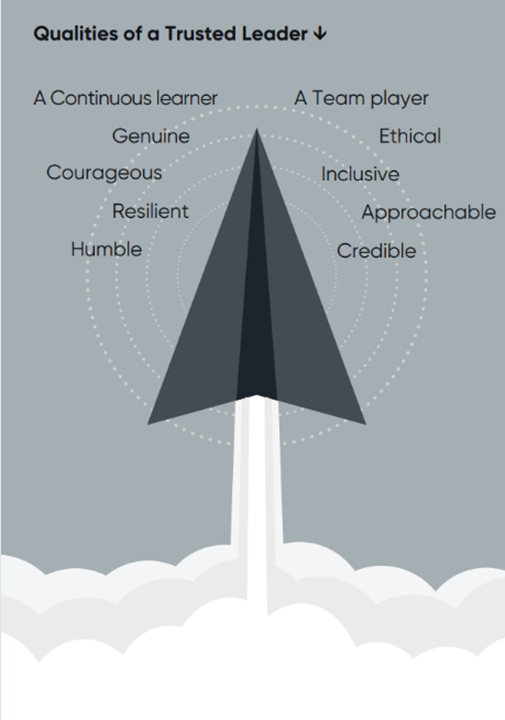
Qualitied of a Trusted Leader

1. Continuous Learner: Trusted leaders are committed to personal growth and learning. They understand that leadership is an evolving journey and continuously seek opportunities to improve themselves.

2. Team Player: A great leader is not a solitary figure but someone who collaborates with their team, values diverse perspectives and encourages open communication.

3. Genuine: Authenticity is key. A culture where employees feel free to express themselves is fostered by trusted leaders who are sincere in their interactions.

4. Courageous: They have the courage to make difficult decisions, take calculated risks, and stand up for what they believe is right, even in challenging situations.

5. Resilient: Resilience is vital in leadership. Trusted leaders bounce back from setbacks, inspire their teams to do the same, and maintain a positive outlook.

6. Humble: Humility goes hand in hand with trust. Leaders who are humble acknowledge their mistakes, seek feedback, and never let their ego overshadow their team’s success.

7. Ethical: Integrity is non-negotiable for trusted leaders. They lead by example and adhere to ethical standards, ensuring fairness and transparency in their actions.

8. Approachable: Approachability fosters a culture of open communication. Trusted leaders are easy to approach, and they actively listen to their team’s concerns and ideas.

9. Credible: Trust is built on credibility. Leaders who consistently deliver on their promises and maintain a high level of competence earn the trust of their teams.

Qualitied of a Trusted Leader

The Gender Gap in Leadership

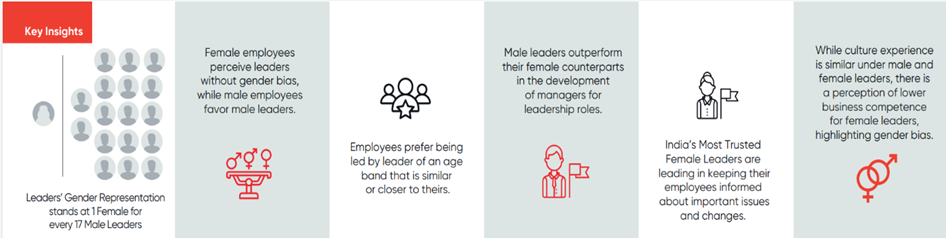
Despite progress in gender equality, there remains a significant gender gap in leadership. Data reveals that for every 17 male leaders, there is only one female leader. This disparity has implications for workplace dynamics and employee perceptions.

Female employees view leaders objectively, highlighting the significance of fairness and opportunity. On the other hand, male employees tend to favor male leaders, indicating the presence of unconscious biases. This bias can hinder the advancement of women in leadership roles and create an unequal work environment.

While cultural experience is similar for male and female leaders, there is a perception of lower business competence for female leaders, highlighting gender bias. This perception is unjust and underscores the need for organizations to challenge and address these biases. Creating a great workplace involves addressing these disparities and fostering an inclusive culture where leadership is based on merit, not gender.

Age and Leadership

In addition to gender, age also plays a role in leadership dynamics. Employees tend to prefer being led by leaders of an age band similar to or closer to theirs. This preference can be attributed to relatability and shared experiences.

Leaders must recognize the importance of bridging generational gaps within their teams. They can do so by promoting intergenerational collaboration, encouraging knowledge sharing, and embracing the unique perspectives that each age group brings to the table.

India’s Most Trusted Female Leaders

In India, trusted female leaders are leading the way in keeping their employees informed about important issues and changes. This communication transparency fosters trust and ensures that employees feel valued and engaged.

Actionable for Leaders as People Managers

Actionable for Leaders as People Managers

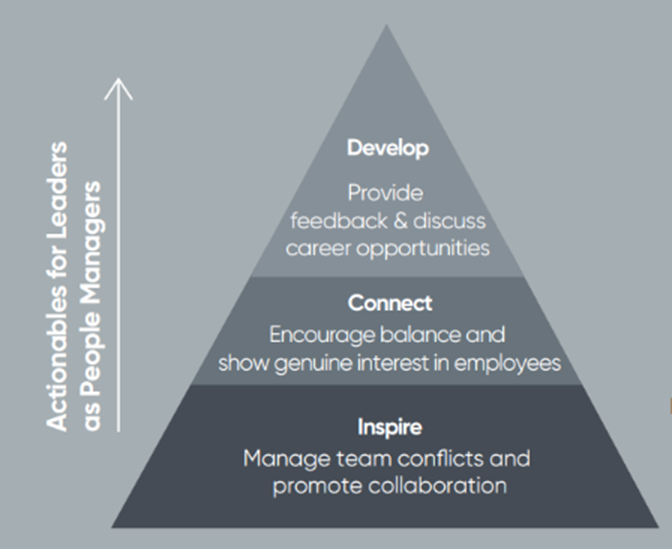
Effective leadership goes beyond personal qualities; it also involves specific actions and behaviors that foster a great workplace. Here are some actionable steps leaders can take as people managers:

1. Inspire: Leaders should actively manage team conflicts and promote collaboration. To motivate teams to perform at their highest point, it’s essential to have the capacity to resolve conflicts amicably and foster a positive work atmosphere.

2. Connect: Leaders should encourage work-life balance and show genuine interest in their employees. Building strong connections with team members helps create a sense of belonging and trust.

3. Develop: Providing regular feedback and discussing career opportunities are essential for employee growth. To ensure that each team member realizes their full potential, leaders should invest in their personal growth.

Leadership is a linchpin in the creation of a great workplace. Trusted leaders possess qualities such as continuous learning, teamwork, authenticity, courage, resilience, humility, ethics, approachability, and credibility. However, gender bias and age-related preferences persist, underscoring the need for organizations to prioritize inclusivity and equal opportunities. Leaders must actively work to bridge gender and generational gaps, inspiring their teams, building connections, and facilitating professional development. By doing this, they can aid in the development of an environment at work where workers flourish, trust is abundant, and everyone has an equal opportunity of success. In the pursuit of a great workplace, leadership is not just a role; it’s a responsibility and a vital one at that.

Employee Resource Groups (ERGs) have become pivotal components of diversity, equity, inclusion, and belonging (DEIB) strategies within organizations. In recent years, these groups have gained prominence, especially in the wake of social and cultural transformations triggered by the post-pandemic era. While some companies are reconsidering their DEIB initiatives, it is crucial to recognize the enduring value of ERGs. In 2023, ERGs continue to be relevant and essential for fostering an inclusive workplace culture. This article explores seven key insights that highlight why every organization should embrace ERGs. 

1. Establish Your Value Proposition

ERGs should begin by defining their value proposition. They must clearly articulate their purpose, goals, and how they contribute to the organization’s broader DEIB efforts. This step helps ERGs gain recognition and support from leadership and employees alike. A well-defined value proposition demonstrates the tangible benefits of ERGs, such as fostering diversity, enhancing employee engagement, and promoting innovation. It also showcases their role in attracting and retaining diverse talent. 

2. Build a Robust Governance Structure 

Successful ERGs require a strong governance structure. This structure should outline the group’s leadership roles, responsibilities, and decision-making processes. Establishing clear leadership ensures that ERGs remain focused, accountable, and aligned with the organization’s overall goals. Furthermore, a governance structure can help ERGs navigate potential challenges and conflicts, ensuring their sustainability and effectiveness over time.

3. Insist on Measurement and Accountability

To gauge the impact of ERGs, organizations must implement measurement and accountability mechanisms. These include setting specific, measurable, achievable, relevant, and time-bound (SMART) goals for ERGs and regularly tracking their progress. Metrics such as increased diversity in leadership, higher employee engagement scores, and reduced turnover rates can provide tangible evidence of ERGs’ effectiveness. Accountability ensures that ERGs remain committed to their mission and continue to drive positive change.

4. Find Strategic Alignment 

ERGs should align their initiatives with the organization’s broader strategic objectives. By connecting their work to the company’s mission and vision, ERGs become integral to the business’s success. This alignment ensures that ERGs contribute to achieving tangible outcomes that benefit both the organization and its employees. For instance, ERGs can collaborate with HR and management to develop inclusive hiring practices or contribute to product development strategies that resonate with diverse customer bases. 

5. Increase Engagement and Activation 

ERGs must focus on increasing engagement and activation among their members. Encouraging participation through various activities, workshops, and events helps ERGs create a sense of belonging and community within the organization. This engagement not only fosters personal growth and development but also enhances collaboration and teamwork across the company. ERGs should also consider welcoming allies and advocates from outside their primary demographic focus, expanding their reach and impact.

6. Offer Advocacy and Action 

ERGs should not limit their efforts to raising awareness and promoting diversity. They should also engage in advocacy and action. This involves pushing for changes within the organization, such as policy improvements, mentorship programs, and equitable career advancement opportunities. ERGs can serve as powerful advocates for marginalized groups, driving meaningful change within the workplace culture and policies. 

7. Connect to Business Success

ERGs are not standalone entities; they are integral to business success. Organizations should recognize the direct correlation between diversity, inclusion, and profitability. Studies have consistently shown that diverse teams drive innovation, increase creativity, and lead to better decision-making. By embracing ERGs and their efforts, companies position themselves to outperform competitors and remain relevant in an ever-evolving global marketplace. 

Employee Resource Groups are not fleeting trends; they are enduring assets that every organization should embrace. In 2023, as some companies reconsider their DEIB initiatives, it is imperative to recognize the critical role that ERGs play in fostering inclusive workplace cultures. By following these seven insights—establishing a clear value proposition, building a robust governance structure, insisting on measurement and accountability, finding strategic alignment, increasing engagement and activation, offering advocacy and action, and connecting to business success—organizations can harness the full potential of ERGs. In doing so, they create workplaces that celebrate diversity, empower employees, and drive sustainable growth and success. 

On this Certification Nation Day, go viral about your company culture! 

Is your organization Great Place To Work® Certified™? Get Certified and join us for Certification Nation Day, November 1-3, 2023, to celebrate your workplace culture. 

When your company earns the coveted title of Great Place To Work® Certified™, it’s not just an accolade; it’s a testament to your exceptional culture. Such recognition deserves more than just a pat on the back; it demands a grand celebration.  

Planning for how your organization will commemorate and promote your company culture award should begin now, as we are set to celebrate Certification Nation Day from November 1 to November 3, 2023. It’s an excellent chance to both thank your employees and spread the word about your company to potential employees and consumers. 

In this article, we’ll dive deep into 21 creative and impactful ideas to celebrate and promote your company culture award. Drawing inspiration from great workplaces over the years, these ideas will not only help you celebrate but also reinforce and amplify your company’s values and culture.

Certification Nation Day

1. Start from the Top 

Let’s begin with the most fundamental step—leadership involvement. Have your company’s top leaders acknowledge the achievement. A heartfelt message from the CEO or other top executives sets the tone for the entire organization and emphasizes the award’s significance. Ensure that leadership remains visible throughout the celebration.

2. Surprise and Delight 

Surprise celebrations can create memorable moments that employees cherish. Consider organizing surprise events or activities, such as impromptu office games or a surprise luncheon. On the day of the announcement, welcome employees working on-site with a celebration. Ask your top leaders to welcome and thank employees as they enter the building, decorate the office, and put-up placards celebrating the victory. These unexpected gestures add excitement and reinforce the positive aspects of your culture.

3. Get Social with Hashtags 

Leverage the power of social media to amplify your celebration. Create a social media campaign using the CND hashtags like #CelebrateYourGreat, #CND2023IN and #GPTWCertifiedIN. Share engaging content, including photos, videos, and employee testimonials, to showcase your company’s culture and the award. Encourage employees to participate actively on social media to extend the reach of your celebration. 

4. Let Your Employees Do the Talking

Your employees are the heart and soul of your organization, so let them be your brand ambassadors. Encourage and empower them to share their experiences and stories on social media. User-generated content is authentic and has a significant impact on potential candidates who are considering joining your organization.

5. Go Old-School Social 

While digital promotion is essential, don’t underestimate the power of in-person interactions. Host a company-wide town hall meeting or celebratory event where employees can come together, interact, share stories, and celebrate as a unified team. These face-to-face connections strengthen the bonds within your organization. 

6. Tap into Technology 

Incorporate technology to create captivating content. Consider producing a virtual tour of your office or a culture-focused video that highlights what makes your workplace exceptional. These digital assets can be shared on your website, social media channels, and even during recruitment efforts. 

Also, don’t forget to include any employees who work hybrid or entirely remotely in the festivities if you have any. Use the technology you already have, like Zoom or Teams, to create an online happy hour, cocktail-making class, or live performance. 

7. Provide Giveaways 

Distribute branded merchandise like T-shirts, mugs, or custom masks to employees. These tangible items serve as constant reminders of their affiliation with a Great Place To Work Certified organization. Additionally, consider creating limited-edition merchandise exclusively for this celebration to make it even more special.

8. Create Culture Cookies 

Take a unique and delicious approach to celebrate your award. Bake cookies or other treats featuring your company’s logo or the certification badge. Share these delectable delights with employees and clients to spread joy and reinforce your brand. 

9. Give the Gift of Time 

Offering employees some extra time to relax, reflect, and pause is a wonderful way to express your gratitude. So, provide your employees with one extra day of PTO; they deserve it. Some businesses let employees leave early on the day of the announcement so they can celebrate with friends and coworkers. 

10. Offer a Financial Reward 

If your budget allows it, consider providing a financial bonus or incentive to reward employees for their contribution to creating an exceptional workplace. A monetary reward can have a significant impact on employee morale and motivation. 

11. Reward the Whole Self (and Their Household)

A great workplace encourages individuals to bring their complete selves to the job. The overlap between personal and professional lives has never been more evident because of the prevalence of individuals who continue to work from home. 

Extend your appreciation beyond your employees and reach out to their families. Offer family-oriented rewards, such as family day-out vouchers or subscriptions to family-friendly services. Recognizing the importance of family ties reinforces your commitment to your employees’ holistic well-being. 

12. Celebrate in Your Job Ads

Highlight your Great Place To Work Certification™ in your job advertisements. Potential candidates are more likely to apply if they know your company values its culture. Incorporate specific examples and testimonials from employees to showcase the real experiences within your organization.

13. Launch an Outdoor Ad Campaign 

Take your celebration to the streets by running an outdoor advertising campaign. Make sure your workplace neighbors are aware of the greatness in the room with billboards, transit ads, and street banners that can help you reach a broader audience and create a sense of pride among employees and the community. Collaborate with a creative agency to design eye-catching visuals that convey your culture and achievement. 

14. Email Your Customers

The pinnacle of employer branding is your company culture award; therefore, if you have a client database to whom you send marketing emails, send it to them. Your company culture award boosts the reputation of the company’s brand significantly in the market. Additionally, customers now consider a company’s values and how it treats its employees when making purchases. Your customers will appreciate knowing they are doing business with a company that values its employees and culture. This can foster stronger customer loyalty and goodwill. 

15. Update Your Company Profiles 

Make sure that you showcase your Certification badge or Best Workplace recognition in all of your corporate boilerplate and company profiles (on Glassdoor, LinkedIn, Facebook, and Instagram). Additionally, make any necessary updates to your email signature and business cards. This sends a strong message to anyone researching your company and reinforces your commitment to maintaining a positive workplace culture.

16. Start Spreading the News 

Write a press release to announce your achievement to the world. Share it with industry publications and local media outlets to increase your visibility and credibility. Highlight the unique aspects of your culture that earned you this recognition. 

17. Show Your Stats

Transparency can be a powerful tool. Publish key culture and workplace statistics on your website or social media channels. Sharing data related to employee satisfaction, diversity, and inclusion or sustainability efforts can attract candidates who appreciate data-driven decision-making. 

18. Share Stories Throughout the Year 

Don’t let the celebration be a one-time event. Continue to share stories, testimonials, and updates about your workplace culture throughout the year. Use various platforms, including your company’s blog, newsletter, and social media, to keep the momentum going and maintain employee engagement. 

19. Send Your Culture Leaders to Summit

A manager has the power to build or ruin a company culture. Do you have inspiring culture leaders in your company? Send them to our For All™ Summit to express gratitude and keep them interested.  

They will share knowledge with other driven business executives and return with new suggestions to advance your workplace.

20. Know Your Why

Great workplaces are not created by chance. There is a narrative behind the Certification and any other honors you have received. What is it about your workplace that inspires a sense of pride and anticipation among your employees? When talented job seekers are considering where to take their next career step, sharing employee experiences on social media may be an engaging, genuine approach to draw them in. You must share why people choose to join you and stay. 

21. Rally for Next Year

Use the momentum from this achievement to set new goals for the next year. Always know that there is always room for improvement, and remind your employees of this. By implementing an action plan promptly, you can maintain your success. Greatness never stops. 

In conclusion, celebrating and promoting your company culture award is not merely an event; it’s an ongoing commitment to fostering an exceptional workplace culture. By implementing these 21 creative ideas inspired by Certified Great Workplaces, you can effectively showcase your outstanding workplace culture and inspire others to join your journey toward workplace excellence. Remember that the celebration is just the beginning; the real magic lies in the continuous effort to nurture and improve your company’s culture year after year. So, savor your achievements and keep striving for a workplace that stands out among the best. 

In today’s intensely competitive business market, firms are continuously looking for ways to achieve a competitive advantage. One often overlooked yet powerful tool for achieving business excellence is the Great Place To Work® Certification™. This certification isn’t just about perks like free snacks, better pay, or a foosball table in the breakroom; it’s a strategic initiative that has far-reaching effects on a company’s culture, employee engagement, and, ultimately, its bottom line. 

In this article, we will delve into how Great Place To Work Certification drives business excellence for Certified organizations. We’ll explore the multifaceted benefits, the transformative impact on workplace culture, and the tangible results that extend beyond the HR department. 

Certification Nation Day

1. Boosting Employee Engagement

One of the foundational pillars of this Certification is the emphasis on employee engagement. Certified organizations are dedicated to creating an environment where employees feel valued, heard, and motivated to give their best. Here’s how this focus on engagement drives business excellence: 

  • Higher Productivity: Engaged employees are more productive. When employees feel connected to their work, their colleagues, and their organization’s objective, they naturally put in more effort, resulting in enhanced productivity and efficiency. 
  • Lower Turnover Rates: A great workplace reduces turnover rates. Companies spend significant resources recruiting and training employees, so retaining top talent is crucial. Because satisfied employees are less inclined to seek employment elsewhere, this Certification frequently results in decreased attrition rates. 
  •  Innovation and Problem-Solving: Engaged employees are more innovative and effective problem-solvers. They are more likely to suggest improvements, participate in brainstorming sessions, and contribute fresh ideas that can drive business growth. 

2. Enhancing Reputation and Attracting Top Talent 

A Great Place To Work Certification is a powerful signal to potential employees, customers, and partners that an organization is committed to excellence. It helps in: 

  • Attracting Top Talent: In today’s job market, attracting top talent is a challenging task. Certified organizations have a competitive edge, as job seekers actively seek out employers with a strong commitment to workplace culture and employee well-being. 
  • Improving Customer Trust: Clients are more likely to trust businesses that put their people first. This Certification can enhance an organization’s reputation and foster customer loyalty. 
  • Partnerships and Collaborations: Other businesses and organizations are more inclined to collaborate with certified companies, knowing that they adhere to high standards of workplace excellence. 

3. Driving Business Performance

The Certification is not just about feel-good initiatives; it has a direct impact on the bottom line. Here’s how it drives business performance: 

  • Revenue Growth: According to our study, Certified organizations beat other businesses in terms of revenue growth. Engaged employees contribute to improved customer service and product quality, leading to increased sales and revenue. 
  • Cost Reduction: Lower turnover rates and higher productivity result in cost savings. An excellent workplace decreases the expenses of hiring, integrating, and training new employees. 
  • Customer Satisfaction: Employees who are actively engaged deliver excellent customer service. Happy, motivated employees are more likely to go the extra mile to satisfy customers, increasing customer satisfaction and loyalty. 
  • Innovation and Agility: Businesses that invest in creating a great workplace culture are better equipped to adapt to changes in the market. Engaged employees are more open to innovation and can help companies pivot and stay competitive in evolving industries.

4. Creating a Culture of Continuous Improvement 

Our Certification does not end with the award ceremony; it fosters an environment of continual growth within the firm. Here’s how: 

  • Feedback and Surveys: Certification involve employee survey and feedback. This data is invaluable for identifying areas that need improvement, which can then be addressed proactively. 
  • Learning and Development: Certified organizations invest in the development of their employees. They provide training and growth opportunities, ensuring that their workforce is equipped with the skills needed for evolving business needs. 
  • Flexibility and Adaptability: A great workplace is one that can adapt to change quickly. Organizations that value their employees’ input and foster a culture of trust and collaboration are better prepared to navigate challenges and seize opportunities.

5. Measuring the Impact of Great Place To Work Certification 

It’s crucial for organizations to measure the impact of this Certification to understand how it drives business excellence. It is possible to monitor key performance metrics over time, including employee turnover rates, customer satisfaction ratings, revenue growth, and employee productivity. Surveys and feedback mechanisms can provide insights into employee engagement and satisfaction levels. 

To evaluate the success of their activities, organizations might benchmark their achievements against industry norms and rivals. Continuous monitoring and improvement are essential to ensure that the benefits of Certification continue to drive business excellence in the long term.  

In a world where businesses are constantly striving for excellence, Great Place To Work Certification stands as a beacon of what’s possible when organizations prioritize their people. The benefits extend far beyond employee satisfaction; they touch every aspect of the business, from financial performance to customer loyalty. In embracing our Certification, organizations not only become great workplaces but also more successful enterprises overall. It’s a win-win proposition that paves the way for business excellence in a rapidly changing world. By focusing on employee engagement, enhancing reputation, driving business performance, and fostering a culture of continuous improvement, organizations can leverage our Certification to thrive in the competitive global marketplace. 

In today’s fast-paced and competitive business world, showcasing your team’s excellence is more critical than ever. Not only does it boost morale and motivation among team members, but it also helps attract potential clients, partners, and investors. The challenge, however, lies in finding innovative ways to highlight your team’s skills and achievements. In this article, we’ll explore twelve creative and effective strategies to shine a spotlight on your team’s talent. 

1. Produce Engaging Team Videos 

For demonstrating the skills of your team, video content is an effective tool. Create engaging videos that introduce each team member, giving them a chance to discuss their roles and share insights. You can also produce behind-the-scenes videos showing the creative process and teamwork that goes into your projects. You may use these videos on your website, on social media, and in presentations to give an up-close and dynamic view of your team’s excellence. 

Certification Nation Day

2. Host Webinars and Live Demonstrations

Webinars and live demonstrations are excellent opportunities to showcase your team’s expertise and engage with your audience directly. Choose relevant topics within your industry and have team members present on these subjects. Encourage questions and interaction from the audience to highlight your team’s knowledge and ability to solve problems in real-time. Webinars can also be recorded and shared on your website or social media channels for future reference. 

3. Launch a Team Podcast

With podcasts, you may explore industry subjects and highlight the knowledge of your team. Create a regular podcast series featuring team members as hosts or guest speakers. Discuss industry trends, share insights, and interview experts in your field. This not only highlights your team’s knowledge but also positions them as thought leaders in the industry, attracting attention from a wider audience.

4. Develop Thought Leadership Content

Whitepapers, e-books, and in-depth essays are all examples of thought leadership content that can help your team become an authority in your field. Encourage team members to write on topics they are passionate about and have expertise in. These materials can be shared on your website, social media, and industry-specific publications to showcase your team’s thought leadership and problem-solving capabilities.

5. Organize Workshops and Training Sessions 

Showcasing your team’s excellence isn’t just about demonstrating what you already know; it’s also about sharing knowledge and expertise. Organize workshops and training sessions that allow your team to teach others about topics they excel in. This not only highlights their skills but also fosters a sense of collaboration and community within your industry. These events can be in-person or conducted virtually, making them accessible to a global audience.

6. Leverage Social Media for Micro-Content 

A wealth of options exists on social media platforms to highlight the skills of your team. Create micro-content such as short video clips, infographics, and quick tips that highlight your team’s expertise. Share success stories, project updates, and team achievements regularly. Team members should be encouraged to interact with your audience by answering questions and taking part in debates about your sector. Social media is a dynamic way to keep your team’s excellence in the spotlight. 

7. Participate in Industry Awards and Competitions 

An effective strategy to be noticed is to enter your team into industry-specific awards and contests. Winning or even being nominated for such accolades can highlight your team’s exceptional skills and achievements. Be sure to thoroughly prepare your submissions, highlighting key projects, innovations, and the impact your team has made in your industry. Winning an award can serve as a powerful endorsement of your team’s excellence.

8. Seek Testimonials and Case Studies

Gathering testimonials and case studies from satisfied clients or customers can provide concrete evidence of your team’s excellence. These materials offer real-world examples of the value your team brings to your clients or customers’ businesses. Ensure that the testimonials and case studies are compelling and highlight the specific skills and contributions of your team members. Share these on your website, in marketing materials, and during presentations to build trust and credibility. 

9. Invest in Continuous Learning and Development 

One way to consistently showcase your team’s excellence is by investing in their continuous learning and development. Encourage team members to pursue certifications, attend industry conferences, and participate in training programs. Highlight these achievements on your website and in your marketing materials to demonstrate that your staff as a whole is committed to being at the forefront of technological advancements and industry trends. 

10. Create a Blog or Knowledge Hub

Maintaining a blog or knowledge hub on your website may demonstrate your team’s expertise while acting as a helpful resource for your audience. Regularly publish informative articles, tutorials, and industry insights written by your team members. Ensure that the content is well-researched, up-to-date, and addresses relevant challenges and trends in your field. This not only positions your team as experts but also attracts organic traffic to your website. 

11. Encourage Employee Advocacy 

Your team members can be some of your most effective advocates. Encourage them to share their professional achievements, insights, and experiences on their personal social media profiles. Provide training and resources to help them effectively represent your brand online. Employee advocacy not only showcases your team’s excellence but also extends your reach to their networks, increasing your visibility. 

12. Foster a Culture of Innovation and Excellence

Creating a culture of innovation and excellence within your firm is the first step towards demonstrating your team’s greatness. Encourage creativity, collaboration, and a commitment to continuous improvement. Recognize and reward outstanding contributions and celebrate team achievements regularly. A strong internal culture of excellence will naturally radiate outward and attract attention from external stakeholders. 

In conclusion, demonstrating your team’s brilliance is crucial for developing a strong brand reputation and attracting possibilities in today’s cutthroat business environment. By implementing these twelve innovative strategies, you can shine a spotlight on your team’s talent, demonstrate their expertise, and create lasting impressions on clients, partners, and investors. Remember that consistency is key, and a combination of these approaches can help you create a multifaceted and compelling narrative of your team’s capabilities. In doing so, you’ll not only celebrate your team’s achievements but also inspire them to reach even greater heights in the future. 

To gain further insights and understanding into the current trends and best practices that the top workplaces in India are following, Download our ‘India’s Best Companies To Work For (Top 100) Report’

In the dynamic landscape of modern businesses, the role of employee voice has gained significant recognition as a driving force for organizational success. As organizations strive to create environments where employees feel valued, engaged, and motivated, Great Place To Work® India has taken a remarkable step forward with the introduction of the National Trust Index™ (NTI). This innovative initiative, based on a shortened version of the proprietary instrument, The Trust Index™, aims to tap into the collective voice of employees across India to gauge the levels of trust and satisfaction within workplaces. In this article, we delve into the significance of the NTI and how it can unleash the power of employee voice. 

The Importance of Employee Voice 

Employee voice refers to an employee’s skill and willingness to share their opinions, ideas, concerns, and comments within the context of the organization. It is a vital component of a thriving workplace as it empowers employees to contribute to decision-making, offer suggestions for improvement, and share their experiences openly. When employee voice is encouraged and valued, it creates a sense of ownership, belonging, and engagement among the workforce. 

Organizations that prioritize employee voice tend to reap several benefits. First, it enhances employee morale and job satisfaction. Employees are more likely to be motivated and devoted to their jobs when they believe their voices are heard, and their opinions are valued. Second, it fosters innovation and problem-solving. Employees at all levels often have unique insights and perspectives that can lead to creative solutions and process improvements. Finally, a strong employee voice culture can help to better connections between management and workers, resulting in a more peaceful and productive work environment. 

The Birth of the National Trust Index (NTI) 

Understanding the significance of employee voice, Great Place To Work India has introduced the National Trust Index (NTI) as a means to quantitatively measure the levels of trust and engagement within Indian workplaces. Drawing from their well-established Trust Index Survey, which is globally validated and built upon decades of research, the NTI seeks to capture insights from employees across different areas of workplace experience. 

Methodology: The Trust Index Survey 

The bedrock of the NTI, the Trust Index Survey, represents a meticulously crafted instrument designed to evaluate the key dimensions of trust and engagement within organizations. It delves into a myriad of aspects that collectively contribute to establishing a great workplace. These dimensions encompass credibility, respect, fairness, camaraderie, and pride. The survey is thoughtfully tailored to encapsulate the essence of employee experiences, thus providing a comprehensive panorama of the trust dynamics inherent within an organization. 

Distinguishing the Trust Index Survey is its capacity to yield both qualitative and quantitative insights. By posing a series of carefully constructed questions, the survey encourages employees to express their opinions and furnish feedback on their lived workplace experiences. This innovative approach not only generates numerical data but also serves as a platform for employees to share their voices and actively contribute to the ongoing discourse surrounding workplace enhancement.

Unleashing the Power of the National Trust Index 

The introduction of the National Trust Index brings several opportunities for organizations and the workforce alike. 

  • Identifying Strengths and Areas for Improvement: The NTI provides a detailed analysis of trust and engagement levels of employees across India. By understanding these analyses, they can identify their strengths and areas that require attention; organizations can tailor their strategies to foster a more conducive work environment. 
  • Enhancing Employee Engagement: Actively involving employees in the NTI process across the country sends a powerful message that their opinions matter. This sense of involvement can significantly boost employee engagement and commitment. 
  • Driving Cultural Transformation: The NTI can serve as a catalyst for cultural transformation within every organization in India. When employees see that their feedback leads to tangible changes nationwide, it reinforces the value of their voices and encourages a culture of continuous improvement. 
  • Promoting Transparency and Openness: The NTI encourages organizations to be transparent about their intentions to create a great workplace. Employees and management gain trust as a result of this transparency, creating the path for more open communication. 
  • Benchmarking and Learning: Organizations can benchmark these results against industry standards and best practices. This allows them to learn and adopt strategies that can be successful in the future for them. 

In Conclusion

The National Trust Index (NTI), introduced by Great Place To Work India, stands as a trailblazing initiative that capitalizes on the potential of employee voice to catalyze transformation across workplaces throughout the nation. Harnessing the insights gleaned from the Trust Index Survey, the NTI offers organizations across India a panoramic view of trust dynamics, enabling them to identify strengths, weaknesses, and avenues for growth. As organizations actively immerse themselves in the NTI process and steadfastly endeavor to establish exceptional workplaces, they forge a path not only toward heightened employee satisfaction and engagement but also toward the areas of innovation, productivity, and sustained prosperity. 

In a realm where the voice of every employee carries significance, the NTI beckons organizations and their workforces toward a future that is imbued with empowerment and promise. This journey of collective voice, collaboration, and advancement sets the stage for a transformation that resonates beyond individual organizations and industries—propelling India’s workforce toward a brighter and more empowered era.