Today, effective leadership is more critical than ever. Great leaders drive their organizations toward success and create an environment where team members thrive. Leadership isn’t about wielding the power to command; it’s about the profound ability to nurture and inspire those around you. Effective leaders build trust, foster a positive work culture, and drive collective success.

The Importance of Good Leadership in Business

Good leadership is crucial to the success and sustainability of any business. Effective leaders provide direction, inspiration, and clarity, ensuring that all team members understand and work toward the organization’s goals. They set the tone for the company culture, influencing the work environment and employee morale. Good leadership fosters a positive and productive workplace where employees feel valued, motivated, and engaged.

Leadership is also pivotal in decision-making and strategic planning. Competent leaders can analyze complex situations, make informed decisions, and steer the company through challenges and opportunities. Their ability to adapt to changing circumstances and drive innovation is essential for maintaining a competitive edge in the market.
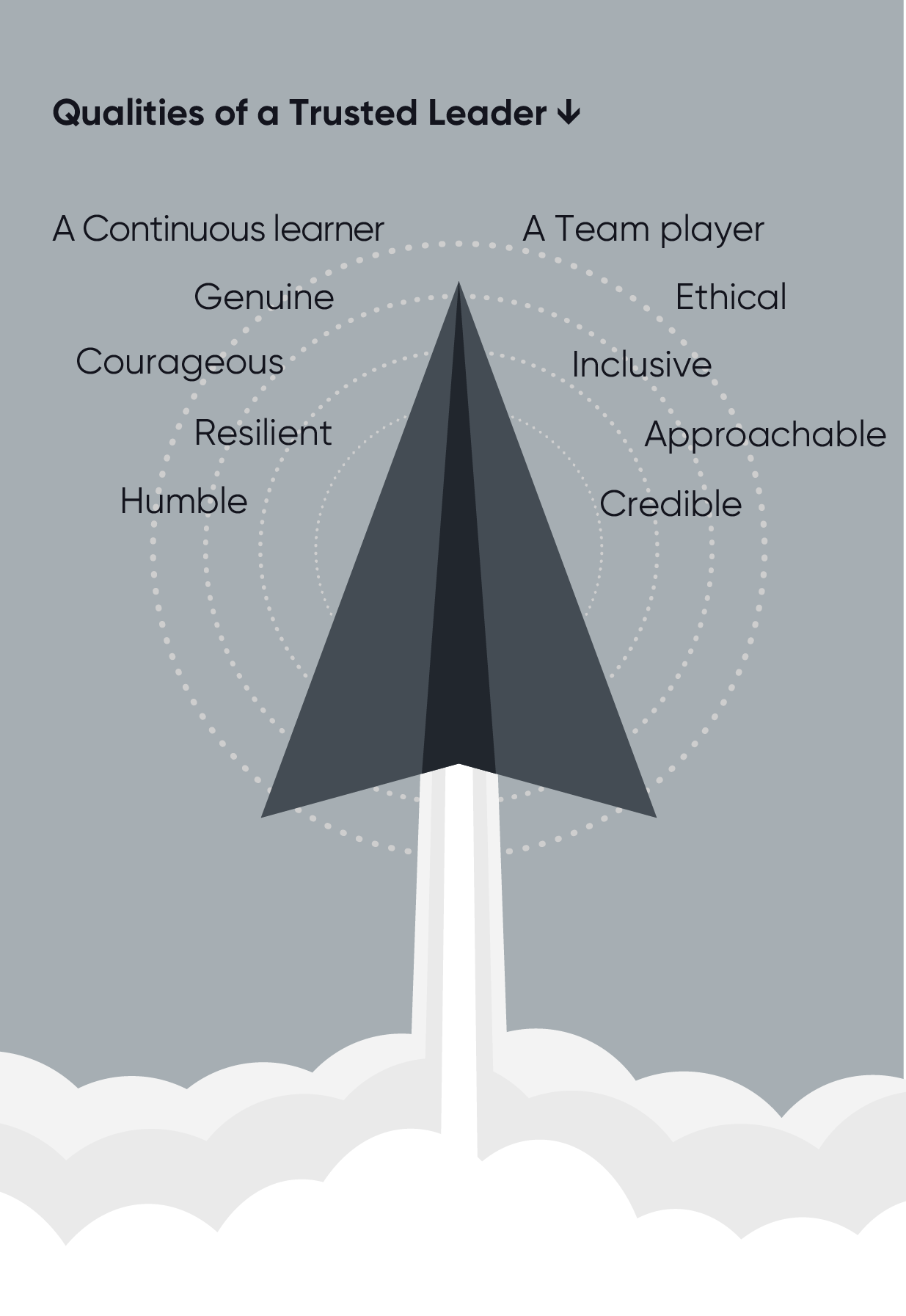
Qualities of a trusted leader - A continuous learner, A team player, Genuine, Ethical, Courageous, Inclusive, Resilient, Approachable, Humble and Credible.

Moreover, strong leadership is vital for building and maintaining relationships, both within and outside the organization. Leaders who communicate effectively and demonstrate integrity and empathy can build trust with employees, customers, and partners, leading to stronger collaborations and customer loyalty.

Good leadership directly impacts a business’s overall performance and growth. It enables the organization to achieve its vision, foster a collaborative and innovative culture, and navigate the complexities of the business world, ensuring long-term success and sustainability.

1. Empowerment and Delegation

Empowerment and delegation are crucial aspects of effective leadership, serving as the backbone of a motivated and high-performing team. Empowering team members involves giving them the authority and confidence to make decisions within their roles. This not only boosts their confidence and morale but also encourages a sense of ownership and accountability. Delegation, on the other hand, involves assigning tasks and responsibilities to team members, and trusting them to complete these tasks autonomously.

When employees feel empowered, they are more likely to be innovative, taking the initiative to propose new ideas and solutions. This culture of innovation leads to improved problem-solving and efficiency.
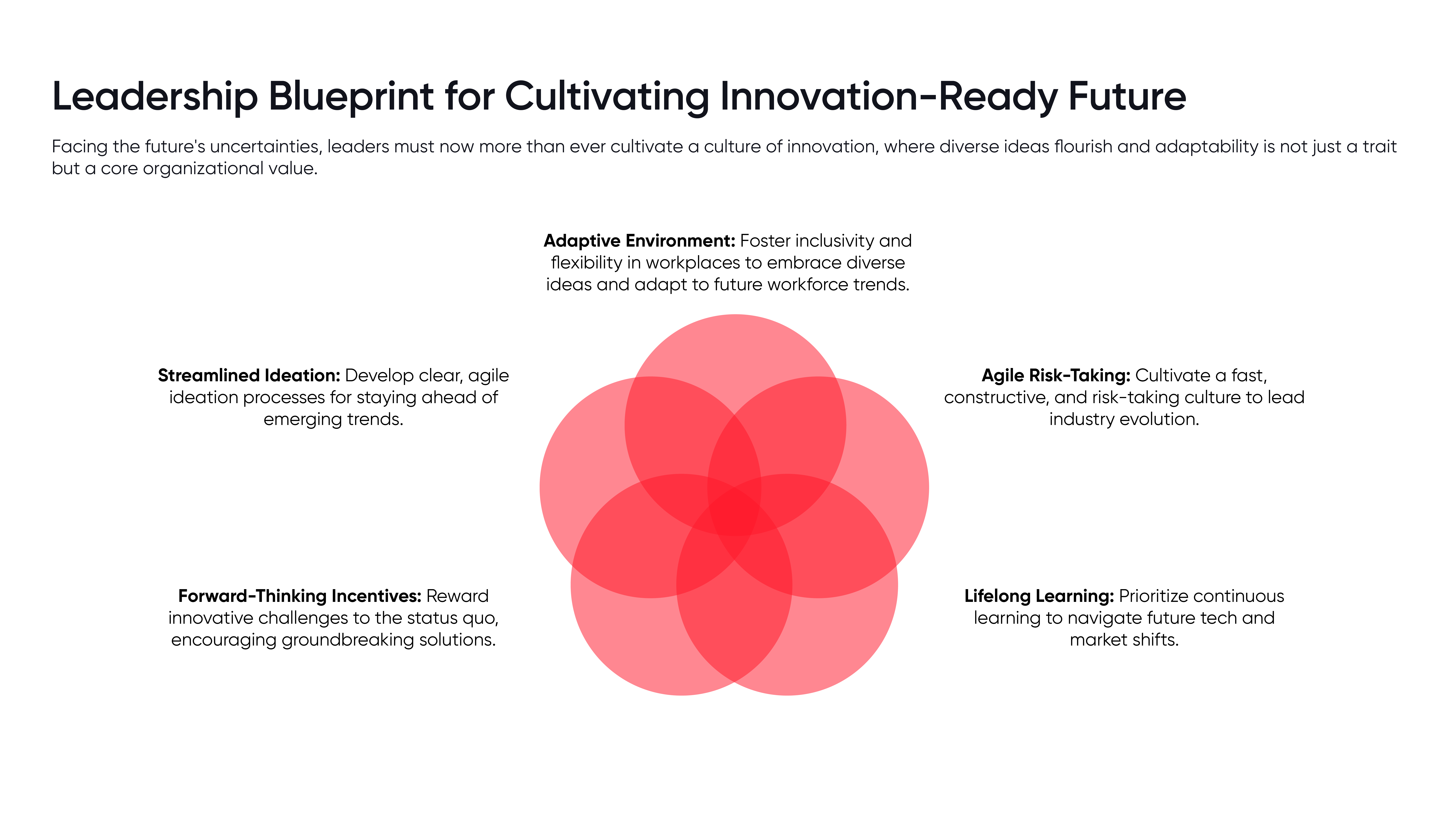
Leadership Blueprint for Cultivating Innovation-Ready Future - Facing the future's uncertainties, leaders must now more than ever cultivate a culture of innovation, where diverse ideas flourish and adaptability is not just a trait
but a core organizational value. Adaptive Environment: Foster inclusivity and
flexibility in workplaces to embrace diverse
ideas and adapt to future workforce trends. Streamlined Ideation: Develop clear, agile
ideation processes for staying ahead of
emerging trends. Forward-Thinking Incentives: Reward
innovative challenges to the status quo,
encouraging groundbreaking solutions. Lifelong Learning: Prioritize continuous
learning to navigate future tech and
market shifts. Agile Risk-Taking: Cultivate a fast,
constructive, and risk-taking culture to lead
industry evolution.

Moreover, empowered employees are generally more motivated and engaged, which enhances overall productivity and job satisfaction. Delegation allows leaders to focus on strategic planning and high-priority tasks, optimizing resource allocation and operational effectiveness.

2. Flexibility and Adaptability

In today’s fast-paced business world, flexibility and adaptability are essential traits for effective leadership. Leaders must be prepared to pivot strategies and approaches in response to new challenges, market shifts, and emerging opportunities. This agility enables businesses to remain competitive and resilient, even in the face of unexpected disruptions.

The benefits of adaptability are significant. An adaptable leader can quickly identify and respond to changes in the business environment, ensuring that the organization remains relevant and ahead of the curve. This proactive stance helps in seizing new opportunities, mitigating risks, and maintaining a competitive edge. Furthermore, adaptable leaders inspire confidence and trust within their teams, fostering a culture of continuous improvement and innovation.

3. Clear Communication and Vision

Clear communication and a strong vision are foundational elements of effective leadership. Clear communication involves conveying information, expectations, and feedback in a way that is easily understood by all team members. A strong vision provides a sense of direction and purpose, guiding the organization toward its long-term goals.

Effective communication fosters trust among team members and between leadership and staff, creating a transparent and cohesive work environment. It ensures that everyone is aligned with the organization’s objectives, reducing misunderstandings and enhancing collaboration. A compelling vision, on the other hand, motivates and inspires employees, providing them with a shared sense of purpose and direction. When team members understand the bigger picture, they are more likely to be engaged and committed to their work.
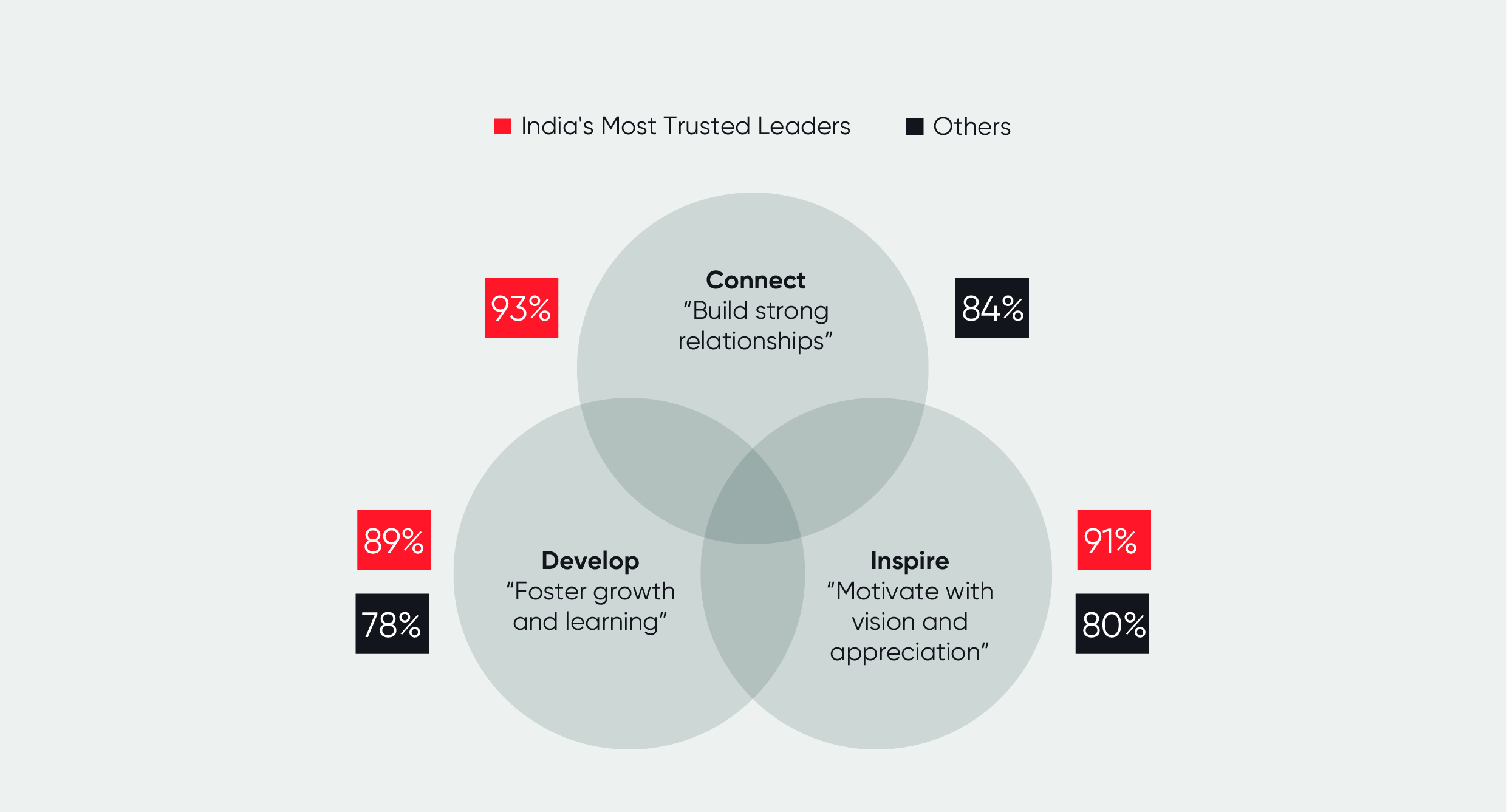
Great people managers, connect, develop & inspire. India's Most Trusted Leaders score 93% to Connect, 89% to Develop and 91% to Inspire compared to others with 84% to Connect, 78% to Develop and 80% to Inspire.

4. Emotional Intelligence

Emotional intelligence (EQ) is a critical leadership trait that involves understanding and managing one’s emotions and the emotions of others. Leaders with high EQ are adept at handling interpersonal relationships judiciously and empathetically, which is essential for building a cohesive and motivated team.

The benefits of emotional intelligence in leadership are profound. Leaders who exhibit high EQ can create a positive work environment by recognizing and addressing the emotional needs of their team members. This fosters a sense of trust and loyalty, leading to improved team dynamics and collaboration. Moreover, emotionally intelligent leaders are better equipped to handle stress and conflict, making them more resilient in challenging situations.

Good leadership is the cornerstone of any successful business. These leadership strategies are not just theoretical concepts but practical tools that can transform a business. Implementing these strategies will help leaders cultivate a positive workplace, foster innovation, and navigate the complexities of the business world, ensuring sustained growth and success for their organizations.

Visit us here to learn more.
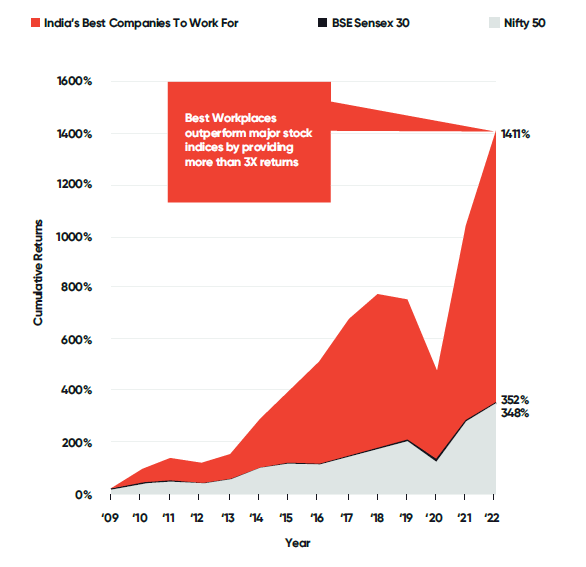
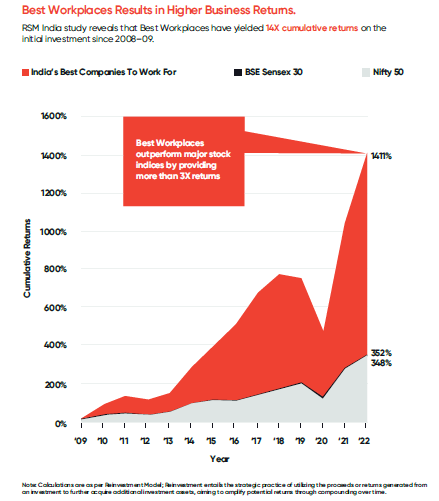
In today’s competitive business environment, attracting and retaining top talent is crucial for organizational success. A company’s achievements rely not just on its products or services but significantly on its employees’ collective strength and commitment. According to a study by RSM India, organizations recognized as Best Workplaces have demonstrated a remarkable 14 times increase in cumulative returns on their initial investments since 2008-09. This substantial growth underscores the value of cultivating a positive workplace culture. By prioritizing employee satisfaction, engagement, and development, companies can drive superior performance, innovation, and long-term profitability, establishing a strong competitive advantage in the market.

Best Workplaces outperform major indices by providing more than 3X returns.

5 Dimensions of Indian Workplace Culture across Demographics and Industries

Camaraderie 

Camaraderie measures the sense of enjoyment in the workplace by assessing the level of intimacy and connection employees experience with their colleagues. When employees share a strong sense of camaraderie, they are more likely to feel engaged, supported, and motivated. 

The importance of camaraderie lies in its ability to create a positive work atmosphere where employees feel valued and understood. It helps in reducing stress, as individuals who enjoy strong interpersonal relationships at work are better equipped to handle challenges and conflicts. Moreover, a workplace with high camaraderie often experiences lower turnover rates, as employees are more likely to stay with a company where they have formed meaningful bonds.

Credibility

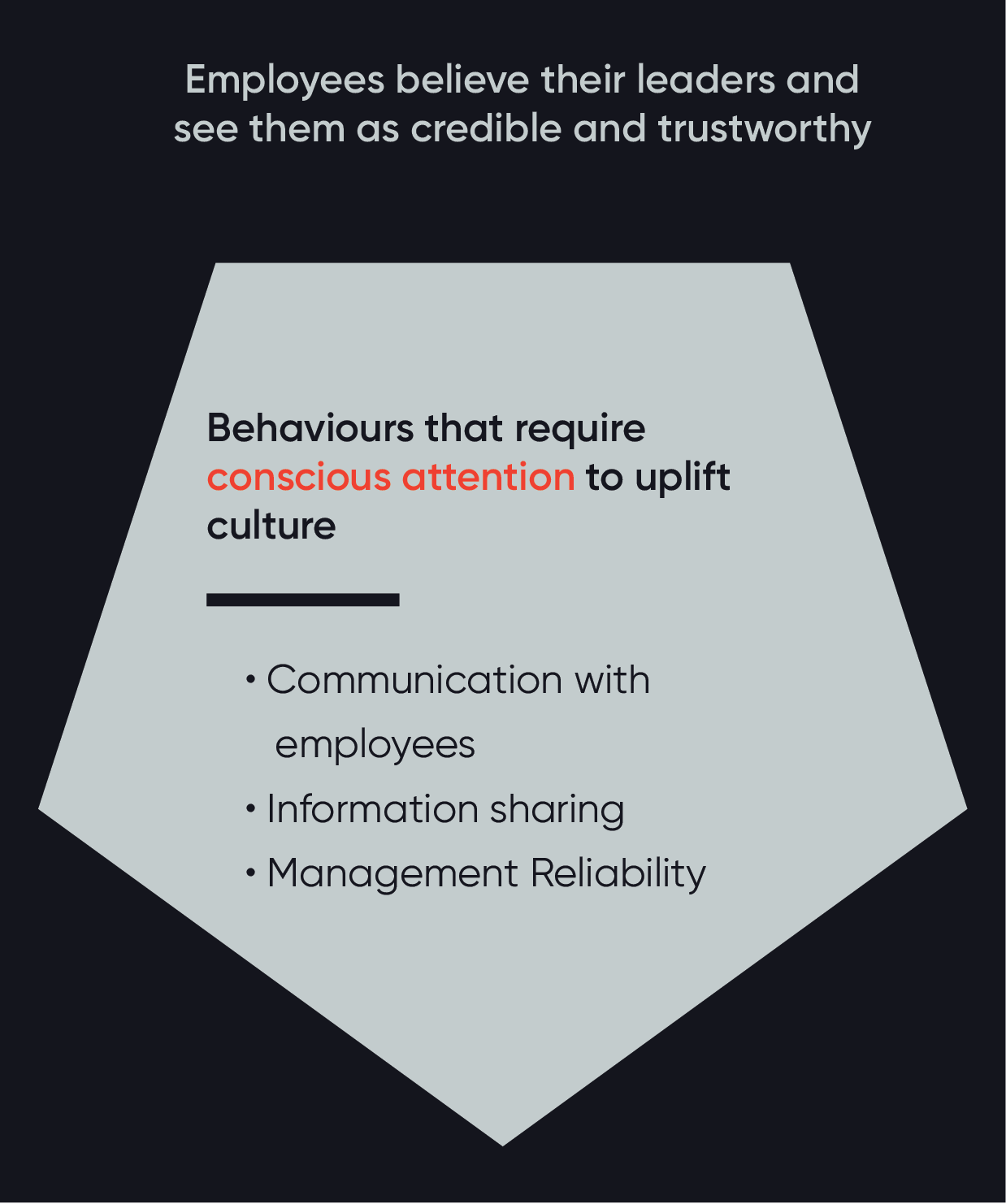
Credibility measures the extent to which employees perceive management as trustworthy, reliable, and competent. When employees view their leaders as credible, they are more likely to have confidence in their decisions, directions, and communications. 

Employees rely on credible leadership to provide guidance, support, and a sense of stability within the organization. When management is perceived as credible, employees feel more engaged, motivated, and invested in their work. They are more willing to collaborate, take initiative, and contribute their best efforts towards achieving organizational objectives.

Credibility is especially crucial during times of change or uncertainty, as employees look to leadership for reassurance and direction. Leaders who demonstrate integrity, honesty, and authenticity in their actions are better able to navigate challenges and inspire confidence among their teams.

Respect 

Respect measures the extent to which employees feel valued, appreciated, and treated fairly by those in leadership positions. When employees feel respected by management, they are more likely to be engaged, motivated, and committed to their work.

Respect is demonstrated through various actions, including active listening, acknowledging contributions, providing opportunities for growth and development, and treating all employees with dignity and fairness. It involves creating an inclusive environment where differences are celebrated, and everyone’s voice is heard and respected.

The presence of respect in the workplace has numerous benefits. It leads to higher levels of employee satisfaction, increased morale, and improved overall well-being. Employees who feel respected are more likely to collaborate effectively, communicate openly, and contribute their unique skills and perspectives to achieve organizational goals.

Moreover, a culture of respect contributes to lower turnover rates as employees are more likely to remain loyal to an organization where they feel valued and respected. It also enhances employer branding, making the organization more attractive to prospective employees and customers alike.

Pride 

Pride measures the extent to which employees take pride in their work, their team or work group, and the overall company. When employees feel a sense of pride, they are more likely to be motivated, productive, and loyal to their organization.

At an individual level, pride in one’s work reflects a deep sense of accomplishment, fulfillment, and personal investment in the tasks and projects they undertake. It encompasses feelings of satisfaction derived from overcoming challenges, achieving goals, and delivering high-quality results.

Similarly, pride in one’s team or work group reflects a sense of camaraderie, collaboration, and mutual respect among colleagues. Pride in the company reflects a strong sense of belonging, loyalty, and commitment to its mission, values, and reputation. Employees who feel proud of their organization are its best ambassadors, advocating for its products, services, and culture both internally and externally.

Fairness 

Fairness measures the extent to which employees perceive management’s practices as just, equitable, and unbiased. When employees believe that they are treated fairly, they are more likely to feel motivated, engaged, and committed to their work.

One crucial aspect of fairness is impartiality, where decisions are made based on merit and objective criteria rather than personal biases or favoritism. Employees expect fair treatment in various aspects of their employment, including recruitment, promotion, performance evaluation, and compensation.

Fair pay is a significant concern for employees, as they want to receive compensation commensurate with their contributions and market value. Gain-sharing programs, where employees are rewarded based on collective performance and productivity, can further enhance perceptions of fairness and promote a sense of shared ownership and accountability.

Addressing perceptions of fairness requires a proactive approach from management, including regular assessments of policies and practices to identify and address areas of potential bias or inequality. By prioritizing fairness, organizations can build a culture of trust and fairness where employees feel valued, respected, and motivated to contribute their best efforts towards achieving organizational goals.

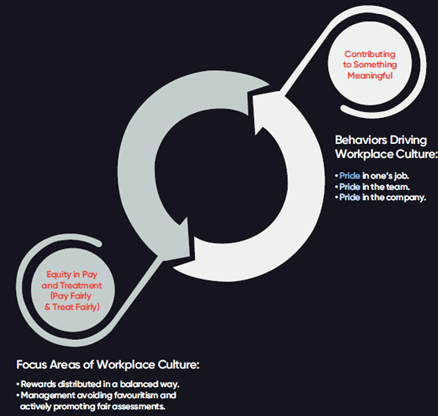
Behaviors Driving Workplace Culture - Pride in one's job, Pride in the team and Pride in the company. Focus Areas of Workplace Culture - Rewards distributed in a balanced way, Management avoiding favouritism and Actively promoting fair assessments.

Pride and Fairness Define Workplace Culture Fulcrum of India 2023

Organizations must recognize the importance of cultivating a positive workplace culture that prioritizes the well-being and success of its employees. By embracing these key dimensions of workplace culture, organizations can differentiate themselves, attract and retain top talent, and achieve sustainable growth and success in the dynamic Indian market. Visit us here to learn more. 

Post-pandemic, prioritizing employee well-being became a central focus for company leaders, driven by the recognition of the profound impact the crisis had on mental health and work dynamics. Organizations are investing heavily in wellness programs, mental health resources, and flexible work arrangements, aiming to support their employees in adapting to the new normal. Initiatives such as virtual therapy sessions, mindfulness workshops, and comprehensive health benefits were introduced to foster a supportive and resilient workforce. Despite these efforts, however, surveys have indicated that employees’ overall psychological and emotional health has seen minimal improvement. This highlights the complexity of addressing well-being in the workplace and underscores the need for continued innovation and commitment from leadership to truly enhance the employee experience in a sustainable way.

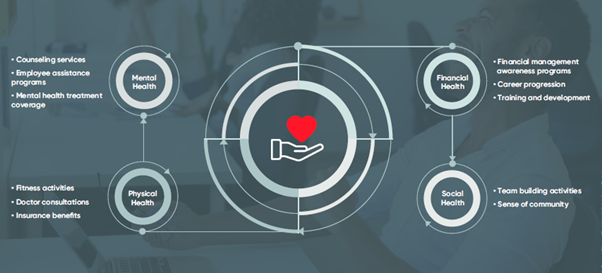
Workplace Wellness - Umbrella term used to describe organizational benefits and practices, designed to support employee health and wellbeing
at the workplace.

What builds well-being for employees?

Sense of purpose

A sense of purpose is vital in the workplace, yet nearly half of respondents in the 2023 market survey (46%) reported that they did not find their work meaningful. Research from Johns Hopkins highlights this experience gap as a significant factor in why only one in six employees globally are “flourishing.” Employees are less likely to feel engaged and motivated without meaningful work, leading to lower overall well-being and productivity. Cultivating a sense of purpose can help bridge this gap, enabling employees to find value in their roles and contribute more effectively to their organizations.

Mental and emotional support

Mental and emotional support in the workplace is crucial for maintaining a positive outlook, even amid adversity. When cultivated across an organization, this positivity contributes to the development of “psychological capital.” Psychological capital comprises optimism, resilience, and confidence, forming a reservoir of goodwill that companies can rely on during challenging times. By fostering a supportive environment, organizations enhance individual well-being and build collective strength. This reservoir of psychological capital helps employees navigate stress, adapt to changes, and maintain productivity, ultimately contributing to the long-term success and stability of the organization.

Mental and emotional support

Mental and emotional support in the workplace is crucial for maintaining a positive outlook, even amid adversity. When cultivated across an organization, this positivity contributes to the development of “psychological capital.” Psychological capital comprises optimism, resilience, and confidence, forming a reservoir of goodwill that companies can rely on during challenging times. By fostering a supportive environment, organizations enhance individual well-being and build collective strength. This reservoir of psychological capital helps employees navigate stress, adapt to changes, and maintain productivity, ultimately contributing to the long-term success and stability of the organization.

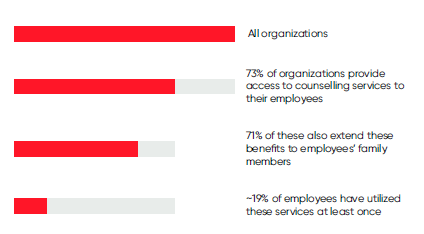
While organizations have started providing various mental health benefits including
counselling services, mental health webinars, wellness leave policies etc., the low utilization of these services highlights the need for ease of usage that can be addressed by creating a structured framework to support employees that open up
about their struggles.

Personal support

Personal support from managers significantly impacts employee well-being, often more than therapists or doctors. At best companies, 84% of employees believe management shows a sincere interest in them as individuals. However, the 2023 market study revealed that only 58% of employees at an average workplace felt similarly supported. This disparity highlights managers’ crucial role in fostering a supportive and caring work environment. When managers genuinely care about their employees, it enhances well-being, engagement, and overall job satisfaction.

Financial health

Financial health is a critical component of overall well-being, as financial worries can negatively impact other areas of life. Recognizing this, great workplaces are increasingly focusing on supporting their employees’ financial health. They offer tools and programs designed to help employees build a strong financial foundation, such as financial literacy workshops, retirement planning resources, and budgeting tools. By addressing financial concerns, these organizations alleviate stress and empower employees to achieve stability and peace of mind, ultimately enhancing their overall well-being and productivity.

Meaningful connections

Meaningful connections are essential for employee well-being, as they significantly influence how connected workers feel to their colleagues and management. The Johns Hopkins study revealed that 25% of employees feel lonely at work, and 30% do not experience a sense of belonging. These feelings of isolation can detract from overall job satisfaction and mental health. Building strong, supportive relationships within the workplace helps foster a sense of community and belonging. Encouraging team collaboration, social interactions, and open communication can bridge these gaps, creating a more inclusive and connected work environment.

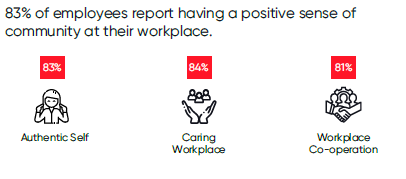
83% of employees report having a positive sense of community at their workplace.

What sets the Best Workplaces apart?

Here’s what you can do to generate good results from your wellbeing practices-

Ask questions to identify barriers to well-being

Asking questions to identify barriers to well-being is crucial for creating a supportive and healthy work environment. By engaging with employees through thoughtful and specific inquiries, organizations can uncover the underlying issues that impact well-being. This proactive approach allows employers to understand stressors, gaps in support, and areas where employees feel unfulfilled or disconnected. Addressing these concerns enhances individual satisfaction and mental health and fosters a culture of openness and continuous improvement. When employees feel heard and valued, it leads to increased engagement, productivity, and loyalty, ultimately contributing to the organization’s overall success.

Align benefits to the needs employees share with you

Aligning benefits to employees’ needs is essential for creating a workplace culture that prioritizes their well-being. Organizations can tailor their benefits packages to address specific needs and preferences by actively listening to employees and understanding their concerns. Whether it’s offering flexible work arrangements to promote better work-life balance, providing comprehensive mental health support, or implementing wellness programs that focus on physical health, aligning benefits with employee feedback demonstrates a commitment to their overall wellness. This approach helps attract and retain top talent and fosters a positive work environment where employees feel supported and valued. Ultimately, aligning benefits to employee needs contributes to higher job satisfaction, increased productivity, and improved overall morale.

Take action to influence the big picture

Taking action to influence the big picture involves implementing strategies and initiatives that go beyond individual employee needs to drive systemic change within the organization and the broader industry. This may include advocating for policies that promote diversity, equity, and inclusion, both internally and externally. It could also involve investing in sustainable practices that reduce the organization’s environmental impact and contribute to a healthier planet. Additionally, organizations can take action to address social issues and community needs through corporate social responsibility initiatives and philanthropy. By actively engaging with stakeholders, collaborating with industry partners, and leveraging resources, organizations can have a meaningful impact on society while also advancing their long-term goals and objectives.

Creating a workplace environment that prioritizes employee well-being is essential for fostering a healthy, productive, and sustainable organization. By adopting proactive measures, fostering a culture of openness and continuous improvement, and advocating for systemic change, organizations can create workplaces where employees feel valued, supported, and empowered to thrive. Visit us here to learn more. 

In today’s competitive job market, attracting top talent requires more than just offering a competitive salary and a good benefits package. Job seekers are increasingly discerning, seeking out workplaces that offer a positive and fulfilling work environment. According to our recent studies, job seekers are 15 times more likely to choose certified Great Workplaces over those that are not. This trend highlights the growing importance of workplace culture, employee satisfaction, and organizational values in the decision-making process of potential employees. Certified Great Workplaces stand out by fostering environments where employees feel valued, engaged, and inspired. In this blog, we’ll explore why job seekers are gravitating towards these certified workplaces and how organizations can leverage this trend to attract and retain the best talent in the industry.

The role of trust in great workplaces

Before we delve into the impact of trust on workplace dynamics, it’s essential to understand its significance in earning the Great Place To Work Certification. Our model is founded on the principle that trust is the cornerstone of an exceptional workplace. This is the key factor we evaluate when assessing companies for Certification. Through our Trust Index™ Survey, we gauge employees’ trust in their leaders, their sense of respect, and their overall workplace satisfaction.

Our research consistently shows that trust creates a pleasant work environment and drives substantial business success. Employees who trust their company are more engaged, productive, and loyal. Consequently, companies that achieve our Certification excel in trust, giving them a competitive edge.

Our research consistently shows that trust creates a pleasant work environment and drives substantial business success.

How companies Certified by Great Place To Work eclipse the typical workplace

Our research indicates that Certified (high-trust) companies distinguish themselves by having better leadership, more equitable promotion processes, and higher levels of employee engagement, with a significant number of employees expressing excitement about coming to work. These companies excel in retaining and engaging employees and promoting adaptability more effectively than the average workplace:

  • 39% more employees express their intention to stay with the organization.
  • 37% more employees feel capable of adapting to changes within the business.
  • 48% more employees are willing to go above and beyond in their roles.

Achieving Certification has become a national benchmark for a positive company culture. For a company to be certified, at least 70% of its employees must affirm it’s a great workplace. 

Companies that cultivate trust-based workplaces fundamentally transform the landscape. They create environments where employees genuinely want to be, which in turn drives business success. When trust is at the core of a workplace, it leads to higher employee satisfaction, engagement, and productivity, ultimately resulting in flourishing businesses.

Certified great workplaces pay and promote their people fairly 

Certified Great Workplaces are distinguished by their commitment to fair pay and equitable promotion practices. They ensure that all employees are compensated fairly for their contributions and have clear, unbiased paths to career advancement. This focus on fairness fosters trust and loyalty and contributes to a more motivated and engaged workforce.

Great workplaces provide a sense of purpose and pride

Our research into top employee retention strategies has revealed that purpose and pride are the most critical factors influencing an employee’s decision to remain with an organization. Employees are:

  • 2.7 times more likely to stay when they feel a sense of purpose
  • 2.2 times more likely to stay when they feel a sense of pride

When leaders inspire their employees to take pride in their work and find meaningfulness in their roles, they cultivate a happier and more motivated workforce. At Certified Great Workplaces, employees experience these empowering conditions, leading to higher retention rates and a more engaged team.

Employer brands that stand out from the crowd 

Certified companies have employer brands that truly stand out from the crowd. These organizations are recognized for their commitment to creating exceptional workplace environments characterized by trust, fairness, and respect. By prioritizing employee well-being, fair compensation, and clear career advancement paths, certified companies attract top talent and foster loyalty and engagement among their workforce. This strong, positive employer brand sets them apart in a competitive job market, making them desirable workplaces and driving their overall success.

Great workplaces offer more opportunities for innovation

Great workplaces offer more opportunities for innovation by fostering an environment where creativity and new ideas are encouraged and valued. These workplaces cultivate a culture of trust and open communication, where employees feel safe to take risks and experiment without fear of failure. By providing resources, support, and recognition for innovative efforts, great workplaces empower their employees to think outside the box and contribute to the company’s growth and success. This emphasis on innovation drives business advancements and enhances employee engagement and satisfaction, making the organization a dynamic and forward-thinking place to work.

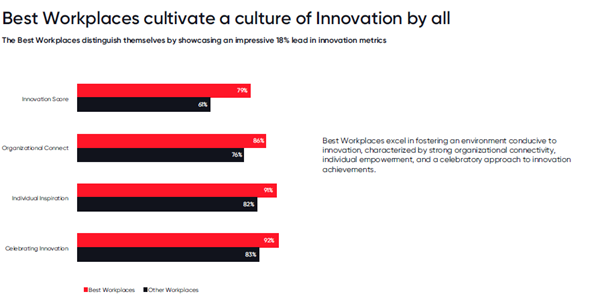
The Best Workplaces distinguish themselves by showcasing an impressive 18% lead in innovation metrics.

For both job seekers and HR managers, opting for Great Place To Work Certification proves to be a wise choice. It results in enhanced job satisfaction, heightened employee engagement, and a sustained positive work atmosphere. Embracing workplace certification boosts job seekers’ prospects of encountering excellent leadership and enables HR managers to utilize this certification as a powerful tool for attracting and retaining top talent within their respective industries. Visit here to learn more.

In today’s fast-paced business world, investing in your team’s growth and development is crucial for success. As markets shift and competition heats up, companies need to focus on nurturing their employees’ skills, passions, and potential. This investment boosts employee satisfaction and retention and fuels innovation, productivity, and overall performance. By having a clear plan for talent development, leaders can systematically identify, nurture, and leverage the talent within their organization. By doing so, leaders can create a continuous learning and improvement culture where employees feel empowered to grow and thrive. 

Holistic Assessment

A holistic, thorough understanding of your team’s strengths, weaknesses, and potential is the key to effective talent development. By taking the time to really get to know your employees, you can gain a deep understanding of your workforce’s dynamics. This helps you identify the stars of your organization, the ones with the potential to take on leadership roles and drive your business forward. This holistic approach can also align talent strategies with business goals, create a culture of continuous improvement, and unlock the full potential of your workforce. 

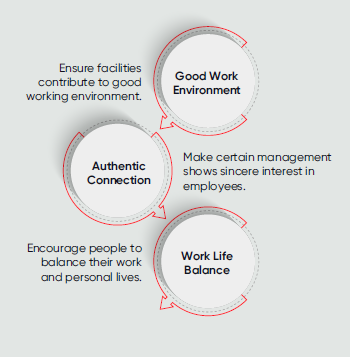
3 leadership imperatives to create a caring work environment - Good Work Environment, Authentic Connection and Work Life Balance.

Personalized Development Plans

Personalized development plans are the cornerstone of effective talent growth, recognizing the individuality of each employee and catering to their specific needs and ambitions. By tailoring these plans accordingly, leaders demonstrate a commitment to nurturing talent at a personal level, fostering engagement and motivation. Integration of diverse learning approaches, including on-the-job experiences, formal training programs, coaching, and mentoring, ensures a well-rounded development journey.

Furthermore, providing ample resources and support enables employees to pursue continuous learning and skill enhancement, empowering them to reach their full potential. Through personalized development plans, organizations cultivate a skilled workforce and foster a culture of lifelong learning and growth.

Continuous Feedback and Coaching

Continuous feedback and coaching are vital components of talent development. They foster a culture of transparency, growth, and improvement within the organization. By nurturing an environment of regular feedback and open communication, leaders create opportunities for dialogue and collaboration, enhancing employee engagement and satisfaction.

Providing constructive feedback allows employees to understand their performance and progress, enabling them to make necessary adjustments and improvements. Additionally, offering coaching and guidance demonstrates a commitment to supporting employees in overcoming challenges and achieving their development goals. Through continuous feedback and coaching, organizations empower their workforce to excel, driving individual and collective success.

Opportunities for Growth and Advancement

Opportunities for growth and advancement are essential for fostering employee engagement, satisfaction, and retention. By creating clear pathways for career progression within the organization, leaders demonstrate a commitment to recognizing and rewarding talent. Offering opportunities for employees to take on new roles, responsibilities, and projects expands their skill sets and keeps them challenged and motivated. Encouraging cross-functional collaboration and mobility further enriches employees’ experiences, fostering a culture of innovation and knowledge sharing. 

Workers who were satisfied with their opportunities for growth were 79% more likely to report good or excellent mental health. Workers who lacked opportunities for growth and advancement were also more likely to feel tense or stressed during their workday. By prioritizing opportunities for growth and advancement, organizations cultivate a skilled and versatile workforce and position themselves as employers of choice in attracting top talent.

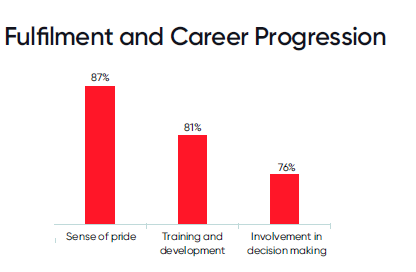
Leaders need to focus on supporting employees in their career progression planning, training and development, and fostering a culture of shared decision making. The Sense of Pride stays at 87%, Training and Development at 81% and Involvement in Decision Making at 76%.

Recognition and Rewards

Recognition and rewards play a pivotal role in reinforcing desired behaviors, fostering a culture of appreciation, and motivating employees to excel. Acknowledging and celebrating employees’ achievements and contributions boosts morale and cultivates a sense of belonging and loyalty within the organization. Implementing reward systems that recognize both individual and team accomplishments encourages collaboration and camaraderie, driving collective success.

Moreover, linking rewards to performance and development goals incentivizes continuous improvement, aligning employees’ efforts with organizational objectives. By prioritizing recognition and rewards, organizations reinforce positive behaviors and inspire a high-performance culture that fuels sustained success.

Cultivating a Learning Culture

Cultivating a learning culture is essential for fostering innovation, adaptability, and continuous improvement within organizations. By promoting a culture of curiosity, leaders inspire employees to explore new ideas, challenge the status quo, and embrace change. Encouraging knowledge-sharing and collaboration creates an environment where diverse perspectives are valued, fostering creativity and problem-solving.

Providing access to learning resources, workshops, and development programs empowers employees to expand their skills and knowledge, driving personal and professional growth. By prioritizing a learning culture, organizations stay ahead of the curve and nurture a workforce that is agile, resilient, and poised for success in an ever-evolving world.

Nurturing talent is not just a strategic imperative but a fundamental commitment to any organization’s long-term success and sustainability. By adopting a structured framework for talent development, leaders can cultivate an empowered workforce that drives innovation, productivity, and growth. Visit here for more info.

Within this vibrant financial landscape of BFSI, notable advancements are observed across various fronts. The BFSI sector, alongside manufacturing, emerges as a frontrunner with a robust 25% hiring intent, signalling a strategic emphasis on both industrial expansion and talent acquisition within the financial domain. Significant developments, including the fortification of banks, the proliferation of fintech ventures, and a surge in investments and insurance activities, further fuel this fervent pursuit of growth. Such advancements not only signify the sector’s upward momentum but also underscore its pivotal role in driving India’s economic evolution towards greater prosperity and inclusivity.

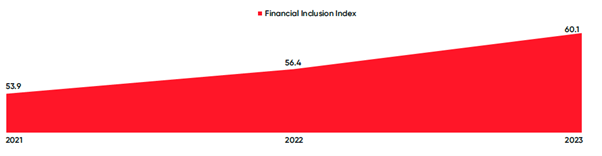
The Financial Inclusion (FI) Index for March 2023 stands at 60.1 vis-a-vis 56.4 in March 2022 and 53.9 in 2021, with growth witnessed across all sub-indices.

The trajectory of financial inclusion emerges as a testament to progress. Recent data paints a vivid picture of growth, with the Financial Inclusion (FI) Index soaring from 56.4 in March 2022 to an impressive 60.1 in March 2023. This upward trend reverberates across all sub-indices, reflecting a concerted effort towards broader accessibility, deeper engagement, and enhanced quality within the financial ecosystem. Crafted in collaboration with governmental bodies and sectoral regulators, the FI-Index articulates its narrative through three fundamental parameters: Access (35%), Usage (45%), and Quality (20%). These metrics not only underscore the sector’s unwavering commitment to fostering inclusive financial practices but also lay the groundwork for a more empowered and resilient future.

Perception of Workplace

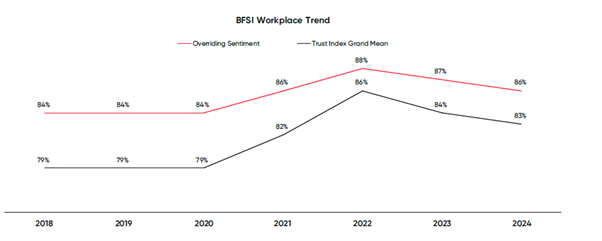
Despite an overarching sentiment of positivity, organizations experienced a marginal 1% dip in the overriding sentiment, with 86% of employees affirming their workplace’s greatness in 2024. Concurrently, the industry’s Trust Index Grand Mean has consistently declined since 2022, signalling a nuanced narrative within the sector. Particularly noteworthy is the perceptible decline in workplace perception, marked by diminished credibility, fairness, and pride among BFSI employees in 2024. The erosion of trust is reflected in waning belief in the integrity of management, perceptions of justice in the workplace, and a fading sense of pride in one’s job, team, and corporate identity.

The overall sentiment was consistently at 84% from 2018 to 2020, and it increased to 86% in 2021 and 88% in 2022. However, it decreased to 87% in 2023 and further to 86% in 2024. The Trust Index Grand Mean showed a similar trend, with a constant rating of 79% from 2018 to 2020, followed by an increase to 82% in 2021 and 86% in 2022. Then, it decreased to 84% in 2023 and 83% in 2024.

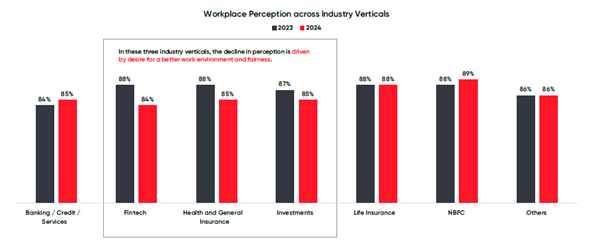
Compared to other industries, the BFSI sector experienced a slip in key areas of fairness, pride, and overall sentiment from the preceding year. There exists a discernible opportunity to enhance employees’ perceptions of service excellence, improved facilities, the commemoration of special occasions, and the addressing of biases related to gender and sexual orientation.

The decline in perception is particularly notable across three verticals, registering a dip ranging between 2% to 4%. Within the BFSI sector, the most significant drop in perception is observed in the Fintech, Health & General Insurance, and Investment verticals. Furthermore, this decline is most pronounced, reaching approximately 10%, among Millennial and Gen-Z managers in the early stages of their tenure. These insights underscore the imperative for proactive measures to bolster workplace culture, foster inclusivity, and nurture a conducive environment for all employees across the BFSI spectrum.

For BFSI employees, belief in the integrity of management, justice at work, and pride in personal job, team, and corporate image has declined.

Workplace Perception across Gender

1 out of every 4 women employees in the BFSI sector feel they lack opportunities to get special recognition. 

1 out of every 4 women employees in the BFSI sector feel they lack opportunities to get special recognition.

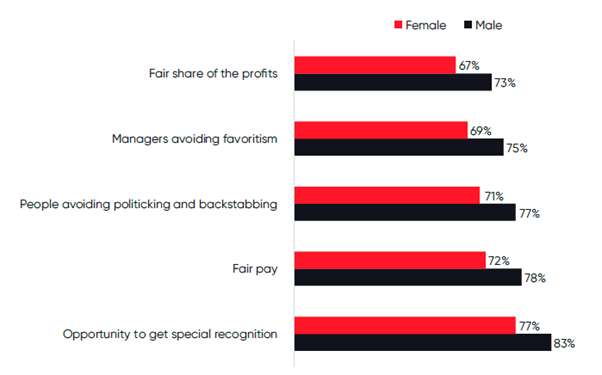
The biggest difference in workplace experience between male and female employees lie in the opportunities they get for special recognition, receiving fair pay and a fair share of profits, and experience with workplace favoritism and politicking.

Equity Perception Across Gender

4 out of 5 employees in the BFSI industry feel positive about equity in the workplace, however female employees are 5% less satisfied with workplace equity compared to their male colleagues.

Workplace Perception across Generations

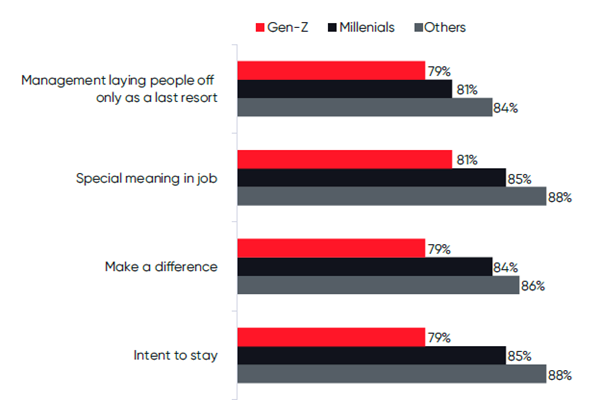
Almost 21% of Gen Z and 15% of Millennials in the BFSI sector do not intend to stay long in the organization. The biggest difference in workplace experience between Gen Z and Millennials of BFSI lies in their intent to stay for a long time, feeling that they make a difference at work, believing that their job has a special meaning, and management laying of people as a last resort.

Almost 21% of Gen Z and 15% of Millennials in the BFSI sector do not intent to stay for a long time in the organisation.

Equity Perception Across Generation

Even though almost 80% of Gen-Z and Millennial employees in the BFSI sector are satisfied with equity in the workplace, Gen-Z employees have a 6% lower perception of fair pay compared to their older peers like Gen-X and Boomers.

Highest And Lowest Perceptions Of BFSI Industry In 2024

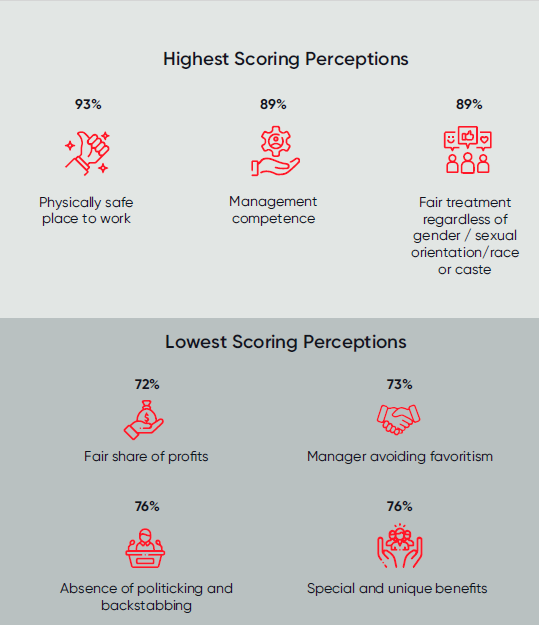
Most employees within the BFSI industry find their workplace physically safe, find their management competent, and do not perceive gender/age/race or caste/sexual orientation-based discrimination. However, they are most dissatisfied with their fair share of profits, managers’ favoritism, and instances of politics and favoritism in the workplace.

Highest Scoring Perceptions showing physically safe place to work at 93%. Management competence at 89% and fair treatment regardless of gender/sexual orientation/race or caste at 89%. Lowest Scoring Perceptions showing fair share of profits at 72%, manager avoiding favoritism at 73%, absence of politicking and backstabbing at 76% and special and unique benefits at 76%.

Amidst the evolving dynamics of the BFSI sector, the imperative to prioritize care at the workplace emerges as a beacon of necessity. As organizations navigate through shifting paradigms and strive for sustained growth, fostering a culture of compassion and empathy becomes paramount. Recognizing the pivotal role of a caring work environment as a cornerstone of workplace culture and employee satisfaction, it becomes incumbent upon BFSI entities to redouble their efforts in this regard. By nurturing an environment where employees feel valued, supported, and empowered, organizations not only cultivate loyalty and commitment but also fuel innovation and productivity. As we look towards the future, let us reaffirm our commitment to prioritizing care at the workplace, thereby fostering a culture that thrives on compassion, inclusivity, and collective well-being. Visit us here for more information.

In an era of unprecedented change and uncertainty, the imperative for leaders to cultivate a culture of innovation has never been more pressing. Traditional business operation models are being disrupted unprecedentedly, necessitating a shift towards a more agile and adaptable approach. A culture of innovation encourages the exploration of diverse ideas and instills a mindset of continual adaptation and evolution. It goes beyond mere tolerance of change; it embraces change as a fundamental aspect of organizational identity.

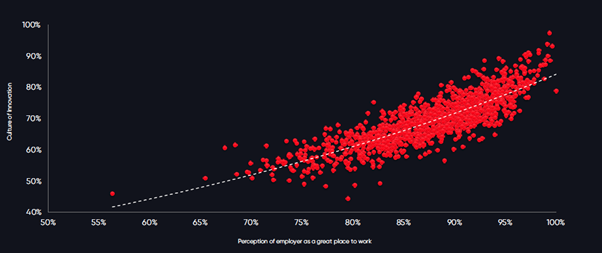
A robust connection exists between workplace satisfaction and the vibrancy of its innovation culture. As employees' perceptions of their workplace improve, there 
is a notable increase in the organization's culture of innovation.

In such a culture, adaptability becomes ingrained as a core organizational value, enabling teams to respond effectively to emerging challenges and capitalize on new opportunities. By fostering an environment where innovation thrives and adaptability reigns supreme, leaders can position their organizations to survive and thrive in an uncertain future.

Agile Risk-Taking

Cultivating a culture characterized by agility, constructive feedback, and a willingness to take risks is paramount. Speed is not just desirable; it’s essential. Innovation cycles are continually accelerating, and organizations must act swiftly to seize emerging opportunities and maintain a competitive edge. By fostering a culture that values speed and agility, leaders empower teams to make decisions rapidly, adapt to changing market dynamics, and capitalize on new trends.

Moreover, cultivating a constructive culture where feedback is embraced as a tool for growth fosters continuous improvement and innovation. Employees feel empowered to experiment, knowing that failures are viewed as opportunities for learning and growth rather than as setbacks. This mindset encourages creativity, risk-taking, and the pursuit of bold ideas that have the potential to drive industry evolution forward.

Adaptive Environment

Creating an adaptive environment fosters inclusivity and flexibility within workplaces to embrace diverse ideas and adapt to future workforce trends. Inclusivity ensures that all voices are heard and valued, regardless of background or perspective. By fostering a culture of inclusivity, organizations can tap into the full spectrum of talent and creativity within their teams, leading to more innovative solutions and approaches.

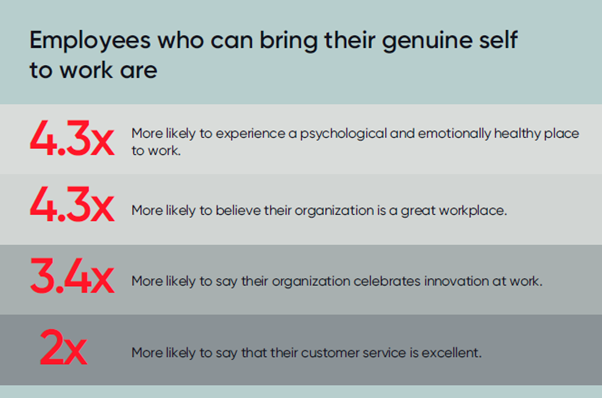
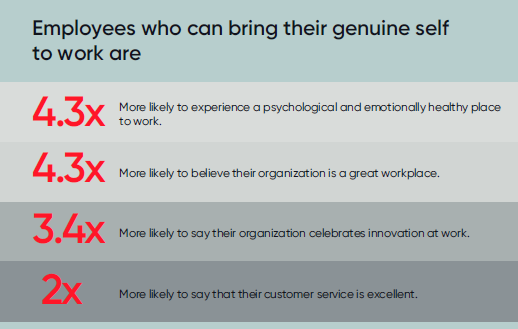
4.3X more likely to experience a psychological and emotionally healthy place to work. 4.3X more likely to believe their organization is a great workplace. 3.4X more likely to say their organization celebrates innovation at work. 2X more likely to say that their customer service is excellent.

Flexibility is equally crucial in creating an adaptive environment. As the nature of work continues to evolve, organizations must adapt to shifting workforce trends, such as remote work, flexible schedules, and alternative work arrangements. By offering flexibility in how, when, and where work is done, organizations can attract and retain top talent while also promoting employee satisfaction and productivity.

Together, inclusivity and flexibility form the foundation of an adaptive environment that enables organizations to thrive in the face of uncertainty and change. By embracing diverse ideas and accommodating evolving workforce needs, organizations can position themselves for long-term success in an ever-changing world.

Forward-Thinking Incentives

Forward-thinking incentives are instrumental in fostering a culture of innovation and encouraging groundbreaking solutions that challenge the status quo. By rewarding innovative challenges, organizations inspire employees to think outside the box, take calculated risks, and push the boundaries of what is possible.

These incentives can take various forms, such as recognition programs, monetary rewards, career advancement opportunities, or even dedicated time and resources for pursuing innovative projects. By aligning incentives with the organization’s strategic goals and values, leaders reinforce the importance of innovation and signal their commitment to supporting and rewarding creative thinking.

Forward-thinking incentives create a sense of excitement and motivation among employees, driving engagement and fostering a culture where innovation is celebrated and encouraged. By recognizing and rewarding individuals and teams who dare to challenge convention and pursue bold ideas, organizations reinforce the message that innovation is valued and essential for long-term success.

Lifelong Learning 

Prioritizing continuous learning allows individuals to stay up-to-date of the latest technological advancements, ensuring they remain relevant and competitive in their fields. By continuously updating their knowledge and acquiring new skills, professionals can adapt to changing market demands and seize new opportunities as they arise.

Furthermore, organizations that prioritize lifelong learning foster a culture of innovation and agility. Employees are encouraged to explore new ideas, experiment with innovative solutions, and contribute fresh perspectives to the organization’s growth. This culture of learning not only enhances employee engagement and retention but also equips the organization with the agility needed to respond effectively to shifting market dynamics.

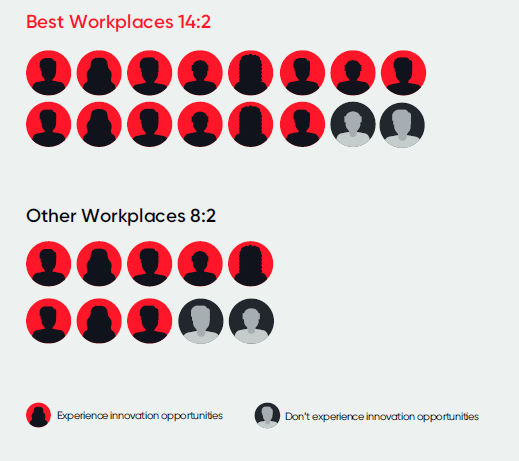
Best Workplaces exhibit nearly double the readiness to innovate 
compared to other workplaces. However, Gen Z, Women, and Non-managerial staff report limited 
opportunities for innovation, highlighting a need for equitable resource distribution and support to nurture creativity universally.

Streamlined Ideation

Streamlined ideation processes are indispensable for staying ahead of emerging trends in today’s dynamic business environment. Organizations can foster a culture of innovation and responsiveness by developing clear and agile ideation processes, enabling them to identify and capitalize on emerging opportunities swiftly.

Clear ideation processes provide structure and direction, guiding teams through the brainstorming and idea-generation phase efficiently. This clarity ensures that everyone understands the objectives and parameters of the ideation process, leading to more focused and productive sessions.

Agility in ideation processes allows organizations to adapt quickly to changing circumstances and market shifts. By embracing iterative approaches and rapid experimentation, teams can test ideas, gather feedback, and refine their concepts in real-time. This flexibility enables organizations to stay nimble and responsive, seizing opportunities as they arise and mitigating risks effectively.

A leadership blueprint for cultivating an innovation-ready future is essential in today’s rapidly changing business landscape. By embracing the above-mentioned key principles, organizations can position themselves for sustained success in an uncertain future. Visit us here to learn more. 

The BFSI sector in India is experiencing significant growth, with a strong focus on hiring and expansion. Despite this, workplace perceptions show a noticeable decline, particularly regarding employee trust and fairness. Women report feeling overlooked for special recognition and less satisfied with workplace equity than men. Similarly, younger employees, especially Gen Z, express a lower intent to stay long-term and perceive less fairness in pay than older generations. While the industry is praised for safety and competent management, dissatisfaction stems from perceived unfair profit-sharing, favoritism among managers, and workplace politics. Amid these challenges, fostering a caring work environment is emphasized to enhance employee satisfaction, loyalty, and productivity, urging BFSI entities to prioritize compassion and inclusivity.

A pressing necessity at present is prioritizing care within the workplace, particularly in organizations within the BFSI sector. It remains paramount for these entities to steadfastly concentrate on cultivating a nurturing work environment, recognizing it as a fundamental catalyst for fostering workplace culture and ensuring employee satisfaction.

Equity Perceptions across Gender & Generations

In the BFSI industry, most employees, comprising 4 out of 5, hold positive perceptions regarding workplace equity. However, a notable gender disparity emerges, with female employees expressing a 5% lower satisfaction level regarding equity than their male counterparts. Similarly, while nearly 80% of Gen-Z and Millennial employees report satisfaction with workplace equity, a discernible generational gap exists. Specifically, Gen-Z employees exhibit a 6% lower perception of fair pay than their older peers, such as Gen-X and Baby Boomers. These findings underscore the importance of addressing gender and generational equity concerns to foster an inclusive and supportive workplace environment in the BFSI sector.

Focusing on Care in the Workplace – Across Genders

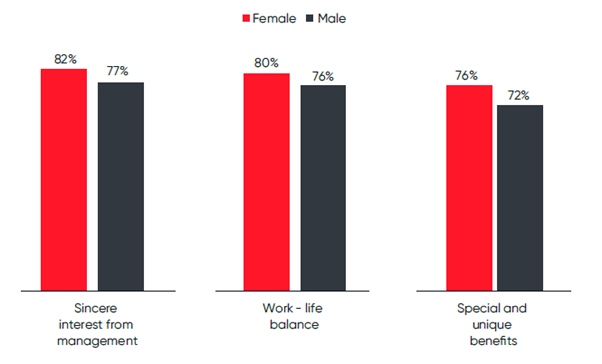
Male employees tend to perceive their organization as more caring than their female counterparts on average. To enhance the experience of women employees, organizations should prioritize demonstrating genuine interest, enhancing work-life balance, and offering tailored and distinctive benefits. Particularly in the BFSI sector, female employees express a heightened requirement for sincere attention from management, improved work-life equilibrium, and specialized perks.

Sincere interest from management is 82% for female and 77% for male. Work - life balance for female is 80% and male 76%. Special and unique benefits for female is 76% and male its 72%.

Focusing on Care in Workplace – Across Generations

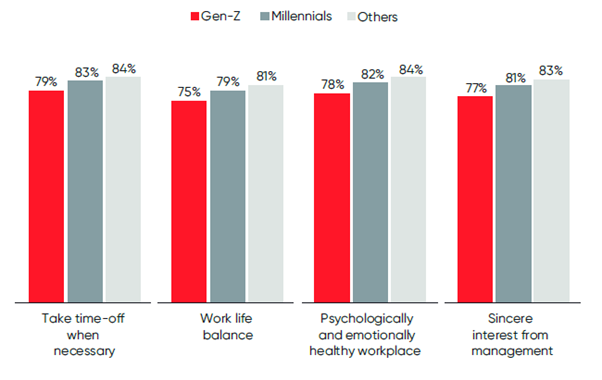
On aspects related to a caring work environment (a key driver for the BFSI industry), Millennials and Gen-Z employees report lower perception in 5/7 sentiments (i.e., -1% lower on average). Millennials and Gen-Z employees in the BFSI industry report a higher need for sincere interest from management, a psychologically and emotionally healthy workplace, work-life balance, and taking time off when necessary.

Millennials and Gen-Z 
employees in the BFSI industry 
report a higher need for 
sincere interest from 
management, a psychologically 
and emotionally healthy 
workplace, work-life balance, 
being able to take time off 
when necessary.

Maximizing Workplace Satisfaction in the BFSI Sector

Enhancing Employee Retention through Care and Benefits

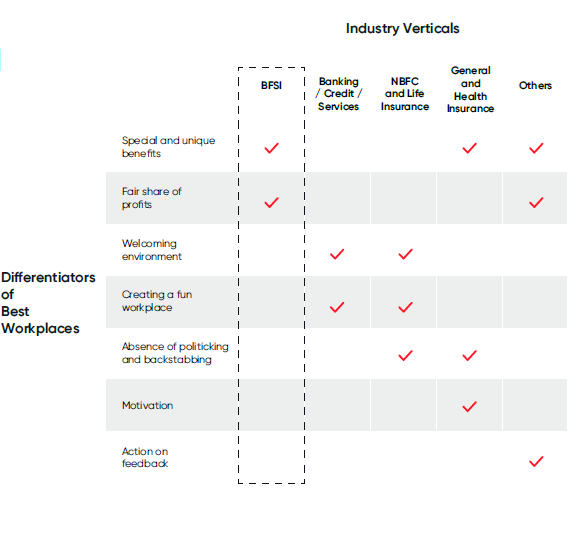
Leading organizations in the BFSI sector outpace others by 9% in equitably sharing profits and offering special and unique benefits. Moreover, the gap in the Trust Index™ score between these top-tier workplaces and others averages 4%. These top performers go beyond industry standards by tailoring workplace initiatives to fit their vertical, resulting in a distinctively positive experience for their employees.

Best Workplaces In BFSI Lead
By 9% In Fair Share Of Profits And 
Special & Unique Benefits.

Long-Term Commitment Despite Slight Dip

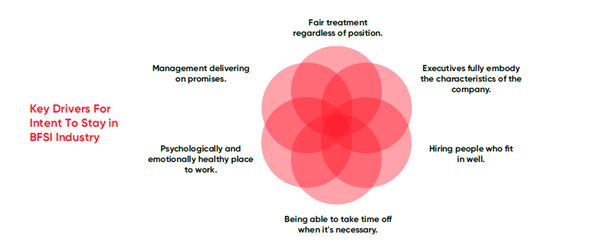
Although 84% of BFSI employees desire to stay long-term, this figure lags 1% below the all-industry average for 2024. However, cultivating a healthy, equitable workplace environment can significantly boost employee retention in the BFSI sector. Prioritizing well-aligned hiring practices, executive authenticity, psychological well-being, flexibility for necessary time off, and dependable management commitments contribute to this positive outcome.

A healthy, fair workplace prioritizing well-aligned hiring, executive authenticity, psychological well-being, flexibility for 
necessary time o, and reliable management promises enhances employee retention in the BFSI industry.

The Payoff of Prioritizing Care

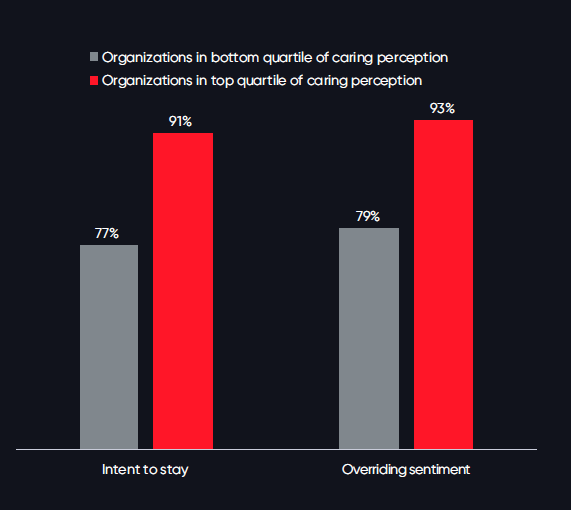
Organizations perceived as caring, wherein managers demonstrate genuine interest in employee well-being and provide supportive benefits, witness remarkable workplace outcomes. On average, entities ranking in the top quartile for caring report a 14% higher intent among employees to remain with the company, underscoring the substantial benefits of fostering a caring workplace culture.

On average, organizations in the top quartile of caring report 
14% higher intent to stay and overriding sentiment.

Learnings from Best Workplaces

Promoting Work-Life Balance at Future Generali India Insurance Company

Future Generali India Insurance Company prioritizes work-life balance by offering flexible work arrangements, particularly beneficial for women before and after maternity. Employees can avail of options such as working from home, capped at 2 days per week and 5 days per month, without the option to accumulate or carry forward unused days. Additionally, the policy prohibits selecting Mondays and Fridays or two consecutive days unless exceptionally approved.

The Flexi Work Arrangement allows employees to adjust their start and end times within core hours and opt for reduced or part-time hours. Moreover, the company supports working from the nearest office location, aligning with the gender diversity goals of the Generali Group. Future Generali has introduced period leave, extended paternity leave to 30 days, and mandated various safety measures for female employees working late to further support employees.

Fostering Authentic Connections at Angel One Limited

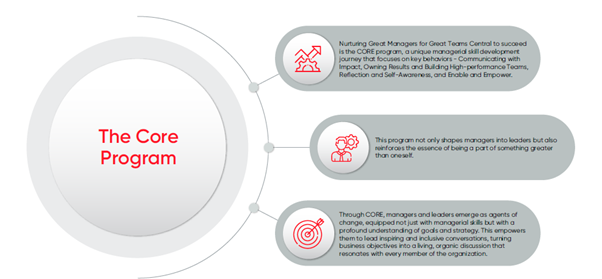
The Core Program of Angel One Limited. Through CORE managers and leaders emerge as agents of change.

Cultivating a Culture of Care at Tata AIG General Insurance

Tata AIG General Insurance has implemented impactful programs focusing on collaboration, effective communication, demonstrating care, and prioritizing the overall employee experience.

While the BFSI sector in India experiences growth, challenges in maintaining workplace equity persist. Gender and generational disparities require attention, but prioritizing care and inclusivity can enhance employee satisfaction and retention. Leading organizations demonstrate the benefits of equitable practices and tailored initiatives. Moving forward, emphasizing empathy and collaboration will be vital for sustained success in the BFSI industry. Visit us here to learn more. 

Every few years, a fresh wave of individuals enters the workforce, each bringing its own unique blend of characteristics, traits, and values. In the past, Baby Boomers prioritized job security, Generation X emphasized achieving a balance between work and personal life alongside professional advancement, and currently, Millennials and Generation Z place importance on various aspects such as a company’s ethical stance and maintaining a healthy work-life balance. These distinctions significantly shape how employees interact with each other and how they are managed within organizations.

According to Johns Hopkins, a significant portion of the workforce currently comprises Baby Boomers (19%), Generation X (35.5%), and Millennials (39.4%). With individuals from this section reaching 65 every day, by 2030, it’s projected that Generation Z will constitute approximately 30% of the workforce. Their innovative perspectives on work and technology are poised to significantly impact our work environments in the near future. Hence, recognizing and appreciating the similarities as well as the distinctions is essential for employers seeking to create inclusive environments where diverse talents can thrive, ultimately driving innovation and success. 

Greater Diversity, Equity, Inclusion & Belonging (DEIB) 

Gen Z views DEIB as an aspiration and an indispensable cornerstone for a workplace that resonates with its core values and fosters its vision of a more equitable future. Furthermore, Great Place To Work® research underscores the profound impact of DEIB initiatives on employees’ sense of workplace wellness, with those in inclusive environments being 4x more likely to perceive their workplace as psychologically healthy. By prioritizing diversity, equity, inclusion, and belonging (DEIB), organizations attract and retain top Gen Z talent and cultivate an environment where all employees can thrive, innovate, and contribute their fullest potential to the organization’s collective success.

Recognize the importance of diversity beyond traditional demographics by including neurodiversity alongside gender, race, and sexual orientation in DEI programs. Demonstrating a commitment to understanding and supporting Gen Z’s diverse workforce strengthens retention efforts.

The image showing 2x more likely to say that their customer service is excellent. 3.4x more likely to say their organization celebrated innovation at work. 4.3x more likely to believe their organization is a great workplace. 4.3x more likely to experience a psychological and emotionally healthy place to work.

Focus on Flexibility & Mental Health

Gen Z values work-life balance and autonomy in the workplace. Despite their willingness to work hard, they seek flexible schedules to accommodate personal needs and career development. Research indicates that 73% of Gen Z employees prefer permanent flexible work options, such as remote or hybrid arrangements. These alternatives enhance productivity and alleviate stressors like heavy workloads and poor work-life balance, contributing to improved mental health. Employers can support Gen Z’s holistic well-being by embracing flexible work models while fostering a more engaged and productive workforce.

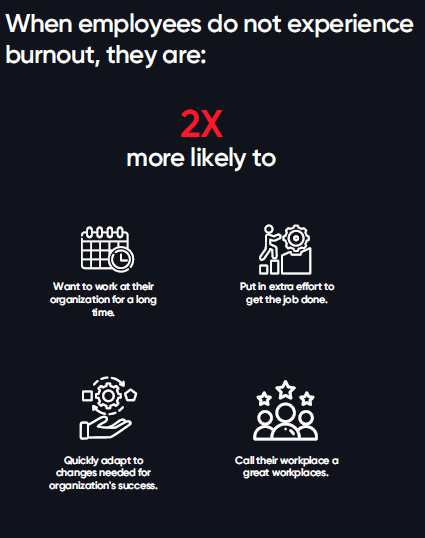
Gen Z employees prioritize access to mental health services and a workplace culture that fosters well-being. This entails establishing stigma-free environments and integrating mental health initiatives across the organization to cater to personal and professional wellness needs. Moreover, when employees do not experience burnout, they are twice more likely to be happier and contribute more to the organization.

The image shows that when employees do not experience burnout, they are 2x more likely to want to work at their organization for a long time, put in extra effort to get the job done, quickly adapt to changes needed for organization's success and call their workplace a great workplaces.

Focus on Engagement & Fair Pay

Engagement activities play a pivotal role in the workplace, especially when it comes to Gen Z employees. By incorporating engaging activities into the workplace culture, companies can foster a sense of belonging and loyalty among Gen Z employees.

Commitment to equal pay reinforces employer attractiveness to Gen Z. Offering fair compensation aligns with their values and increases the likelihood of employee retention.

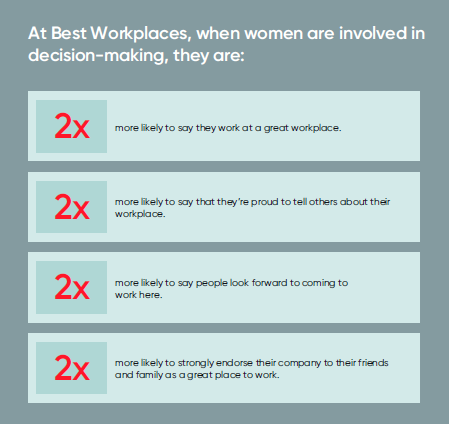
The image shows at Best Workplaces when women are involved in decision-making they are 2x more likely to say they work at a great workplace, proud to tell others about their workplace, they look forward to coming to work here and strongly endorse their company to their friends and family as a great place to work.

Gen Z employees seek career advancement and financial security, valuing mentorship and training programs. They prefer companies offering guidance, development opportunities, and supportive leadership.

As today’s young employees ascend into future leadership roles, companies must adopt innovative strategies to accommodate the needs of Generation Z employees. By gaining a deeper understanding of their perspectives and adapting accordingly, organizations can bridge generational gaps and foster environments conducive to the success and satisfaction of all employees. Visit us here to learn more.
The Indian retail industry is undergoing rapid change. According to the BCG-RAI 2024 report Post-COVID, Indian retail saw a strong recovery, set to reach $2Tn in the next decade. Consumer confidence is high, fueled by a growing middle class with a taste for premium goods. The future holds a tech revolution, with AI, computer vision, and 5G transforming how we shop.

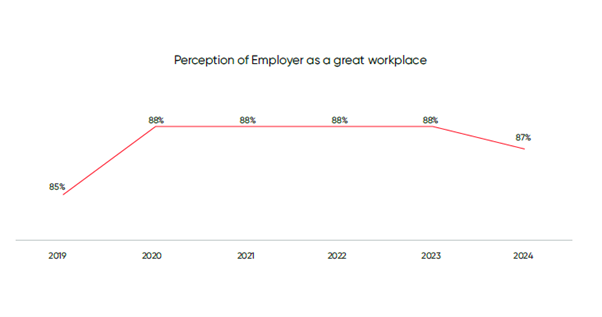
However, when it comes to the workplace culture of the industry, the story is slightly different.  According to our recent research report on India’s Best Workplaces™ in Retail, there seems to be concerns about equity in the workplace, particularly for female employees. While 87% of employees believe their organization is a great place to work, there is a 4% drop in this perception among female employees.

The graph is showing the trend of Perception for Employer as a great workplace. In 2019 it was 85%. From 2020 to 2023 it was 88% and it dipped to 87% in 2024.

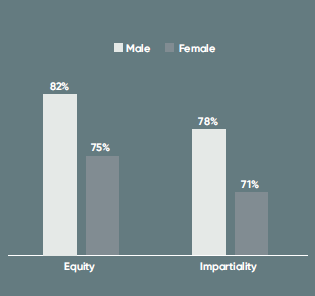
Even though female employees do not overtly perceive gender bias at their workplaces, their perception in key areas of Equity and Impartiality lags by almost 7% compared to their male colleagues.

The graph depicts Males having 82% Equity and Females with 75%. For Impartiality the same trend for Male with 78% and Female with 71%.

To address these issues, leaders must prioritize building gender equity. Achieving gender equity in the workplace is essential, and requires leaders to take concrete steps:

  • They must address the persistent pay gap between men and women.
  • Valuing potential over traditional qualifications can help identify talented individuals who may be overlooked. Creating a welcoming environment during onboarding sets a positive tone from the start.
  • Ensuring women have access to senior leadership increases their visibility and opportunities.
  • Empowering women to share their stories fosters a more inclusive and understanding work culture.

By actively addressing these challenges, the retail sector can cultivate a thriving workforce, ultimately contributing to its long-term success and sustainability. Let us have a closer look at a few of India’s Best Workplaces in Retail and their best practices. 

What India’s Best Workplaces are doing differently  

Flipkart’s Breaking Barriers, Building Futures

Flipkart is dedicated to empowering women through various tailored programs and interventions designed to support them at various stages, including those who have taken breaks from their careers.

Enhancing Representation

Flipkart prioritizes increasing the representation of women across business groups through initiatives such as:

  • Vidyarthini : A campus initiative to attract more women MBA students to India’s supply chain.
  • GirlsWannaCode (GWC): Empowering women in technology through specialized learning and skilling programs for women engineering students.
  • Neev: Internship and hiring programs targeting women-only colleges, particularly focusing on supply chain roles.
  • Flip Forward: Offering return ship opportunities for women on career breaks, providing a pathway for them to restart their careers.

Developing Women Leaders

To cultivate a pipeline of women leaders, Flipkart offers programs such as:

  • Catalyze: A comprehensive 6-month development journey utilizing the GROW model to support women in transitioning into leadership roles.
  • Prerna: A platform for senior women leaders to come together, share experiences, and learn from each other.
  • Ignite & Soar: A holistic diversity development program tailored for women in Tech, fostering strong leadership talent in junior and middle management positions.

Sustaining Support

Flipkart fosters an equitable work environment by leveraging Employee Resource Groups, including:

  • Mom on Board Employee Resource Group
  • Women in Tech Business Resource Group
  • Ekayam: A dedicated network of employees committed to driving Diversity, Equity, and Inclusion initiatives within the supply chain.
  • Flipkart Pride Collective

Through these initiatives, Flipkart endeavors to create a workplace culture that champions gender diversity, supports women’s career progression, and fosters an inclusive environment for all employees.

Flipkart’s Commitment to Safety, Equality, and Inclusivity 

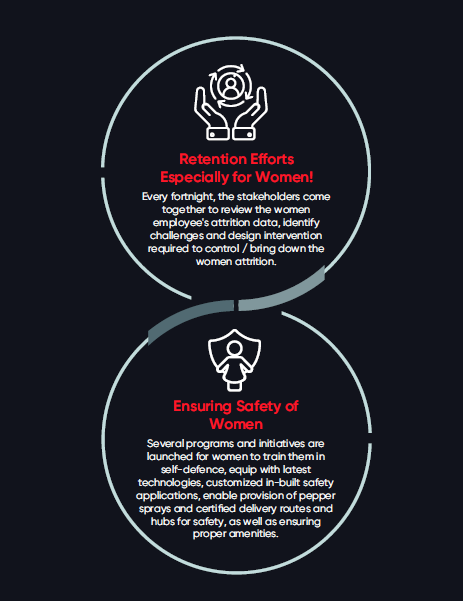
Flipkart is dedicated to ensuring the safety and security of all employees, especially women in the supply chain. Their commitment to this cause is further strengthened by bold and audacious program that aims to address women’s attrition rates in the workforce.

Image showing Retention Efforts Especially for Women and Ensuring Safety of Women.

Shopper’s Stop Motivating for Innovation

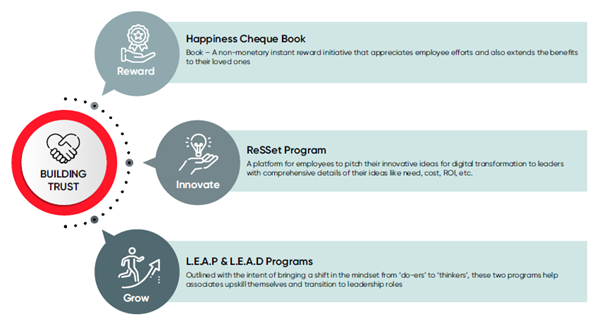
While constantly evolving, Shoppers Stop focuses on building trust among employees by providing a safe and secure environment where employees can grow, innovate and are recognized for their efforts.

Building Trust through Reward - Happiness Cheque Book, Innovate - ReSSet Program and Grow - L.E.A.P & L.E.A.D Programs.

Lifestyle’s Landmark Happiness Movement 2.0

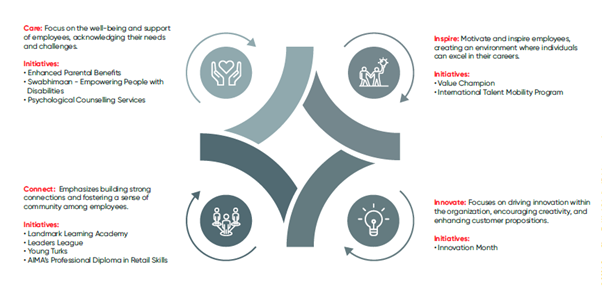
With the primary goal of enhancing the overall well-being and engagement of employees, Lifestyle International structures its initiatives around four pillars, Care, Connect, Inspire, and Innovate, each representing a key aspect of the organization’s approach to creating a positive and thriving workplace.

These case studies underscore the importance of proactive measures in addressing workplace challenges and cultivating environments where all employees can thrive. By prioritizing inclusivity, equity, and innovation, these organizations not only set benchmarks for excellence but also contribute to the long-term success and sustainability of the retail industry.

Visit us here to learn more.