In today’s fast-paced and highly competitive work environment, fostering a culture of appreciation and recognition has become more crucial than ever. Recognizing and appreciating employees’ efforts not only boosts morale and motivation but also enhances productivity and overall job satisfaction. While appreciation can take many forms, understanding and utilizing the five languages of appreciation can be a game-changer in harnessing the power of recognition in the workplace. Developed by Dr. Gary Chapman and Dr. Paul White, these languages offer a comprehensive framework to express appreciation in ways that resonate with individual employees.

Let’s delve into these five languages and explore how they can be effectively harnessed to create a positive and thriving work environment.

Words of Affirmation 

The first language of appreciation is words of affirmation. Verbal or written appreciation can have a significant impact on individuals who value this language. Simple acts such as praising a job well done, acknowledging a team member’s efforts during a meeting, or sending a thoughtful email expressing gratitude can go a long way. The key is to provide specific and genuine feedback, highlighting the person’s strengths and contributions. This language is especially powerful for employees who thrive on verbal encouragement and acknowledgment.

Quality Time

For some individuals, quality time is the language that resonates most deeply. Taking the time to actively listen, engage in meaningful conversations, or offer one-on-one mentoring sessions shows genuine interest and care for the employee. Managers can prioritize spending quality time with their team members by scheduling regular check-ins, organizing team-building activities, or simply creating a supportive space for open communication. This language is particularly effective for employees who value personal connections and feel appreciated through meaningful interactions.

Acts of Service

Actions often speak louder than words, and for individuals who appreciate acts of service, lending a helping hand can be a powerful way to demonstrate appreciation. Offering assistance with tasks, volunteering for additional responsibilities, or providing practical support to overwhelmed colleagues can make a significant impact. Managers and coworkers can identify opportunities to alleviate workload burdens, recognize individual strengths, and step in when needed. This language is particularly impactful for employees who value teamwork and feel appreciated through practical assistance.

Tangible Gifts

While some individuals may perceive material gifts as the primary way of feeling appreciated, it’s important to note that this language is not solely about the monetary value of the gift. It’s about the thoughtfulness and effort put into choosing a meaningful token of appreciation. Personalized gifts, symbolic items, or even a simple handwritten note can show that the person’s contributions are valued and recognized. Managers can create a system to identify meaningful gifts for employees on special occasions or as a spontaneous gesture of appreciation. This language can be particularly effective for employees who appreciate tangible reminders of their value and hard work.

Physical Touch

The fifth language of appreciation, physical touch, may not be appropriate or preferred in all workplace settings. However, for certain individuals, appropriate physical contact such as handshakes, high-fives, or pats on the back can convey appreciation and reinforce positive connections. It’s important to establish clear boundaries and ensure that physical touch is welcomed and comfortable for all parties involved. In situations where physical touch may not be suitable, alternative expressions of appreciation in other languages can be utilized. 

Creating a Culture of Appreciation

To harness the power of the five languages of appreciation, organizations should foster a culture that encourages and supports recognition efforts. Here are some strategies to implement:

    1. Awareness and Training: Educate managers and employees about the five languages of appreciation and encourage self-assessment to determine their own primary and secondary languages. This awareness will help individuals understand their preferences and recognize the diversity of appreciation languages within the organization.

    1. Individualization: Recognize that each employee has unique preferences and adapt your appreciation efforts accordingly. Tailor your recognition to align with their primary language while incorporating elements of other languages to create a well-rounded approach.

    1. Leadership Example: Leaders should set the tone by actively and consistently expressing appreciation using different languages. When leaders demonstrate their commitment to appreciation, it encourages others to follow suit.

    1. Regular Feedback: Create a feedback culture that incorporates appreciation and recognition as a core element. Encourage employees to provide feedback on their preferred languages and implement their suggestions wherever possible.

    1. Celebration and Rewards: Incorporate regular celebrations and rewards programs to acknowledge individual and team achievements. These can be in the form of team outings, certificates, trophies, or public recognition during company-wide events.

Harnessing the power of the five languages of appreciation at the workplace is a strategic investment in employee engagement, satisfaction, and overall productivity. By understanding and incorporating these languages into our daily interactions, we can create a culture that fosters meaningful connections, personal growth, and a sense of belonging. By embracing the diverse ways in which individuals feel appreciated, we can unlock the full potential of our teams and pave the way for a positive and thriving work environment.

Discover which cultural initiatives are making a significant impact with the assistance of Great Place To Work® Certification™. By utilizing our extensive employee surveys and data analysis, you can assess the current well-being and sentiments of your employees. This valuable information will guide you in effectively allocating your limited resources to enhance employee engagement and boost staff morale, irrespective of the prevailing circumstances. Begin your journey of becoming a great workplace today.
Belonging is a fundamental human need that drives our desire to connect with others, form relationships, and feel part of a group or community. When individuals feel a sense of belonging, they experience greater levels of happiness, life satisfaction, and overall well-being. This need is equally important in the workplace, where employees who feel a sense of belonging are more engaged, productive, and committed to their organization. In this blog post, we will explore the relationship between belonging and employee well-being, with a specific focus on addressing burnout and promoting resilience in the workplace.

The Importance of Belonging in Employee Well-being

Our recent Wellbeing: The Indisputable Superpower research report has shown that employees who feel a sense of belonging in their workplace experience higher levels of well-being and job satisfaction. When individuals feel connected to their colleagues and the organization as a whole, they are more likely to be engaged in their work, feel valued and respected, and have a positive outlook on their future within the company. In contrast, employees who do not feel a sense of belonging are more likely to experience stress, anxiety, and burnout, which can negatively impact their overall well-being.

Understanding Burnout: Causes and Consequences

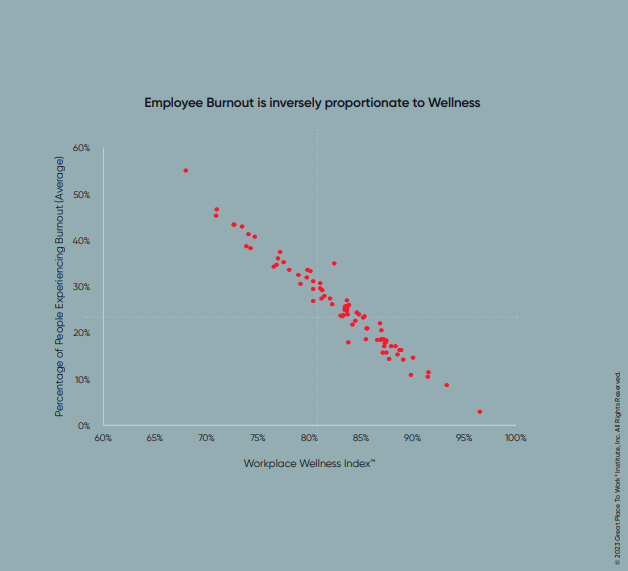
Burnout is a growing concern in today’s fast-paced, high-pressure work environments. Burnout is a state of emotional, physical, and mental exhaustion caused by prolonged exposure to job-related stressors. Our report shows that only 15% of employees experience burnout in companies in the top-quartile as compared to 39% in the bottom-quartile. The causes of burnout can be multifactorial, including excessive workload, lack of control over work, poor work-life balance, and interpersonal conflict with colleagues. The consequences of burnout can be significant, including reduced work performance, decreased job satisfaction, and increased absenteeism.

employee burnout stats
How Belonging Can Help Address Burnout

Workplace wellness is inversely proportionate to employee burnout, as top quartile companies with increased workplace wellness saw a decrease in burnout, while bottom quartile companies with decreased workplace wellness saw an increase in burnout. Belonging can play a critical role in addressing burnout in the workplace. When employees feel a sense of connection and belonging with their colleagues and the organization, they are more likely to experience positive emotions, which can counteract the negative effects of stress and burnout.

Additionally, belonging can provide a sense of support and encouragement, helping employees to cope with the demands of their job more effectively. This support can come in the form of social support, emotional support, or practical support, such as assistance with workload management.

Promoting Resilience Through Belonging

Resilience refers to an individual’s ability to bounce back from adversity and cope with stress in a positive way. Resilience is a critical component of employee well-being, as it enables individuals to manage the demands of their job more effectively and maintain a positive outlook on their work. Belonging can play a crucial role in promoting resilience in the workplace by providing a sense of social support and creating a positive work environment.

generation and milennials diagram

The data on Wellbeing Indicator™ in our report demonstrate differentiated trends on Resilience and Fitness Index whereas similar trends are observed on Social Index across all age cohorts. Gen X and Millennials value fitness, while Gen Z values resilience the most. Interestingly, post the Covid 19 pandemic social networking and connectedness were valued the least across all generations. By fostering a culture of belonging, organizations can help employees to build the skills and resources they need to cope with stress and maintain their well-being over time.

Strategies for Fostering Belonging in the Workplace

There are several strategies that organizations can employ to foster a sense of belonging in the workplace. First, organizations can encourage social connections between employees by providing opportunities for team-building activities, social events, and informal gatherings. These activities can help to break down barriers between colleagues, foster positive relationships, and create a sense of camaraderie.

Second, organizations can promote inclusivity and diversity in the workplace by creating a culture of respect and appreciation for individual differences. This can be achieved through diversity training, creating employee resource groups, and actively recruiting diverse candidates for job openings.

Third, organizations can provide opportunities for employee input and involvement in decision-making processes. By involving employees in the decision-making process, organizations can create a sense of ownership and investment in the company’s success, which can help to foster a sense of belonging.

Overcoming Barriers to Belonging: Addressing Bias and Exclusion

Despite the importance of belonging in employee wellbeing, there may be barriers that prevent individuals from feeling a sense of belonging in the workplace. One such barrier is bias and exclusion, which can manifest in various forms, including discrimination based on gender, race, ethnicity, sexual orientation, and disability. To overcome these barriers, organizations must take proactive steps to address bias and promote inclusivity.

One approach is to provide training and education on bias and discrimination to all employees, including managers and executives. This training can help individuals become more aware of their biases and take steps to overcome them. Additionally, organizations can create policies and procedures that promote inclusivity, such as hiring and promotion practices that prioritize diversity and create a zero-tolerance policy for discrimination.

Building a Culture of Belonging for Long-term Employee Wellbeing

Fostering a culture of belonging is a long-term process that requires ongoing effort and commitment from organizations. One approach is to create a culture that values employee well-being as a core priority. This can be achieved by providing resources and support for mental and physical health, promoting work-life balance, and prioritizing employee development and growth. 

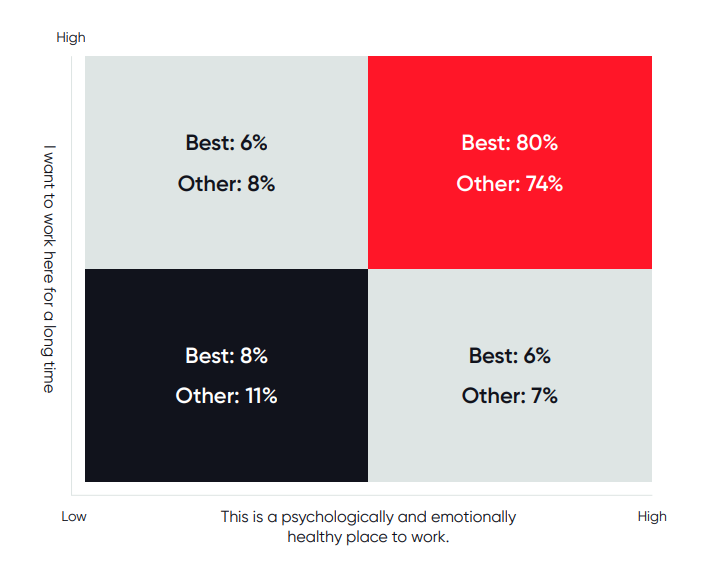
Additionally, organizations can create a culture of transparency and open communication, where employees feel comfortable sharing their ideas, concerns, and feedback. By creating a safe and supportive environment, organizations can foster trust and build strong relationships between employees and the company. 80% of employees at the best workplaces feel like they can work at their current job for a longer period and are willing to put in extra effort to complete their tasks than 74% of employees at the other workplaces.

psychologically and emotionally health place to work image
Measuring the Impact of Belonging on Employee Well-being and Business Outcomes

To truly understand the impact of belonging on employee well-being and business outcomes, organizations must measure and track their efforts. This can be achieved through various methods, including employee surveys, focus groups, and performance metrics.

By collecting data on employee well-being, engagement, and retention, organizations can gain insights into the effectiveness of their belonging initiatives and identify areas for improvement. Additionally, organizations can track business outcomes, such as productivity, innovation, and customer satisfaction, to understand how belonging impacts the overall success of the company.

Conclusion

Belonging is a fundamental human need that plays a critical role in employee well-being and organizational success. By fostering a culture of belonging, organizations can address burnout, promote resilience, and create a positive work environment that supports employee well-being. By overcoming barriers to belonging, promoting inclusivity, and measuring the impact of belonging initiatives, organizations can build a strong foundation for long-term employee well-being and business success.

As Pride Month unfolds, it is an opportune time to reflect on the significance of creating a workplace culture that embraces diversity and inclusivity for LGBTQ+ employees. The journey towards an inclusive environment requires intentional efforts to dismantle barriers, foster empathy, and promote acceptance. In this article, we will explore the key elements of building an LGBTQ+ inclusive workplace culture, ranging from policies and practices to education and allyship. By understanding the importance of diversity and equality, we can create a workplace where every individual feels valued, respected, and empowered.

Understanding LGBTQ+ Identities: A Primer for Inclusive Workplaces

To cultivate an inclusive workplace culture, it is crucial to begin with a foundation of knowledge and understanding. Recognizing and respecting different LGBTQ+ identities is fundamental in creating an environment where individuals can express their authentic selves. Providing education and awareness programs that introduce LGBTQ+ terminology and identities can help dispel misconceptions and promote empathy. By acknowledging the diverse spectrum of identities within the LGBTQ+ community, we can foster an environment where individuals feel seen, heard, and validated.

Policies and Practices: Building LGBTQ+ Inclusive Workplaces

Inclusive policies and practices are instrumental in creating a supportive environment for LGBTQ+ employees. Establishing nondiscrimination policies that explicitly protect individuals based on sexual orientation and gender identity is crucial. Additionally, implementing anti-harassment policies that address LGBTQ+ issues and provide clear procedures for reporting incidents is vital for ensuring a safe and inclusive workplace.

Equitable benefits and support systems are also essential components of an LGBTQ+ inclusive workplace. Offering inclusive healthcare coverage that encompasses gender-affirming treatments and procedures demonstrates a commitment to the well-being of LGBTQ+ employees. Providing access to mental health resources and support networks that address the unique challenges faced by the community further enhances inclusivity.

Educating the Workforce: Promoting Awareness and Acceptance

Education plays a pivotal role in promoting LGBTQ+ inclusion in the workplace. Training programs that focus on LGBTQ+ issues and allyship can help employees and managers develop a deeper understanding of the challenges faced by their LGBTQ+ colleagues. By addressing unconscious biases and fostering empathy, organizations can create an environment where individuals feel safe and accepted.

Creating open dialogues and safe spaces for discussion is essential. Allowing employees to share their experiences, concerns, and ideas helps foster a culture of inclusion and belonging. These conversations can also facilitate the exchange of knowledge and promote a deeper appreciation for the contributions of LGBTQ+ employees.

Allies in Action: Becoming an LGBTQ+ Advocate

Allies play a crucial role in creating an inclusive workplace culture. Being an effective LGBTQ+ ally means actively supporting and advocating for LGBTQ+ rights and equality. It involves actively listening to the experiences and concerns of LGBTQ+ colleagues, amplifying their voices, and standing up against discrimination and prejudice. By openly showing support, allies can help create a more welcoming environment and inspire others to do the same.

Supporting LGBTQ+ employee resource groups (ERGs) and community initiatives is another way to demonstrate allyship. ERGs provide a platform for LGBTQ+ employees to connect, share experiences, and provide support to one another. Organizations can actively support these groups by allocating resources, providing mentorship opportunities, and engaging in collaborative efforts to drive positive change.

Celebrating Pride Month: Meaningful Recognition and Support

Pride Month offers an excellent opportunity for organizations to demonstrate their commitment to LGBTQ+ inclusion. Planning activities and events that celebrate the LGBTQ+ community can help raise awareness and promote a sense of belonging. These initiatives can range from organizing educational panels and workshops to hosting social events that foster connections among employees.

Recognizing LGBTQ+ history, achievements, and challenges is an integral part of celebrating Pride Month. By highlighting the contributions of LGBTQ+ leaders and their impact on society, organizations can inspire others and create a more inclusive narrative. Partnering with LGBTQ+ organizations and engaging with the community during Pride Month can further demonstrate solidarity and support beyond the workplace.

Success Stories: LGBTQ+ Employee Experiences and Leadership

Sharing success stories of LGBTQ+ employees in the workplace can be empowering and inspiring. By highlighting the journeys, accomplishments, and challenges faced by LGBTQ+ individuals, organizations can showcase the value they bring to the workplace. These narratives can foster a sense of pride among LGBTQ+ employees and help create a culture where everyone feels encouraged to be their authentic selves.

Recognizing LGBTQ+ leaders within the organization is equally important. By showcasing their accomplishments and contributions, organizations can inspire other LGBTQ+ employees and create role models for future generations. It sends a powerful message that LGBTQ+ individuals can thrive and lead in any professional field.

Beyond Pride Month: Sustaining Inclusion Throughout the Year

While Pride Month serves as a catalyst for LGBTQ+ inclusion, the commitment to sustaining an inclusive workplace culture should extend throughout the year. Organizations should embed LGBTQ+ perspectives in their ongoing diversity and inclusion efforts. This can be achieved by integrating LGBTQ+ issues into training programs, diversity initiatives, and internal communication platforms.

Engaging in continuous education and learning is crucial. By staying informed about current LGBTQ+ issues, organizations can adapt their policies and practices to address emerging challenges. This includes understanding the evolving needs of transgender employees, supporting individuals through their gender transitions, and ensuring that the workplace remains inclusive and affirming.

Regularly assessing the effectiveness of LGBTQ+ inclusion initiatives is essential for progress. Collecting feedback from employees, conducting surveys, and utilizing metrics can help organizations measure their success and identify areas for improvement. Creating accountability and transparent reporting structures reinforces the organization’s commitment to LGBTQ+ inclusion.

Building an LGBTQ+ inclusive workplace culture requires a multifaceted approach that encompasses policies, education, allyship, and celebration. By understanding and respecting LGBTQ+ identities, organizations can create an environment where employees feel safe, seen, and valued. Implementing inclusive policies and practices ensures that the workplace is free from discrimination and harassment.

Education and awareness initiatives promote empathy and understanding, fostering a culture of acceptance. Allies play a critical role in creating a supportive environment by advocating for LGBTQ+ rights and equality. Recognizing and celebrating Pride Month allows organizations to demonstrate their commitment to LGBTQ+ inclusion and celebrate the contributions of LGBTQ+ individuals.

However, sustaining an inclusive workplace culture requires year-round efforts. Integrating LGBTQ+ perspectives into ongoing diversity and inclusion initiatives ensures continued progress. By prioritizing education, assessing initiatives, and listening to employees’ experiences, organizations can foster an environment where every individual feels empowered to be their authentic selves.

As we celebrate Pride Month, let us remember that LGBTQ+ inclusion is not just a one-time event but an ongoing journey. By embracing diversity and fostering an inclusive workplace culture, organizations can create environments where LGBTQ+ employees can thrive, contribute, and excel. Together, let us champion diversity, equality, and acceptance in the workplace, not just for Pride Month but every day of the year.

To learn more about fostering an inclusive workplace culture for LGBTQ+ employees in your organization, visit the DEIB page on our website. Happy Pride Month!

Loneliness is a deeply personal experience that can affect individuals from all walks of life. However, it is observed that certain factors contribute more to the loneliness crisis in India. Rapid urbanization and the rise of nuclear families have led to a decrease in social support networks. Additionally, long working hours, high competition, and the relentless pursuit of success often leave individuals feeling alienated and disconnected.

The Workplace Impact

The workplace, where individuals spend a significant portion of their waking hours, plays a crucial role in shaping their overall well-being. A lonely and unsupportive work environment can have severe consequences, such as decreased job satisfaction, reduced productivity, and increased stress levels. Moreover, loneliness can lead to mental health issues like anxiety and depression, further exacerbating the problem.

Creating a Connected Work Environment

To address the loneliness crisis and foster a connected work environment, organizations need to implement strategies that prioritize employee well-being. Here are some effective approaches:

The Role of Leadership

Leaders within organizations play a crucial role in addressing the loneliness crisis. By prioritizing employee well-being and setting an example, leaders can create a positive work environment. Here’s how leaders can contribute:

The Power of Collaboration

The loneliness crisis cannot be solved by organizations alone. Collaborative efforts between businesses, government bodies, and community organizations are crucial to bridging the gap and combating loneliness in India. Here are some collaborative initiatives that can make a significant impact:

The loneliness crisis in India is a pressing issue that requires the collective efforts of organizations, leaders, and society as a whole. By earning a Great Place To Work® Certification™, workplaces can bridge this gap and combat loneliness.

Together, we can create environments where individuals feel connected, supported, and empowered to thrive both personally and professionally. Let us unite our workplaces and build a future where no one feels alone.

WORKPLACE CULTURE HAS BECOME PARAMOUNT

The year 2022 witnessed significant transformations in the way we work. With the world gradually recovering from the global pandemic, organizations across various industries had to adapt to new challenges and redefine their workplace culture. As we move forward into the future, it becomes crucial to identify the key shifts in workplace culture that have emerged and will continue to shape the professional landscape. In this article, we will explore the five essential shifts we observed in 2022 with respect to workplace culture.

HIGH-TRUST CULTURES RESULT IN GREATER BUSINESS RETURNS

Hybrid Work Environments

The pandemic accelerated the adoption of remote work, and this trend is here to stay. In 2022, organizations increasingly embraced hybrid work models that combined remote and in-person work. This shift gave employees greater flexibility and autonomy, allowing them to balance their personal and professional lives more effectively. Companies will also invest in technologies and infrastructure to support seamless collaboration among distributed teams. However, maintaining a cohesive company culture in a hybrid work environment will become a significant challenge. Organizations must focus on fostering strong communication channels, building trust, and creating opportunities for meaningful interactions to ensure employees feel connected and engaged, regardless of their physical location.

Emphasis on Well-being

The pandemic has underscored the importance of employee well-being. Since 2022 and beyond, workplace culture will prioritize the holistic well-being of employees, including physical, mental, and emotional health. Companies will invest in initiatives that promote work-life balance, offer mental health support, and encourage regular breaks. Flexible working hours and wellness programs will become integral parts of the workplace culture. Employers understand that a healthy and happy workforce increases productivity, reduces burnout, and improves retention rates.

EMPLOYEE BURNOUT IS NOT JUST A MILLENNIAL ISSUE

Impact when wellness is a priority

Diversity, Equity, and Inclusion (DEI)

In recent years, there has been a growing recognition of the importance of diversity, equity, and inclusion in the workplace. In 2023, this focus on DEI will intensify, with organizations making concerted efforts to create inclusive environments where every employee feels valued and heard. Diversity will be prioritized not only in terms of race and gender but also in terms of diverse perspectives, experiences, and backgrounds. Companies will implement unbiased hiring practices, offer diversity training, and establish employee resource groups to foster a sense of belonging. The shift towards DEI will be a moral and business imperative, as diverse teams have been proven to drive innovation and better decision-making.

WOMEN EMPOWERED @ WORKPLACE DIVERSITY, REQUIREMENTS, LEADERSHIP

Building a sense of belonging at workplace culture is vital for retention

Remote Onboarding and Employee Experience

With remote work becoming more prevalent, organizations will revamp their onboarding processes to cater to virtual environments. Remote onboarding programs will be designed to help new employees feel connected, understand company values and goals, and establish relationships with colleagues. Companies will invest in digital tools and platforms facilitating remote collaboration, communication, and knowledge sharing. Moreover, organizations will strive to provide a positive and inclusive employee experience, irrespective of the physical location. This will involve regular check-ins, mentorship programs, virtual team-building activities, and continuous feedback mechanisms.

Learning and Development Opportunities

Continuous learning and development have always been critical to professional growth, but in 2023 and beyond, they will take center stage in workplace culture. Organizations will prioritize providing opportunities for employees to upskill and reskill in response to rapidly evolving technologies and job requirements. This may involve offering online learning platforms, mentorship programs, and educational allowances. By investing in the development of their workforce, companies will not only empower employees but also foster a culture of innovation and adaptability.

In conclusion, workplace culture is undergoing a transformative shift since 2022 and beyond. The rise of hybrid work environments, emphasis on employee well-being, focus on diversity, equity, and inclusion, remote onboarding, and learning and development opportunities are essential shifts shaping the future of work. These changes reflect a broader understanding of the importance of creating inclusive, flexible, and supportive work environments that prioritize the well-being and growth of employees.

As we look ahead, it is clear that the future workplace will be a dynamic and ever-evolving space. Organizations that embrace these essential shifts in workplace culture will be better equipped to attract top talent, foster employee engagement, and drive innovation. Adapting and responding to these changes will be crucial for businesses to thrive in the post-pandemic era. Our Trust IndexTM Survey can help you understand where your organization stands regarding the ever-evolving workplace culture.

Young employees are the future of any nation. Their skills, creativity, and energy will drive innovation and growth, making them critical to a country’s economic and social progress. However, to harness their full potential, it is essential to understand and capture their emotions. Emotional intelligence, a key aspect of emotional well-being, can drive productivity, innovation and improve work environments, among other things.

Understanding the Emotional Needs of Young Employees

This is the first step in capturing their emotions. Young employees, especially those new to the workforce, often struggle to find their place in the organization. They may feel insecure about their skills, unsure of their role, or intimidated by more experienced colleagues. Moreover, they often face high-pressure situations that require them to adapt quickly and handle multiple tasks simultaneously, leading to stress and anxiety.

It is crucial to create a work environment that nurtures and supports young employees’ emotional well-being. The organization’s leadership must recognize and acknowledge their emotional needs, provide regular feedback, and offer training and development opportunities to build their confidence and skills.

How Emotional Intelligence can Drive Productivity and Innovation?

Emotional intelligence, the ability to understand and manage one’s emotions and those of others, can drive productivity and innovation. When employees have high emotional intelligence, they are more likely to communicate effectively, build stronger relationships, and work collaboratively.

Emotional intelligence can also help employees manage stress and regulate their emotions, ultimately improving their well-being. In our recent studies, we also observed that employees with high emotional intelligence reported significantly lower levels of work-related stress and burnout.

The Impact of Workplace Culture on Young Employee Emotions

The workplace culture has a significant impact on young employees’ emotions. A toxic or unsupportive work environment can lead to stress, anxiety, and burnout. In contrast, a positive and inclusive culture can help employees feel valued, supported, and engaged.

Leaders must create a culture that fosters emotional well-being by promoting empathy, respect, and teamwork. This can be achieved through regular communication, mentorship, and coaching programs that encourage open dialogue and feedback.

The Role of Leaders in Fostering Emotional Well-being Among Young Employees

Leaders play a critical role in fostering emotional well-being among young employees. They must create a supportive work environment where young employees feel valued and respected.

Leaders must also recognize the unique challenges that young employees face and provide them with the support they need to navigate these challenges successfully. This may include providing training and development opportunities, offering feedback and recognition, and providing resources for mental health and well-being.

Strategies for Capturing and Addressing Young Employee Emotions at the National Level

Capturing and addressing young employees’ emotions at the national level is essential for a country’s economic and social progress. Here are some strategies that can be implemented:

  • Create a National Index to study and address young employees’ emotions.
  • Develop a comprehensive strategy that includes policies and programs to promote emotional well-being among young employees.
  • Provide training and development opportunities that focus on emotional intelligence, leadership, and communication.
  • Offer resources and support for mental health and well-being.
  • Encourage organizations to implement policies that support emotional well-being and provide incentives for those that do.
  • Promote a culture of empathy and emotional support at the national level.
  • Develop mentorship and coaching programs that offer young employees’ guidance and support. 

The Economic Benefits of Prioritizing Young Employee Emotional Well-being

There are many economic benefits to prioritizing young employees’ emotional well-being. When employees are emotionally healthy and engaged, they are more productive, creative, and motivated, which translates into improved business outcomes. Additionally, organizations prioritizing emotional well-being will most likely attract and retain the best talents, reducing turnover costs and increasing efficiency.

In all our recent studies, we observed that organizations that prioritized employee well-being were more likely to outperform their competitors in revenue growth and profitability.

Building a Culture of Empathy and Emotional Support for Young Employees in the Workplace

Building a culture of empathy and emotional support for young employees in the workplace is critical to their emotional well-being. Empathy, the ability to understand and share the feelings of others, can help employees feel valued and supported, reducing stress and anxiety.

Organizations can promote empathy by encouraging open communication, active listening, and creating a culture of inclusion and diversity. Additionally, providing resources and support for mental health and well-being can help employees feel supported and cared for.

Leaders play a crucial role in building a culture of empathy and emotional support. They must lead by example, demonstrating empathy and actively listening to employees’ concerns. To create a safe and supportive work environment that fosters open communication, register for our Trust IndexTM Survey today.

In conclusion, capturing and addressing young employees’ emotions is crucial for national growth. Emotional intelligence, workplace culture, and leadership play a critical role in fostering emotional well-being and driving productivity and innovation. National strategies that promote well-being, offer training and development opportunities, and provide resources for the same can help organizations attract and retain top talent, reducing turnover costs and increasing efficiency. By prioritizing young employees’ emotions, organizations and nations can empower the future, driving economic and social progress.

The level of an employee’s involvement in their work and motivation to put out their best effort is referred to as employee engagement. The amount of employee involvement inside a company is measured using a variety of surveys. These surveys often include a series of questions aimed at determining how employees feel about their jobs, their managers, their coworkers, and the company overall. The information received from these surveys may be used to pinpoint areas where the company is doing a good job of including its workers as well as those where work needs to be done to improve things.

Because they offer insightful information on the level of employee engagement inside a business, employee engagement surveys are important for engagement and change. They can assist in identifying areas where workers are disengaged and where improvements are needed to increase engagement. This is crucial since motivated workers are more likely to be productive, stay with their company longer, and suffer from burnout or mental health problems. A culture of participation can also contribute to the development of a productive workplace that is advantageous to both workers and the business.

Improving company culture using an employee engagement survey

A major advantage of using an employee engagement survey is the ability to enhance the culture of a company. When it comes to defining an organization and influencing employee behavior, company culture refers to the common values, attitudes, and beliefs that exist inside it. Employee engagement can be significantly influenced by a company’s culture, which can also contribute to the development of a favorable workplace atmosphere that draws and keeps top talent.

Employee engagement surveys can help identify areas where the organization’s culture is strong and where it needs improvement. For example, if the survey results show that employees feel a strong sense of belonging and connection to their colleagues, but feel that their manager doesn’t provide enough feedback, the organization can work to improve communication and feedback channels between managers and employees. By making targeted changes based on survey data, organizations can create a more engaged and positive work environment that promotes a strong company culture.

Following are some interesting steps you can implement within your organization to conducting an employee engagement survey that kickstarts change:

  • Set clear objectives: Before conducting an employee engagement survey, it’s essential to have a clear understanding of what you hope to achieve. What specific areas of employee engagement are you hoping to measure? What are your goals for the survey results? By setting clear objectives, you can ensure that your survey is focused and targeted towards the areas that matter most to your organization.
  • Choose the right survey tool: There are many employee engagement survey tools available, and it’s important to choose one that fits your organization’s needs. Look for a tool that offers a range of question types and customization options, so you can tailor the survey to your organization’s specific needs.
  • Secure support from important leaders in your organization: To get the most out of your employee engagement survey, it’s important to have buy-in from key leaders within your organization. This includes executives, managers, and team leaders. Make sure they understand the importance of the survey and are committed to taking action based on the results.
  • Communicate the launch of the survey effectively: Launching an employee engagement survey requires effective communication to ensure that employees understand the purpose of the survey and are motivated to participate. This can include email reminders, social media posts, and in-person meetings. Make sure employees know that their participation is valued and will be used to make meaningful changes within the organization.
  • Analyze the results: Once the survey is complete, it’s time to analyze the results. Look for trends and patterns in the data, and identify areas where employees are particularly engaged or disengaged. Use the data to create a clear picture of the current state of employee engagement within your organization.
  • Develop an action plan: Based on the survey results, develop an action plan to address areas of low engagement and build on areas of strength. This may include changes to company policies or procedures, providing training and development opportunities for employees, or improving communication channels between managers and employees. Be sure to involve key stakeholders in the development of the action plan and set clear timelines and metrics to track progress.
  • Implement changes: Once the action plan has been developed, it’s time to implement changes. Be sure to communicate any changes to employees and provide support and training as needed. Monitor progress and adjust the plan as necessary to ensure that changes are having the desired impact on employee engagement.
  • Follow up with another survey: Conducting a follow-up survey several months after implementing changes can help measure progress and identify areas that still need improvement. Use the data gathered from the follow-up survey to continue refining and improving the action plan.

Employee engagement surveys are a very powerful tool for enhancing corporate culture and fostering a supportive workplace. Organizations can conduct successful surveys that offer insightful information about the level of employee engagement and pinpoint areas for development by following the instructions provided in this blog. Companies can develop an engagement culture that is advantageous to both the employees and the company by acting on survey results and making adjustments.

So, are you ready to take your workplace to the next level? The Great Place To Work® Trust IndexTM Survey is your key to unlocking the potential of your team and transforming your organization into a thriving, high-performance workplace. With just a few clicks, you can now gain valuable insights into your employee’s experience and start making positive changes that will drive engagement, retention, and growth for your organization.

The Power of Employer Branding for Attracting Top Talent

In today’s job market, attracting top talent is crucial for the success of any company. But with so many employers vying for the same pool of candidates, it can be challenging to stand out. That’s where employer branding comes in. By creating a strong employer brand, you can differentiate your company from the competition and attract the best talent.

But what exactly is employer branding, and how can you build it? Let’s explore the importance of employer branding, the significance of the Great Place To Work® CertificationTM, and how to build a strong employer brand that attracts top talent.

Understanding the Great Place To Work Certification and its Significance

The Great Place To Work Certification is an internationally recognized certification that acknowledges companies with exceptional workplace cultures. Companies must go through a thorough evaluation procedure, including a Trust IndexTM Survey and a Culture AuditTM to become Certified. As it displays a commitment to establishing a positive and inclusive work environment, the Certification is a useful tool for businesses trying to attract top talent.

Employee morale and retention can be greatly impacted by having a Great Place To Work Certification. According to our data, employees at Certified organizations express higher levels of job satisfaction, are more likely to stick with their current employers, and are more likely to promote the business to others.

Spotlighting Your Company Culture and Employee Experience on Social Media

Social media is an essential tool for building and promoting your employer’s brand. By showcasing your company culture and employee experience on social media, you can give potential candidates a glimpse into what it’s like to work for your company. This can be essential for companies that may not have a well-known brand or reputation.

Platforms like LinkedIn, Instagram, and Twitter can be powerful tools for sharing your company culture and values. Share photos and videos of your employees at work, highlight employee accomplishments and milestones, and share testimonials from current employees. This can help potential candidates get a sense of your company’s culture and values and help them decide if your company is the right fit for them.

Building Your Employer Brand with Great Place To Work Certification

Earning the Great Place To Work Certification can be a powerful tool for building your employer brand. Use the Certification in your job postings, on your company website, and in your social media posts to showcase your commitment to creating a positive workplace culture.

You can also use the Certification to attract top talent by participating in career fairs and networking events. Having the Certification Badge on display at these events can help you stand out from the competition and attract the best candidates.

Benefits of Building a Strong Employer Brand

Building a strong employer brand can have many benefits for your company. A strong employer brand can:

  • Attract top talent: You can attract the best candidates for your vacant roles by building a powerful employer brand.
  • Improve employee morale: When they work for a company with a good reputation, employees are more likely to be content and engaged.
  • Increase retention: Strong employer brands increase the likelihood that workers will stick around at a company.
  • Enhance your reputation: A strong employer brand can help you establish a positive reputation in your industry and community.

Measuring the Impact of Employer Branding on Talent Acquisition and Retention

Measuring the impact of employer branding on talent acquisition and retention is essential for understanding the effectiveness of your employer branding efforts. To evaluate the effectiveness of your employer branding activities, utilize the following metrics:

  • Applicant quality: Measure the quality of your job applicants to determine if your employer branding efforts are attracting top talent.
  • Time-to-hire: Measure the time it takes to fill open positions to determine if your employer branding efforts are speeding up the hiring process.
  • Employee retention: Measure employee retention rates to determine if your employer branding efforts are helping to keep your employees engaged and satisfied.
  • Referral rates: Measure the percentage of new hires that come from employee referrals to determine if your employees are actively promoting your company to their networks.
  • Social media engagement: Measure the engagement rates of your social media posts to determine if your content is resonating with your audience.

By tracking these metrics, you can determine the impact of your employer’s branding efforts and make adjustments as necessary.

The Importance of Employer Branding in Attracting Top Talent.

In today’s competitive job market, building a strong employer brand is crucial for attracting top talent. By earning the Great Place To Work Certification, spotlighting your company culture and employee experience on social media, and measuring the impact of your employer branding efforts, you can create a positive reputation for your company and attract the best candidates.

Remember, building a strong employer brand is an ongoing process. Continuously monitor and improve your employer branding efforts to ensure that you are attracting and retaining the best talent for your company. By doing so, you can set your company up for long-term success.

Introduction: The Shift to Hybrid Work Model

The COVID-19 pandemic has brought about significant changes in the way we work. With remote work becoming the new norm, companies have been forced to adapt to a new work model – the hybrid work model. This new model combines the best of both worlds, with employees working both in the office and remotely. While this model has many benefits, it also presents new challenges, especially when it comes to maintaining a strong company culture.

The Importance of Company Culture in a Hybrid Work Model

Company culture is essential in any work environment, and it becomes even more important in a hybrid work model. With employees working both in the office and remotely, it can be challenging to maintain a sense of community and shared values. A strong company culture can help bridge this gap by providing a sense of purpose and shared identity. It also helps foster collaboration, productivity, and employee engagement.

In a hybrid work model, where employees may feel disconnected from their colleagues and the company, a strong culture can help create a sense of belonging and reduce turnover. Overall, the importance of company culture cannot be overstated in a hybrid work model, and companies must make it a priority to build and maintain a strong culture that resonates with all employees, regardless of their work location.

Traditional Company Culture and Its Challenges in a Hybrid Work Model

Company culture is essential in any work environment, and it becomes even more important in a hybrid work model. With employees working both in the office and remotely, it can be challenging to maintain a sense of community and shared values. A strong company culture can help bridge this gap by providing a sense of purpose and shared identity. It also helps foster collaboration, productivity, and employee engagement.

Reinventing Company Culture in a Hybrid Work Model

Companies must first understand the challenges they face to reinvent company culture in a hybrid work model. One of the biggest challenges is communication. With employees working both in the office and remotely, it can be challenging to maintain open and effective communication. To overcome this challenge, companies must embrace technology and use it to facilitate communication and collaboration. This includes tools like video conferencing, instant messaging, and project management software.

Another challenge in a hybrid work model is creating a sense of community and shared experiences. To overcome this challenge, companies must find new ways to bring employees together, both in person and virtually. This includes virtual team-building activities, online social events, and hybrid meetings that allow employees to connect regardless of their location.

Virtual Coffee Breaks: The New Water Cooler

One innovative way to bring employees together in a hybrid work model is through virtual coffee breaks. These breaks provide employees with an opportunity to connect with their colleagues, share experiences, and build relationships. Virtual coffee breaks can be facilitated through video conferencing, and they can be scheduled on a regular basis to ensure that all employees have an opportunity to participate. These breaks can be structured or unstructured, depending on the company’s culture and employees’ preferences.

Fostering Collaboration and Connection in a Hybrid Work Model

Another critical aspect of building and maintaining company culture in a hybrid work model is fostering collaboration and connection. To achieve this, companies must create a culture that promotes open communication and encourages employees to share ideas and collaborate. This includes creating a culture of trust, where employees feel comfortable sharing their thoughts and ideas without fear of judgment or retribution.

Innovative Ways to Build and Sustain Company Culture in a Hybrid Work Model

There are many innovative ways to build and sustain company culture in a hybrid work model. Some of these include:

Keeping the Culture Alive: Challenges and Solutions

There are several challenges that companies must overcome to keep their culture alive in this new work model. In this section, we will explore these challenges and some solutions to overcome them.

Challenge: Maintaining Consistency

In a traditional work environment, it’s easier to maintain consistency in the company culture. Employees are all in the same physical location and experience the same work environment. However, in a hybrid work model, employees work in different locations and experience different work environments. This can make it challenging to maintain consistency in the company culture.

Solution: Emphasize Core Values

To overcome this challenge, companies must emphasize their core values. Core values are the foundation of a company’s culture and can help maintain consistency, regardless of the work location. Companies should communicate their core values regularly and ensure that all employees understand and embrace them. This can be achieved through regular training, internal communications, and recognition programs that reinforce the company’s core values.

Challenge: Building Relationships

Building relationships is essential in building a strong company culture. In a traditional work environment, employees have more opportunities to build relationships through in-person interactions. However, in a hybrid work model, employees work in different locations, making it challenging to build relationships.

Solution: Virtual Team Building

Virtual team-building activities can help build relationships between employees working in different locations. Companies can schedule virtual team-building events, such as virtual trivia games, online happy hours, and other fun activities that encourage employees to interact and get to know each other. These activities can be structured or unstructured, depending on the company’s culture and employee preferences.

Challenge: Overcoming Communication Barriers

Effective communication is essential in building and maintaining a strong company culture. In a hybrid work model, employees work in different locations, making it challenging to communicate effectively.

Solution: Embrace Technology

To overcome communication barriers, companies must embrace technology. Video conferencing, instant messaging, and project management software can facilitate communication and collaboration. These tools can help employees feel connected, even when working in different locations.

Challenge: Adapting to Change

Adapting to change is essential in building a strong company culture. In a hybrid work model, employees must adapt to a new work environment, which can be challenging.

Solution: Provide Support and Resources

Companies must provide support and resources to employees to help them adapt to the new work model. This includes training and development programs that help employees develop new skills, coaching and mentoring programs that provide support and guidance, and wellness programs that promote work-life balance and overall well-being.

Challenge: Addressing Employee Burnout

Employee burnout is a significant challenge in a hybrid work model. With employees working from home, it can be challenging to separate work and personal life, leading to burnout.

Solution: Promote Work-Life Balance

To address employee burnout, companies must promote work-life balance. This includes setting clear expectations around work hours, providing support for caregivers, and encouraging employees to take breaks throughout the day. Companies should also offer wellness programs that promote physical and mental well-being.

Conclusion: Embracing Change and Building a Strong Culture in a Hybrid Work Model

Building and maintaining a strong company culture in a hybrid work model is essential. While there are challenges, companies can overcome them by emphasizing core values, building relationships through virtual team building, embracing technology to facilitate communication, providing support and resources to employees, and promoting work-life balance. By embracing change and finding innovative solutions, companies can build and sustain a strong culture that resonates with all employees, regardless of their work location.

The Need to Support and Retain Working Women

Women have come a long way in terms of professional advancement in the workplace. Despite these advances, working women still face challenges, especially married women. Juggling a career with family responsibilities can be a daunting task. The workplace can be an even more stressful place for married women who feel unsupported and unappreciated.

Research has shown that supporting and retaining women in the workforce is good for business. Companies that prioritize gender diversity and inclusion are more profitable, innovative, and competitive. Therefore, organizations must create a work environment that supports and retains working women, especially those who are married. Our latest recognition India’s Best Workplaces™ for Women 2022, applauds such exemplary practices by our best workplaces.

Understanding the Challenges Faced by Married Women in the Workplace

Married women in the workplace face unique challenges that can impact their career growth and overall job satisfaction. One of the most significant challenges is the balance between work and family life. Women are still seen as the primary caregiver in many households, which means they are often tasked with caring for children, and elderly parents, and managing the household. This can make it challenging for them to commit to a demanding work schedule.

Another challenge that married women face in the workplace is the perception that they may not be as committed to their jobs as their single counterparts. This stereotype can lead to missed opportunities for professional growth and promotions, despite their qualifications and dedication to their job.

So, how can we empower and support married women to thrive professionally in the workplace this International Women’s Day?

Strategies for Empowering Married Women in the Workplace

Creating opportunities for women to advance in their careers is also critical to supporting and retaining working women. This can include offering leadership roles and promotions, creating mentorship programs, and providing opportunities for networking and collaboration. By creating these opportunities, employers can help women to overcome the barriers that often prevent them from advancing in their careers.

Conclusion

Supporting and retaining working women is essential for creating a more inclusive and equitable workplace. By promoting women’s leadership and advancement opportunities, employers can help to address the gender gap that exists in many industries. This can lead to increased employee satisfaction, productivity, and loyalty, which can benefit both employees and employers. It’s time for employers to recognize the value of working women and take action to support and retain them in the workplace.

Is your workplace equitable and inclusive for women?

Embrace a growth mindset and unlock your organization’s potential. Adopt these proven strategies today and witness the transformational impact on your team’s success.

Ready to reach new heights? Get Certified now and embark on your path to greatness!